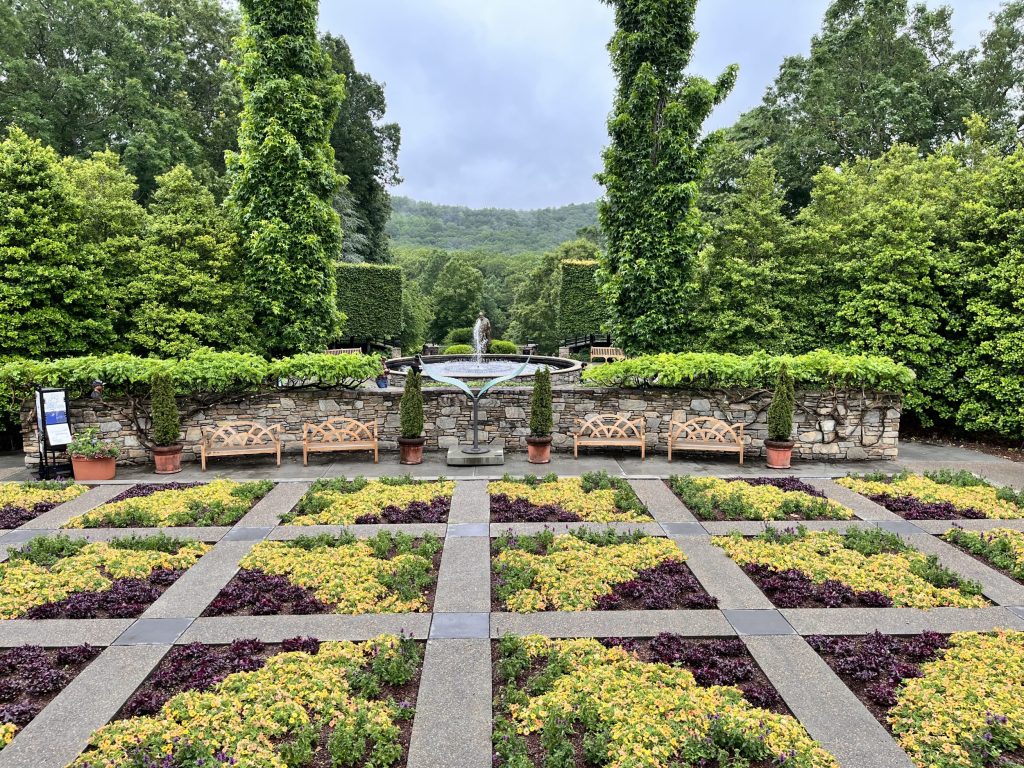
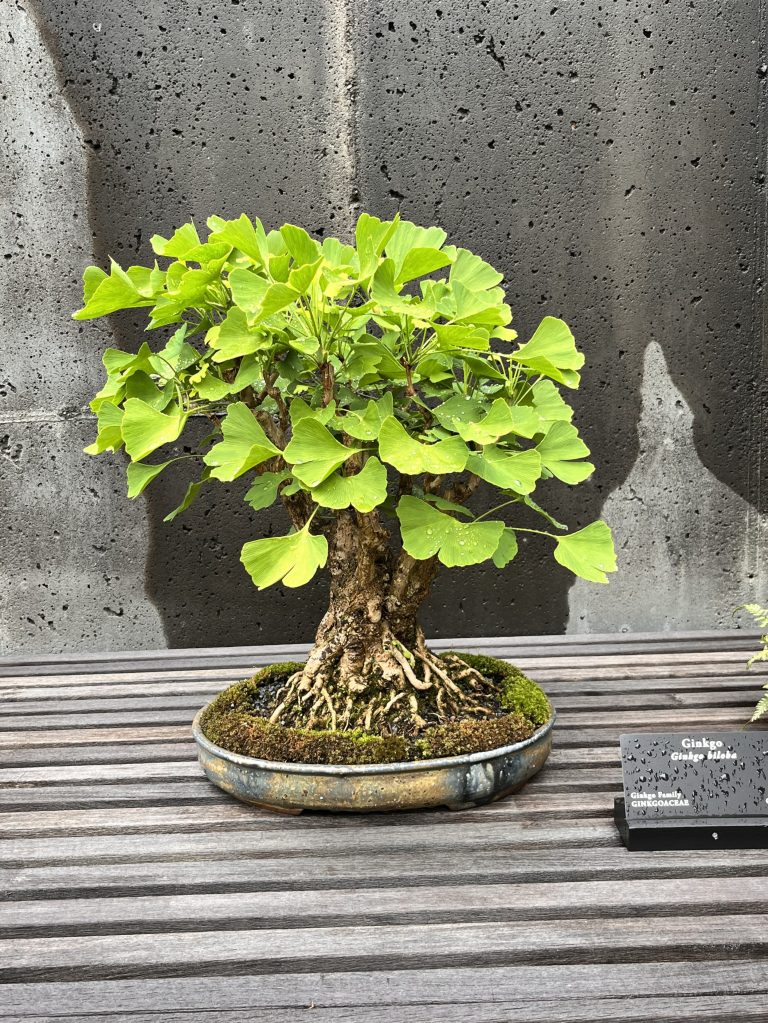
It rained most of last week putting a damper on my hiking expeditions. I did manage to get in a 5.7-mile hike with two women from my hiking group who were willing to venture out in the rain. We did a loop near my house that wasn’t very difficult but lovely, nonetheless. We concluded the hike with a leisure passage through the NC Arboretum where we enjoyed the beautiful display of flowers, plants, and Bosai trees. The dismal outdoor climate gave me a chance to assemble my gear and start the job of packing. I discovered it will be difficult to pack all I want to take in my duffel bag and keep it under 30 pounds. I still must go through it again and see what I can do without. This will be hard since I will be traversing through five climate zones and need clothing for hot to artic temperatures. I appreciated help from my friend Debi in this daunting task of getting organized.
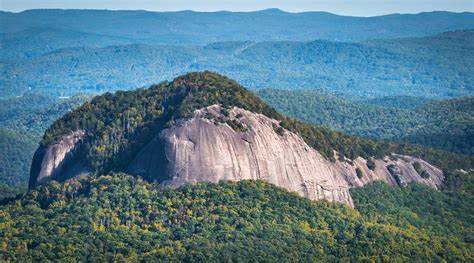
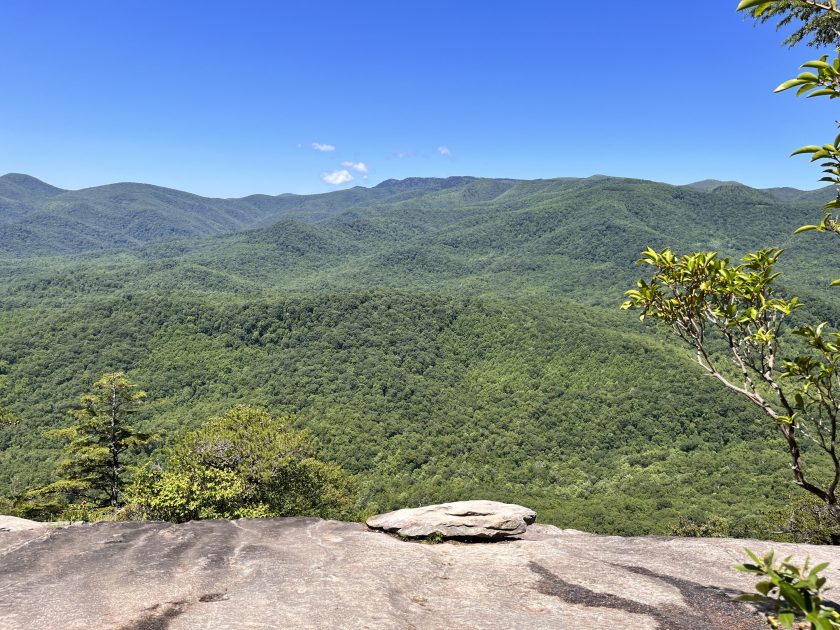
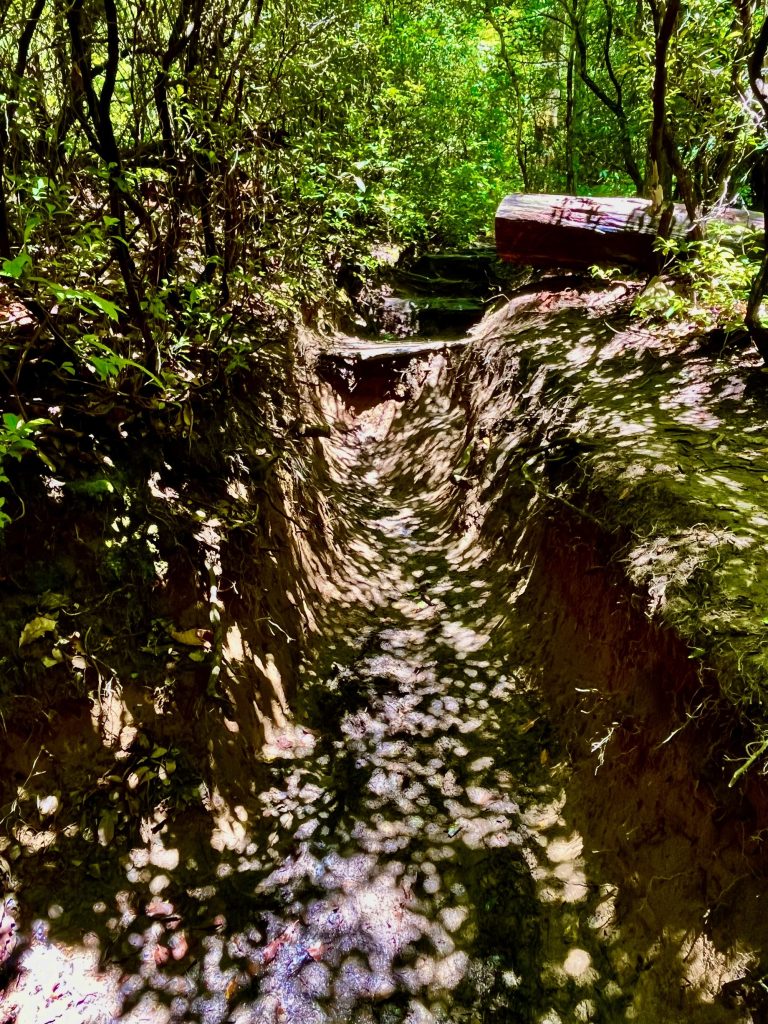
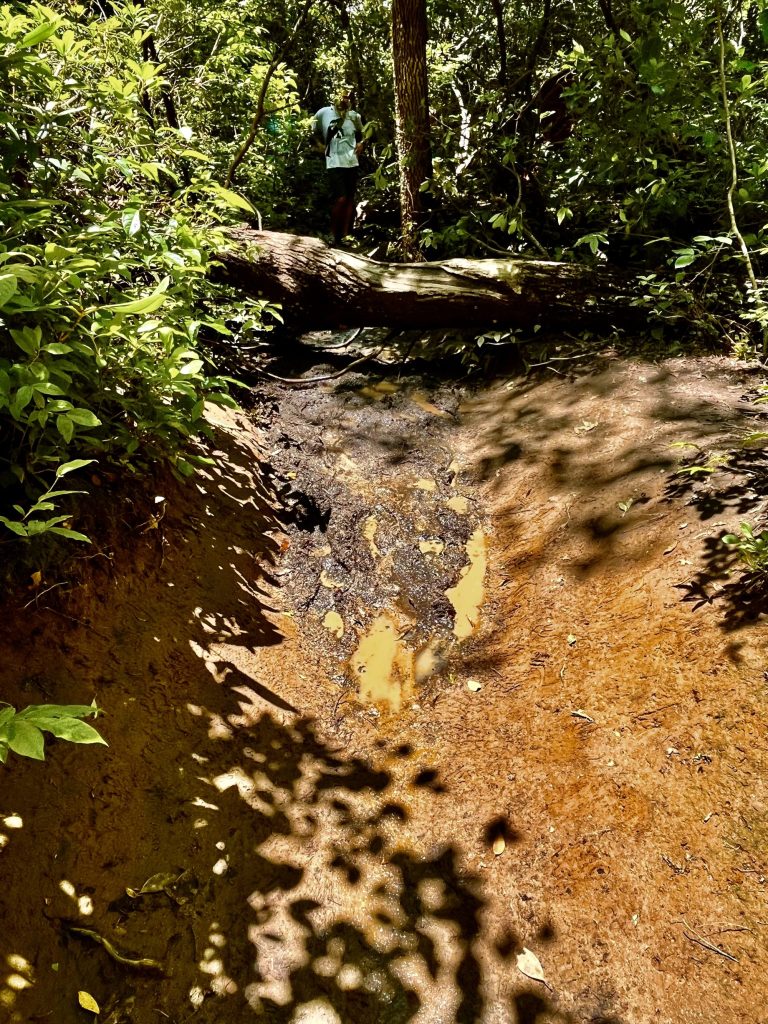
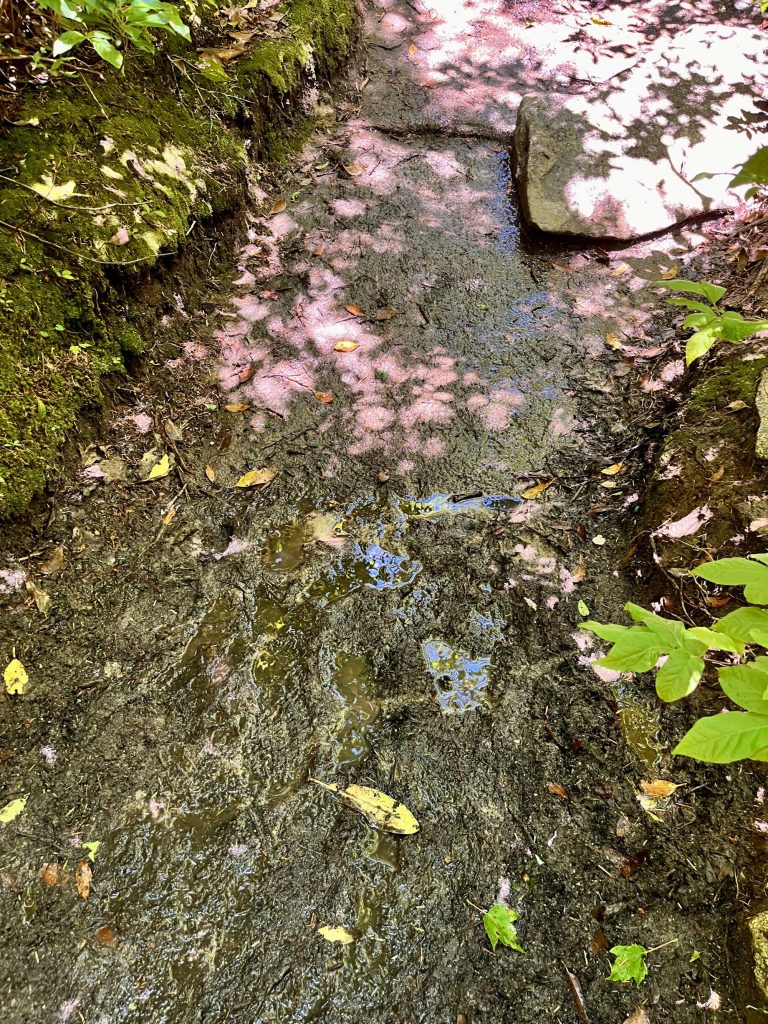
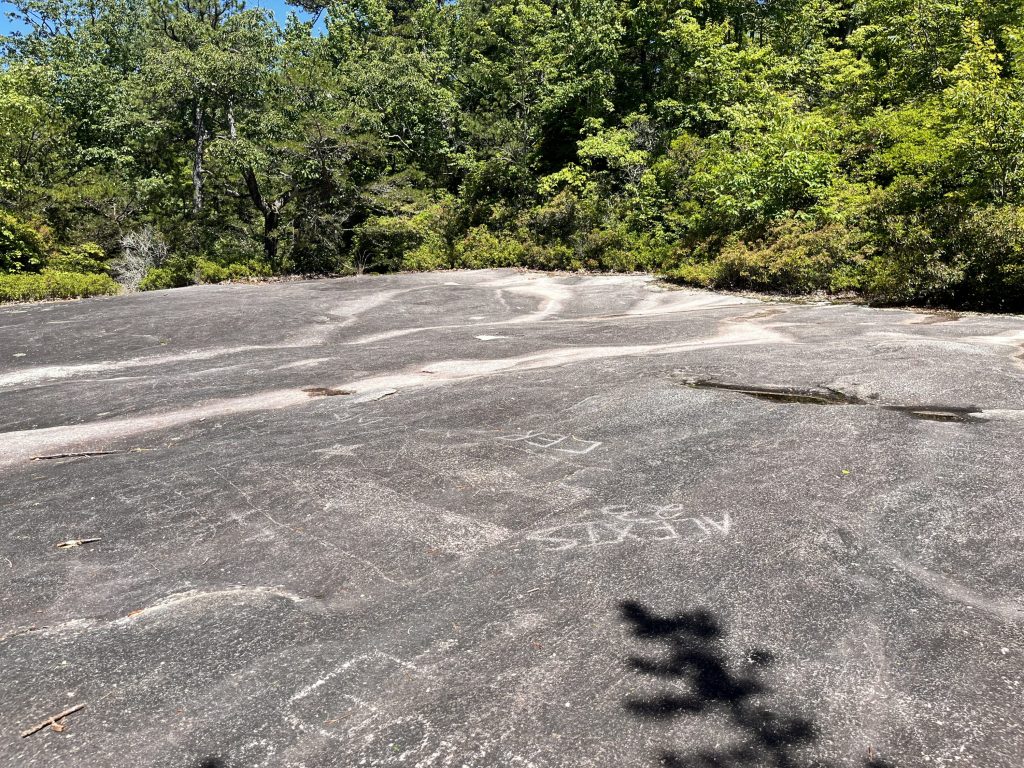
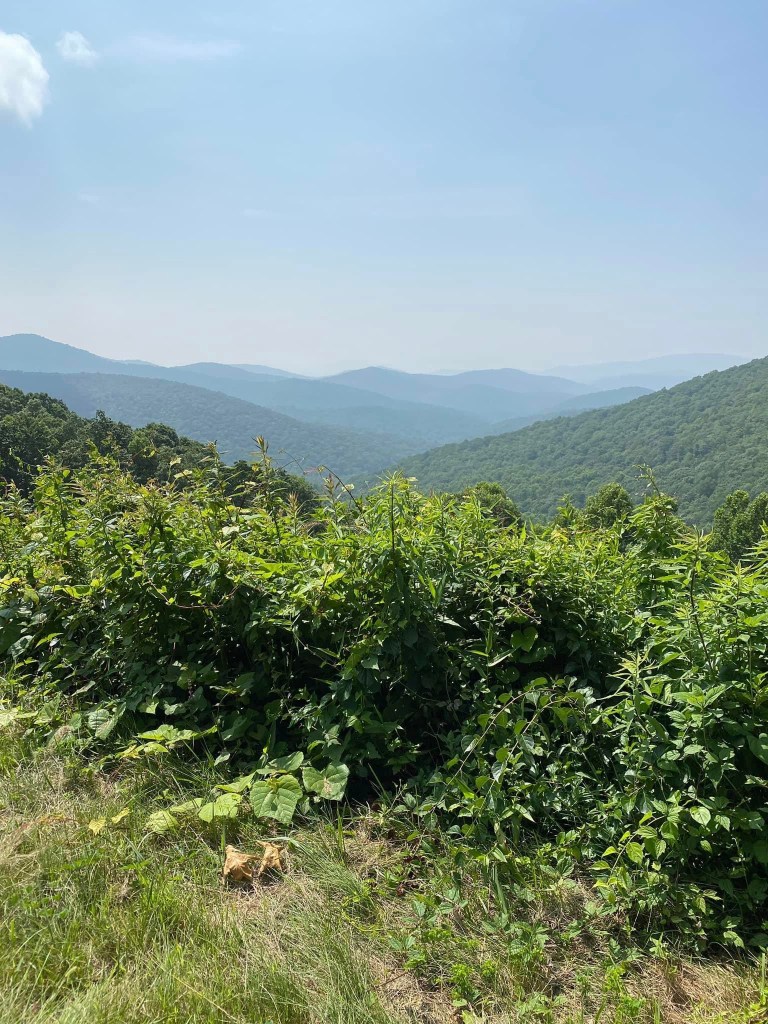
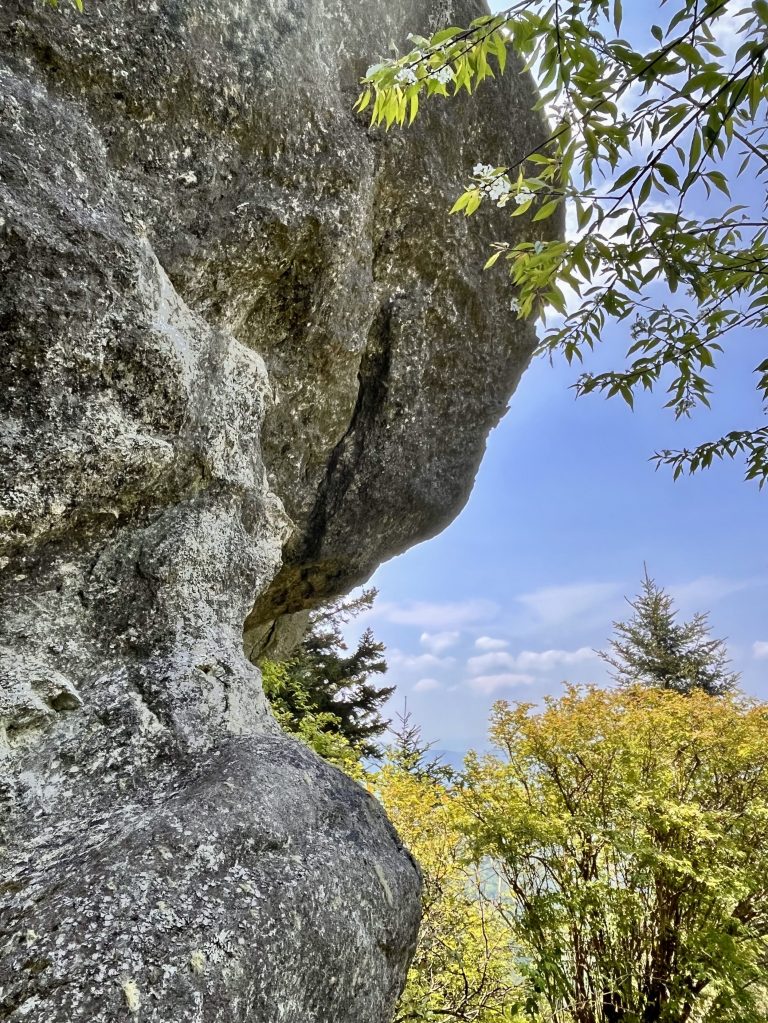
This week the weather was great, and the week started with a trek up the backside of Looking Glass Rock. It is an iconic monolith in the mountains of Pisgah National Forest. The trail starts at the bottom of the mountain and ends at the top of the precipitous cliff. The roundtrip journey was 6.18 miles and 1,713 ft. of elevation gain. I decided to use my new daypack and add things I thought I might pack in it on the Kilimanjaro climb. It was heavier than I thought it was going to be and I had to slow my usual pace down as I got out of breath much quicker. I wished I had started conditioning with the heavier pack sooner but still managed the trip in 3 hours and 20 minutes. The trail had sections that were very steep with large steps and big roots. Some of the trail had deep trenches that were very muddy. On the way to the top of the sheer rock face, we passed a large, rather flat rock place where helicopters land for rescue or recovery missions as over the years, many adventurers have plunged to their death from the cliff. Due to the rain of the previous night and the gentle breeze, the atmosphere was very clear and the views from the top of the face were absolutely stunning. No picture or video can ever duplicate what the breathtaking in-person experience provides.
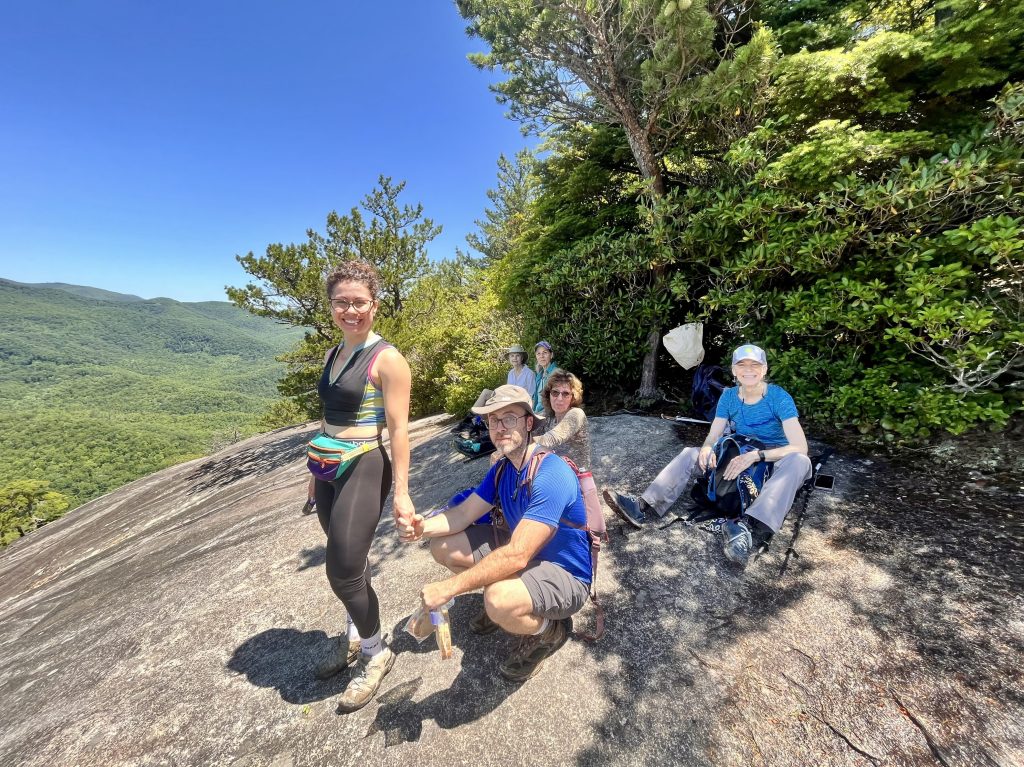
Shadow art in the trail trenchSo much mudmore mudHelicopter landingKatie, Daniel Kristi,Debbie and Debi
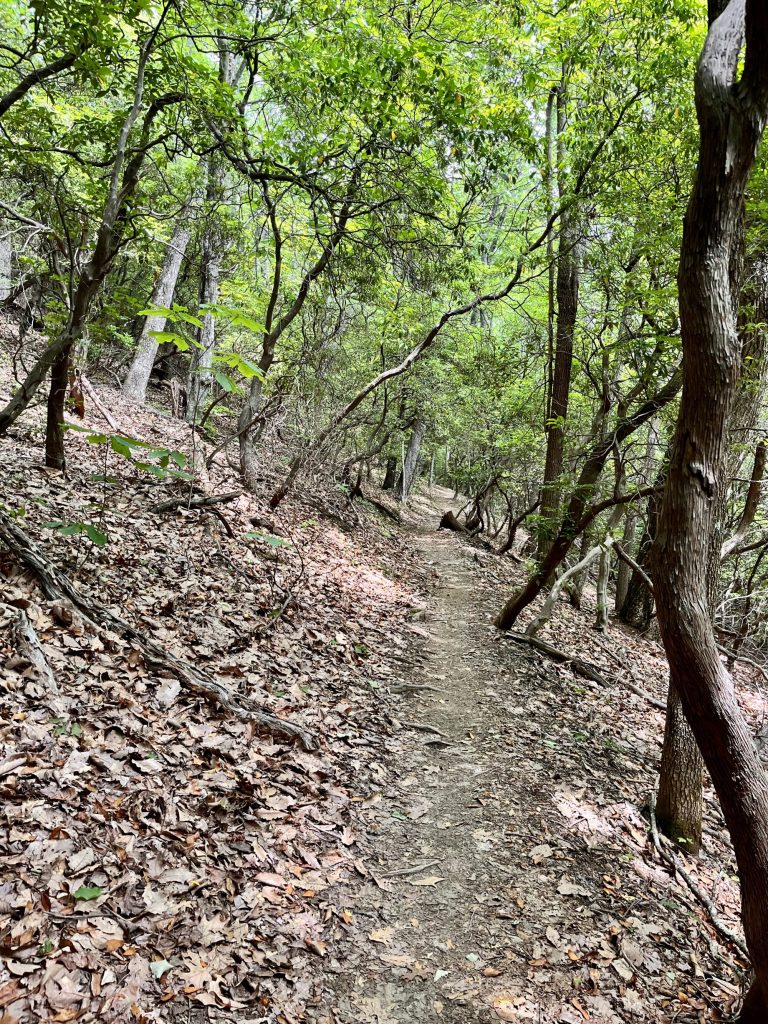
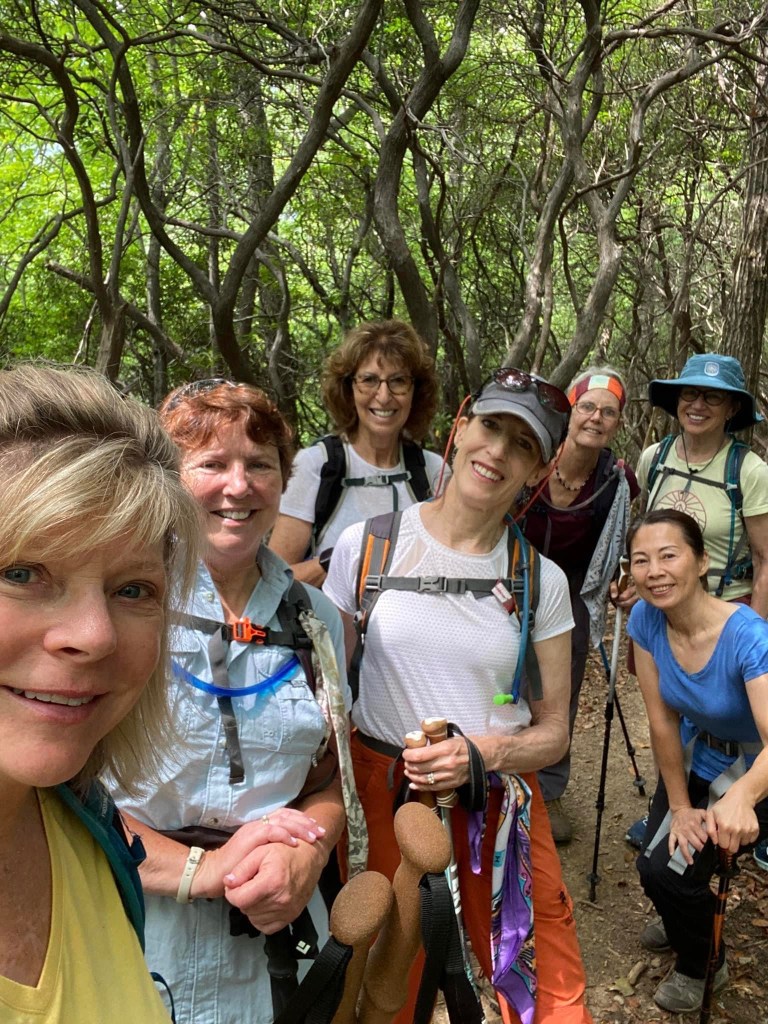
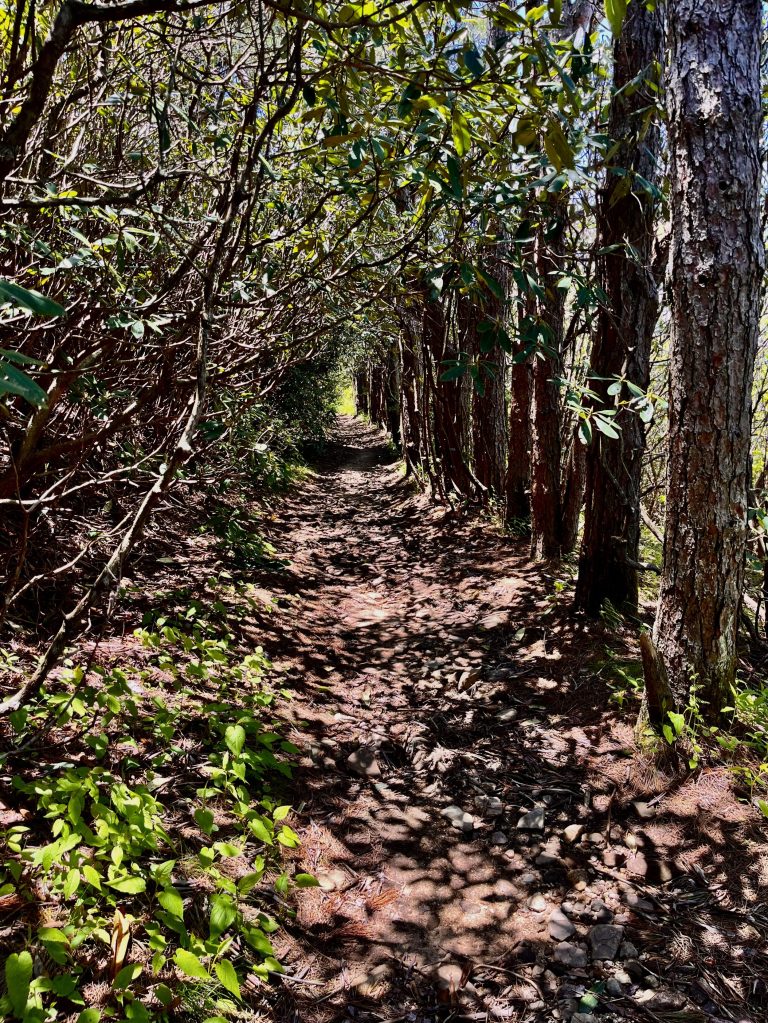
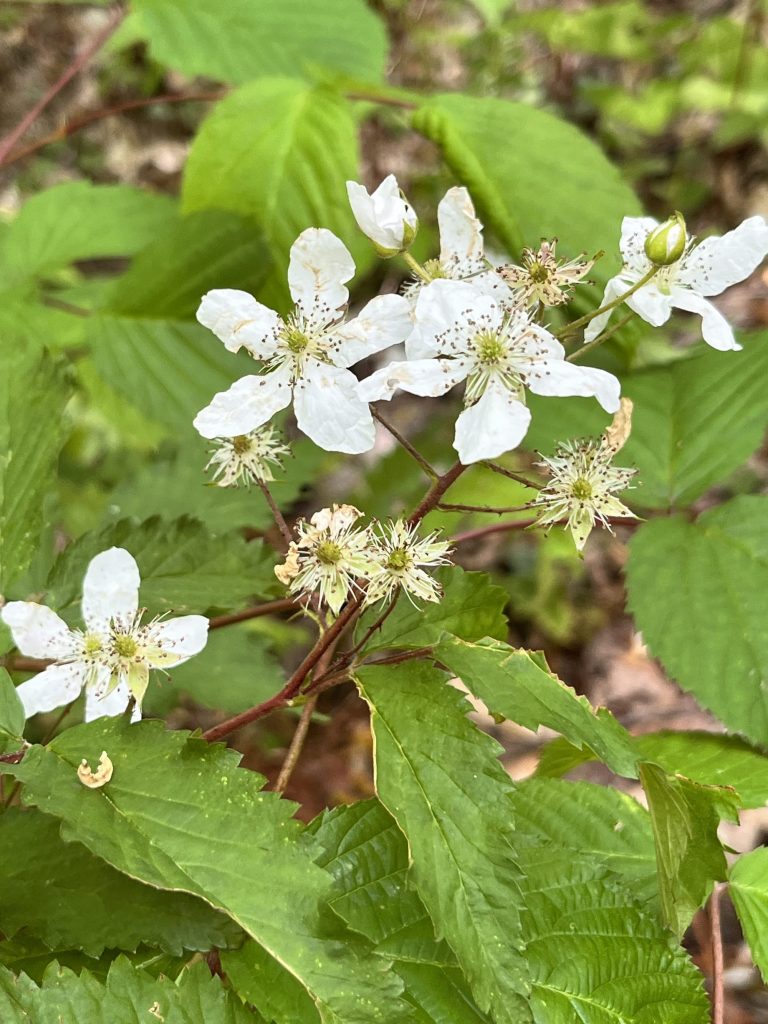
The second hike had to be adapted due to an air quality alert due to particulate matter in the air at elevations above 4000 ft. This apparently was due to wildfires in Canada. It is amazing that what is happening thousands of miles away in Canada can affect our air in North Carolina. It is a reminder of how connected we all are on this planet and how everything we do has an affect not only to us but to others near and far away. We chose to do a section of the Mountain to Sea Trail that would have a good amount of elevation gain and allow us to take a second trail to make a loop back to our cars. The terrain was the typical rocky, shady, root laden, path with multiple varieties of foliage complete with a few rhododendron tunnels we often hike through. With the trees fully leafed out, the views were mostly obscured but the flowers along the trail added beauty and interest. The group of women who hiked with me were delightful. We spent time along the way getting to know each other better and bonding over the amazing stories of the lives we have all lived. While the path of each person has been unique, we were united in embracing our differences and gaining new perspectives on life. We completed the 6.25 miles and 1200 ft. elevation gain in 3 hours of moving time. This time, I did better with the new daypack but hope to get even better before I take it on to the trek to the top of Kilimanjaro.
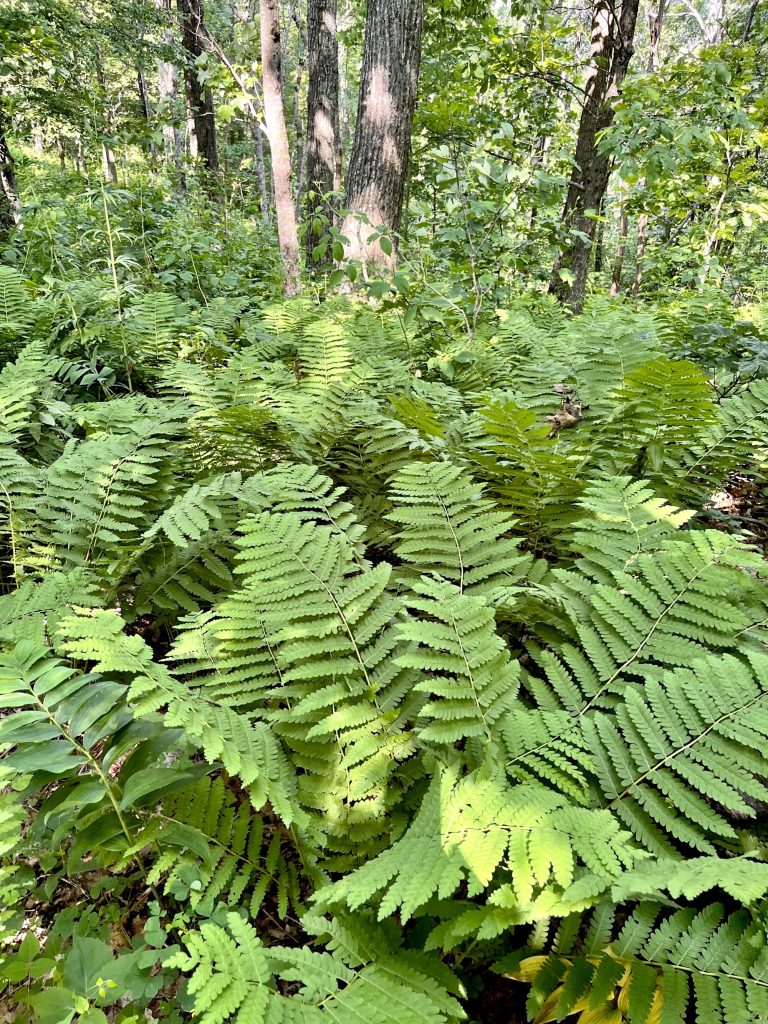
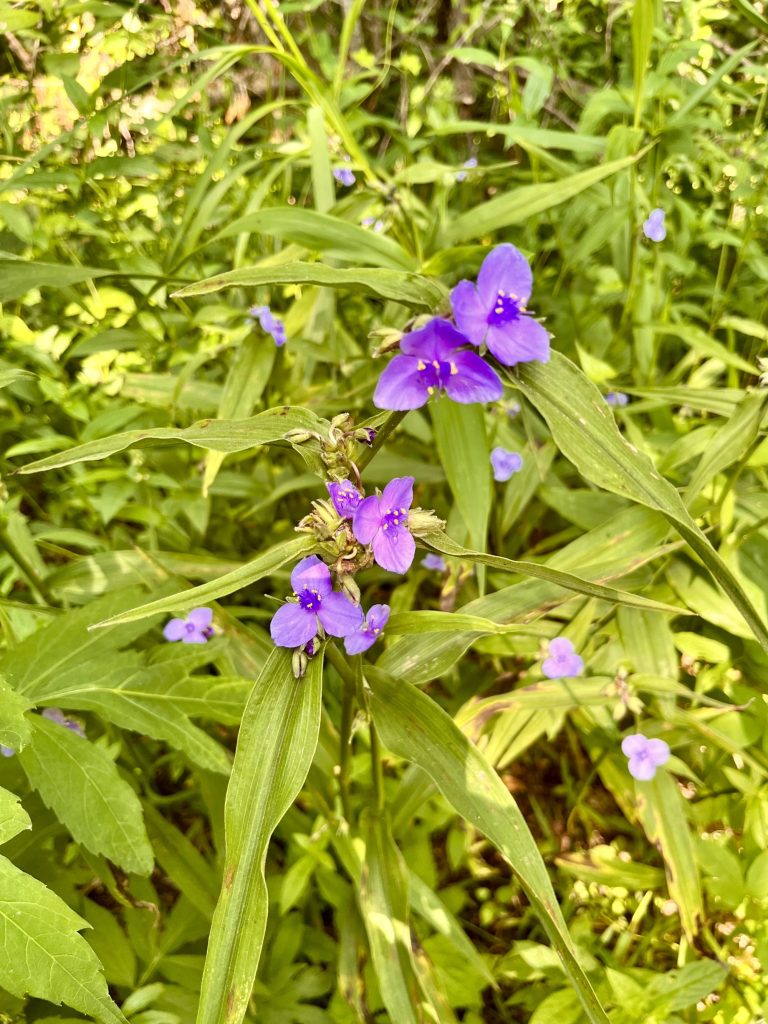
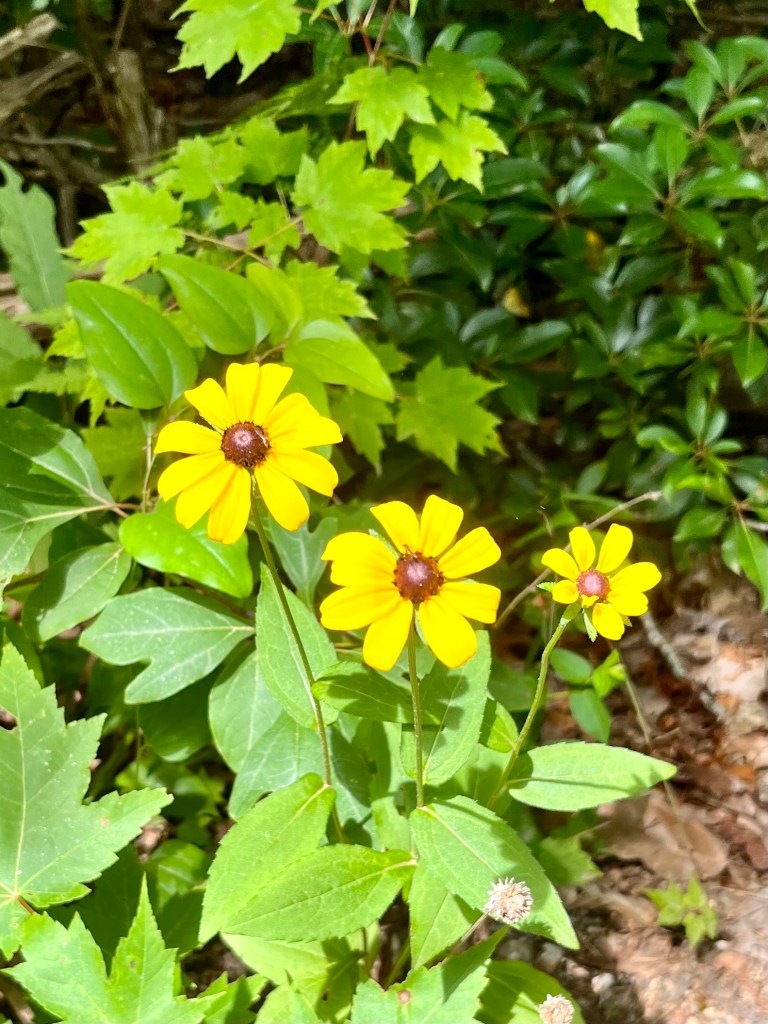
Lots of fernsSpiderwortBlackeyed susanLaura, Linda, Debbie, Susan, me, Kim, and Barbara
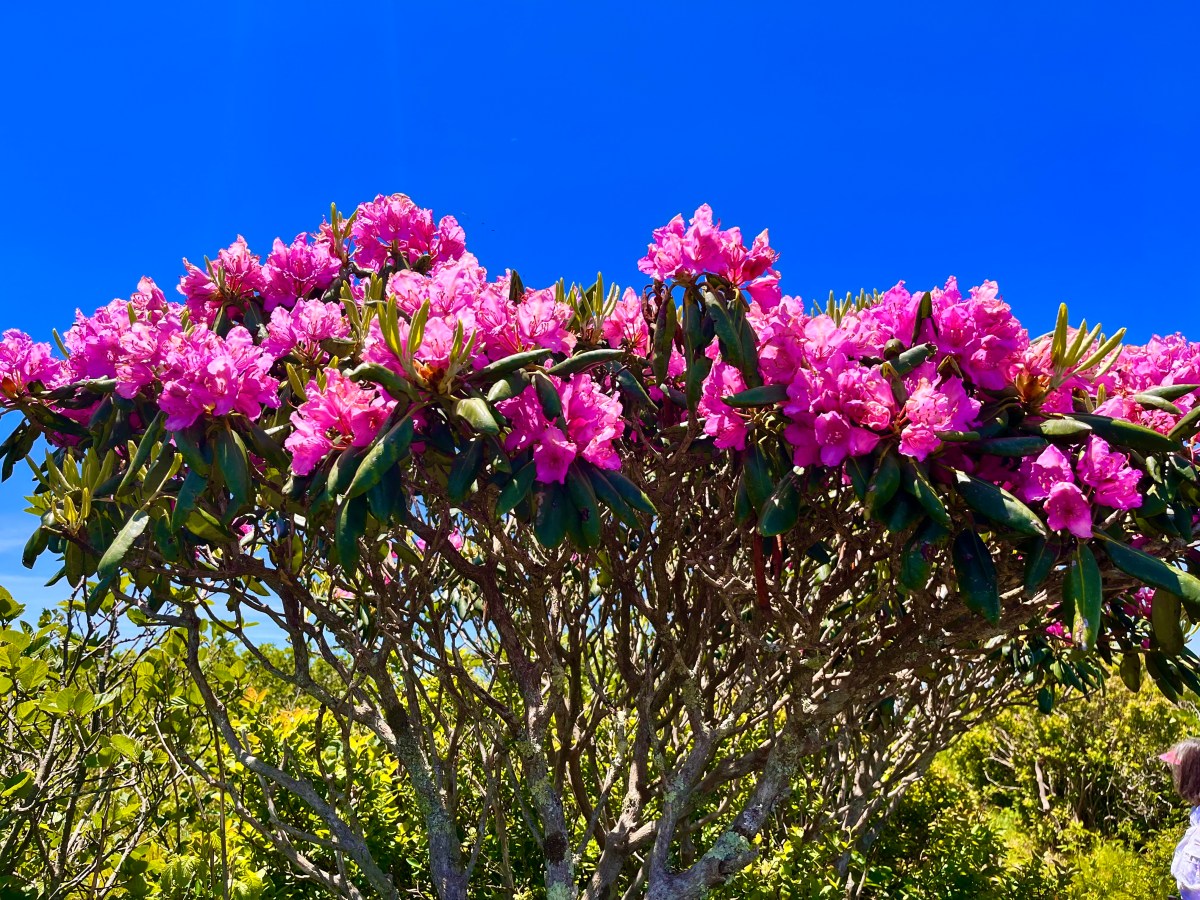
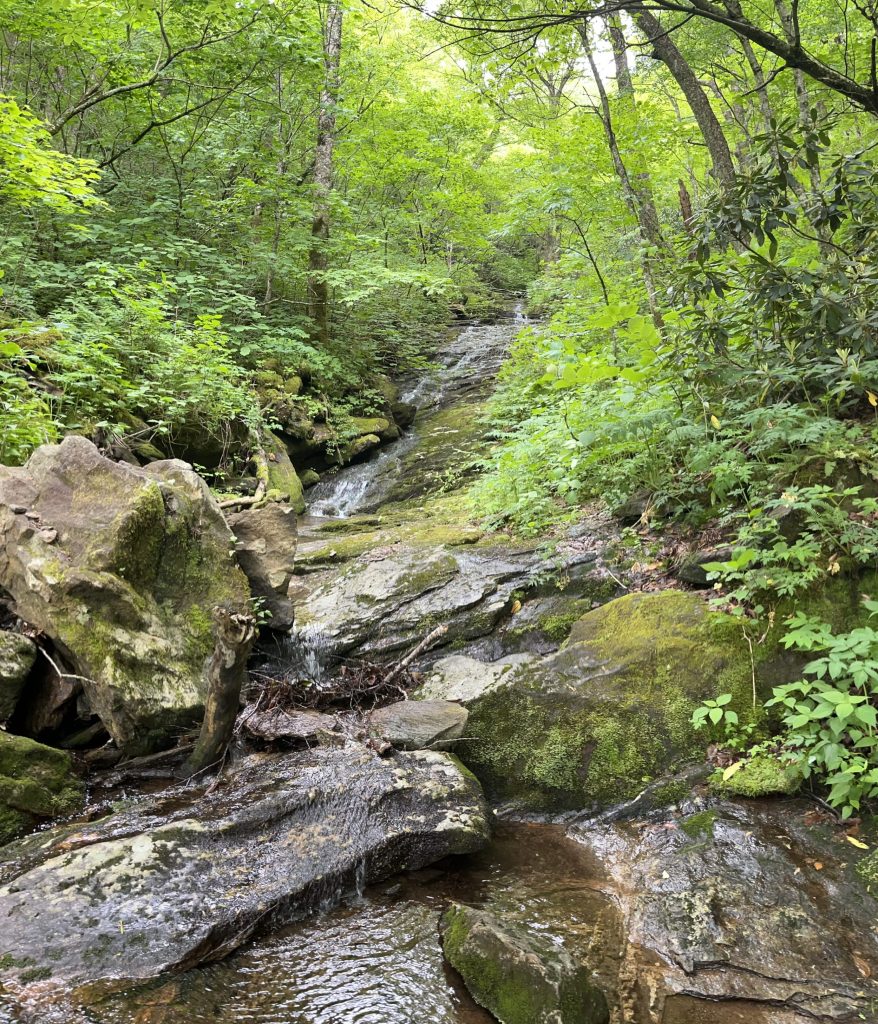
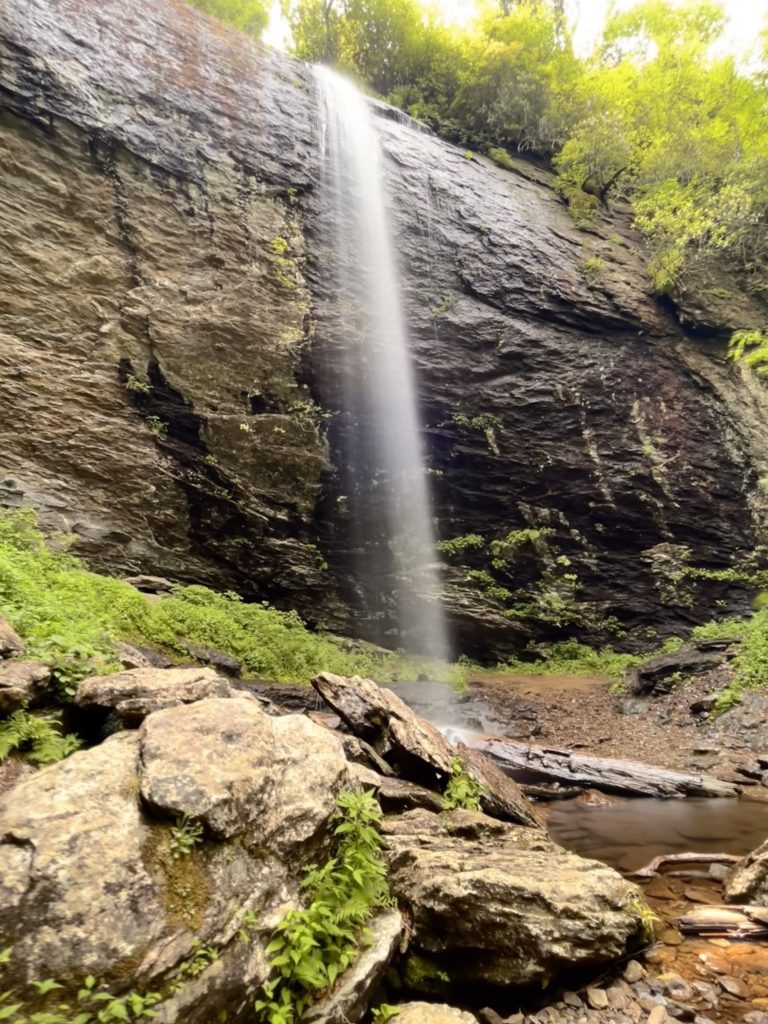
This post will cover my last three conditioning hikes. The first one was to Douglas Falls not far from Craggy Gardens off the Blue Ridge Parkway, well known for the gorgeous deep pink Catawba Rhododendrons. The 8.3-mile hike with 1,679 ft. elevation gain traversed through the densest, tropical rain forest type flora I have hiked through on any of my mountain hikes. The trail was very narrow on a steep bank for much of the distance. At times, the soft soil gave way as I stepped on the edge of the trail and there were numerous slippery rocks causing me to fall at least three times. They were easy spills so fortunately, no damage was done to my body or gear. We crossed over several small streams and one long, cascading trail of water that would have been lovely if we could have found a good place to see it from top to bottom. Douglas Falls is a straight 70-foot plunge of water onto rocks below. It is not a big, dramatic falls but worth the hike to see it, nonetheless. After taking a break in the basin of the falls, we headed back up the four-mile ascent. It was a tiring day but the beauty and invigoration were wonderful.
Douglas Falls
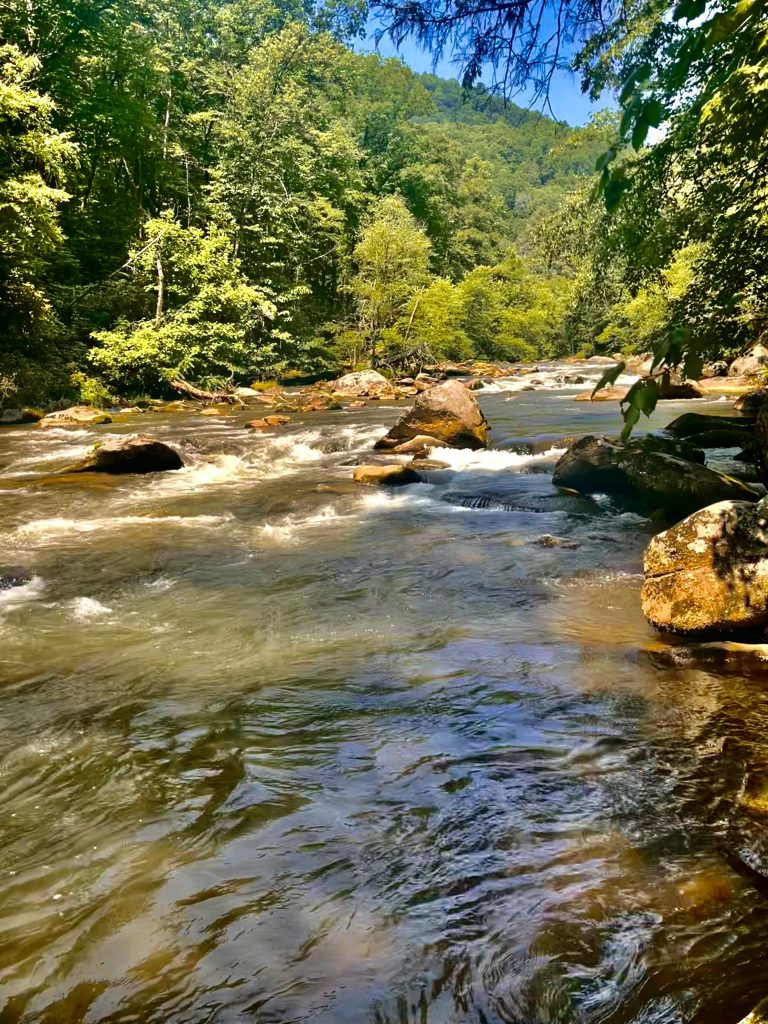
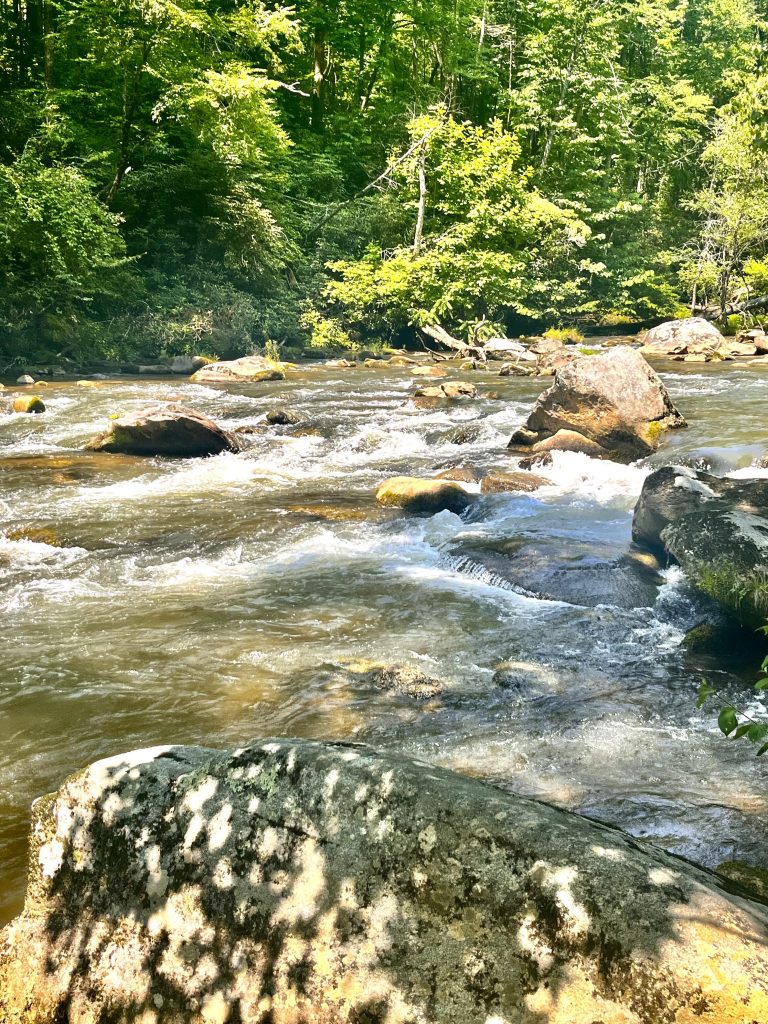
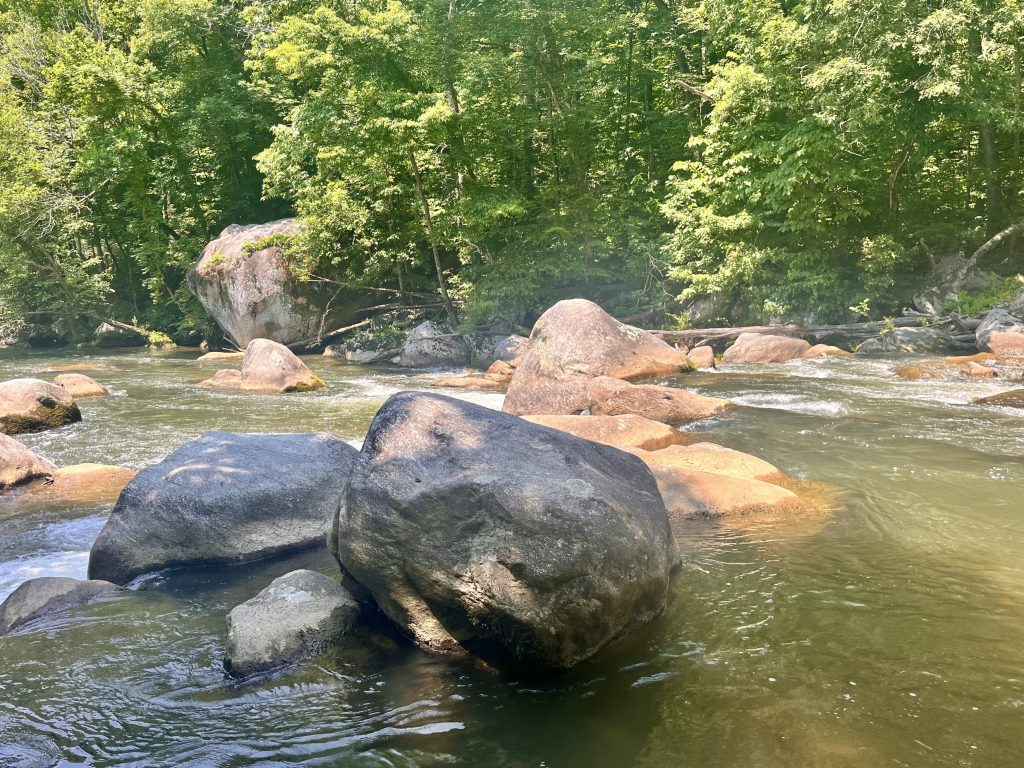
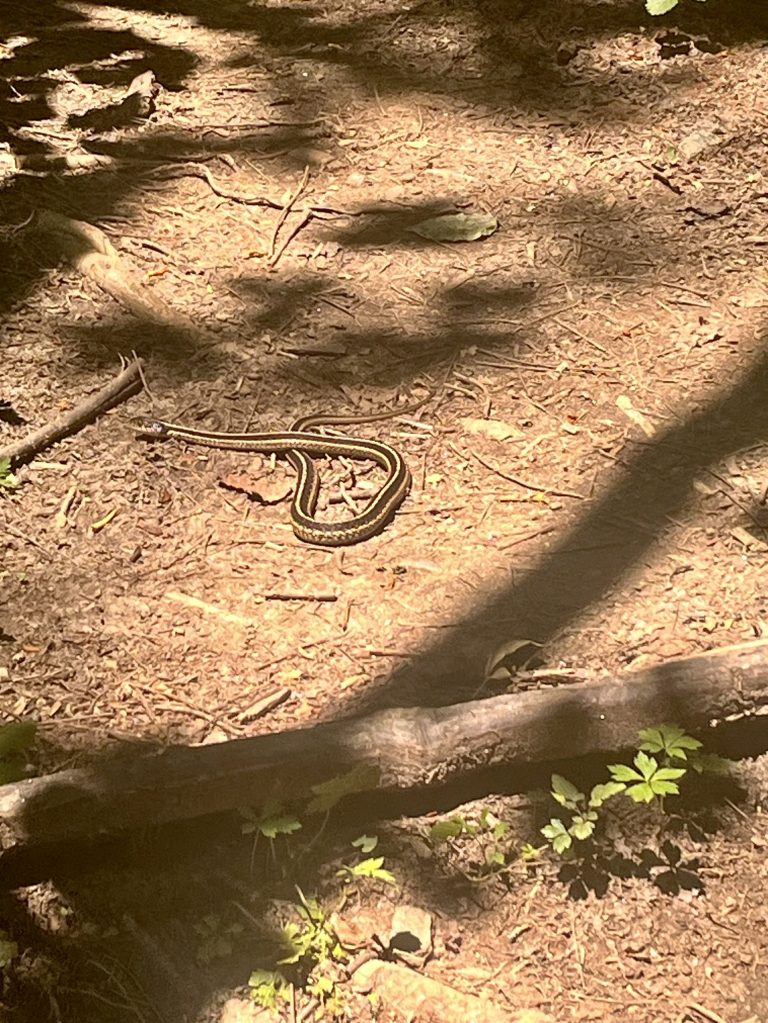
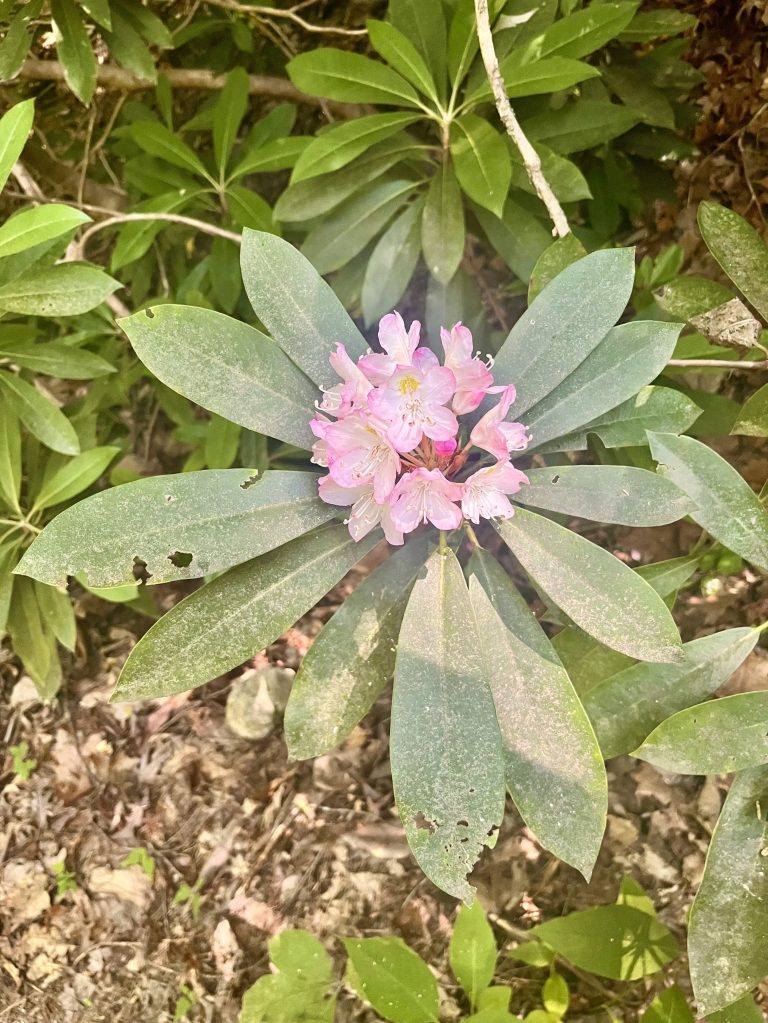
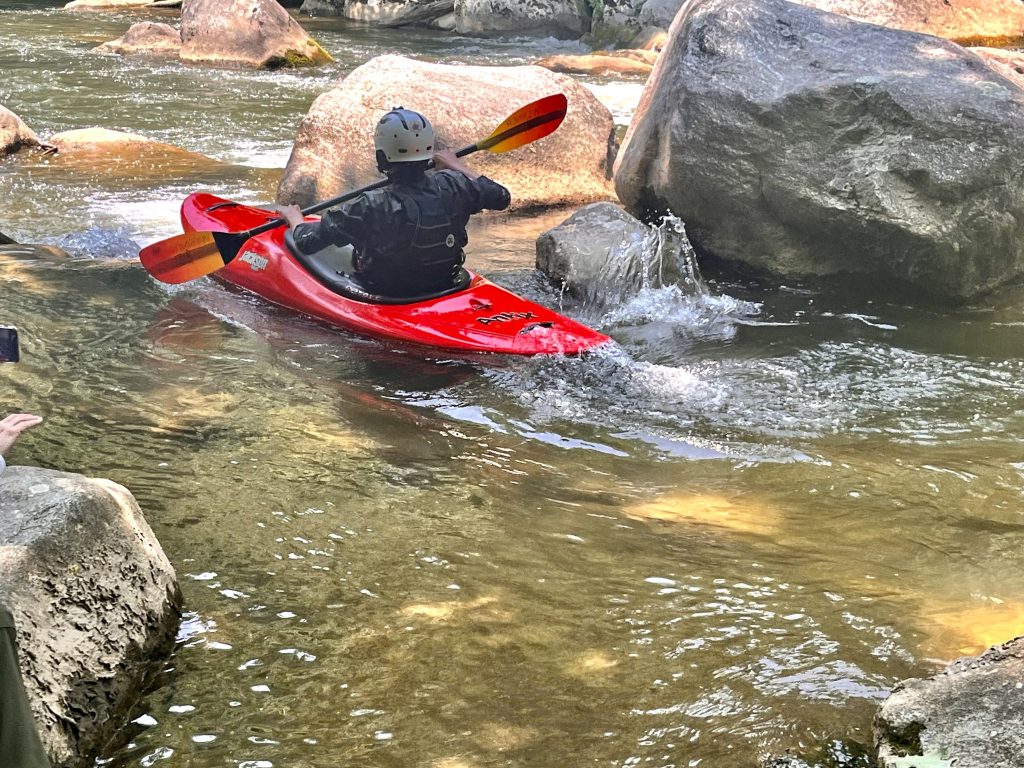
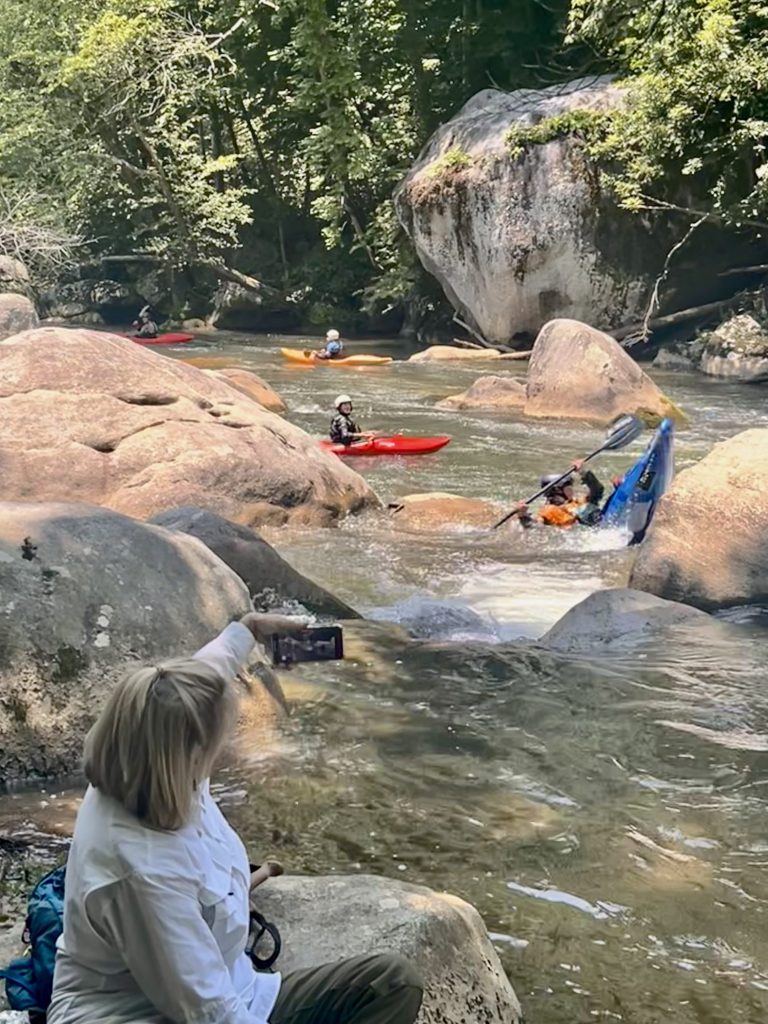
The second hike was along the Green River in the Green River Gamelands near Saluda, NC. The 8 mile and 1200 ft. elevation gain round trip trail followed the river for most of the trek. There were pretty flowers blooming along the way but lots of poison ivy too. I am happy to say that none of the hikers reported getting any reaction to it. We also had two snake sightings, one a water snake and the other a garter snake. Our turnaround point was right on the river just a little way downstream from the famed Narrows known to all serious kayakers in the area. I chose to sit on a large boulder right on the edge of the water a little distance from the others. I had a good view of a section of the water that rushed through a cluster of boulders. I am drawn to the sights and sounds of moving water, especially water that creates a dynamic force as I find it is calming and soothing. Yet just a little way upstream in the Narrows, these same waters claimed the life of the 19-year-old son of a friend and colleague of mine in a tragic kayaking accident. As I sat in silence to remember my friend’s son, I was taken with the uncertainty of life and life’s circumstances. I felt grateful for the years I have lived and once again determined to make the years remaining to be vibrant ones. I want to go places, see sights, feel the cool mist of waterfalls, and hear their roar in places I have not traveled, taste foods that bring comfort and pleasure and remember the scents I once smelled. I want to inspire others to do the same. And if possible I want to share these experiences with those I love and care about as life is better and easier when shared with others.
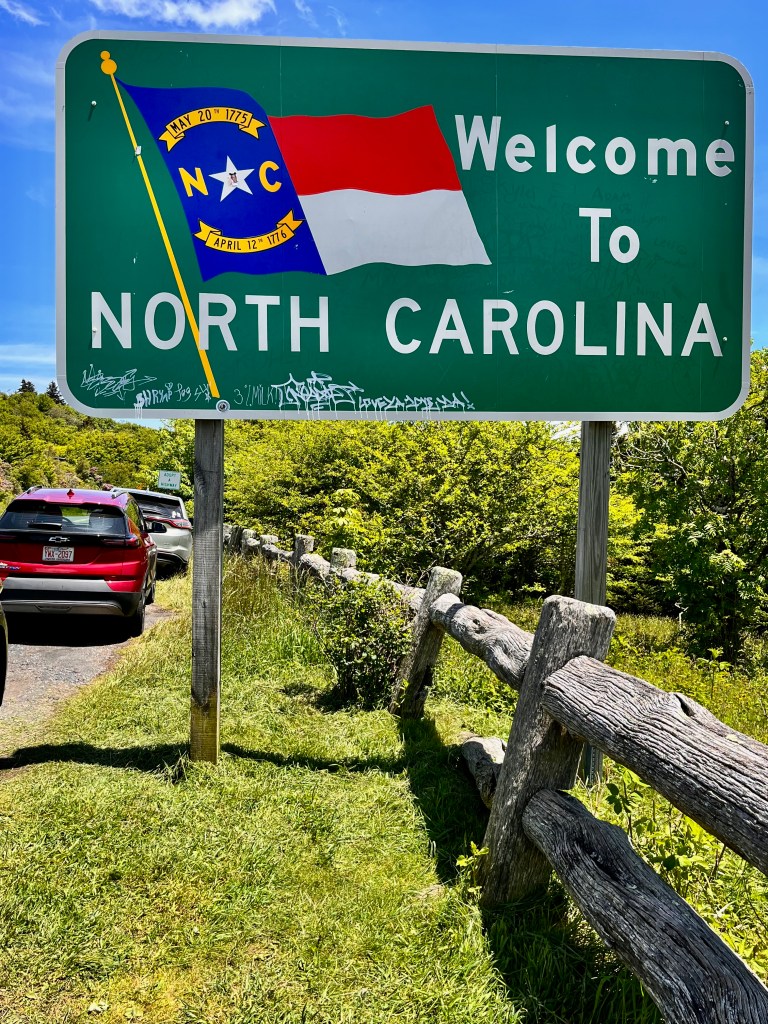
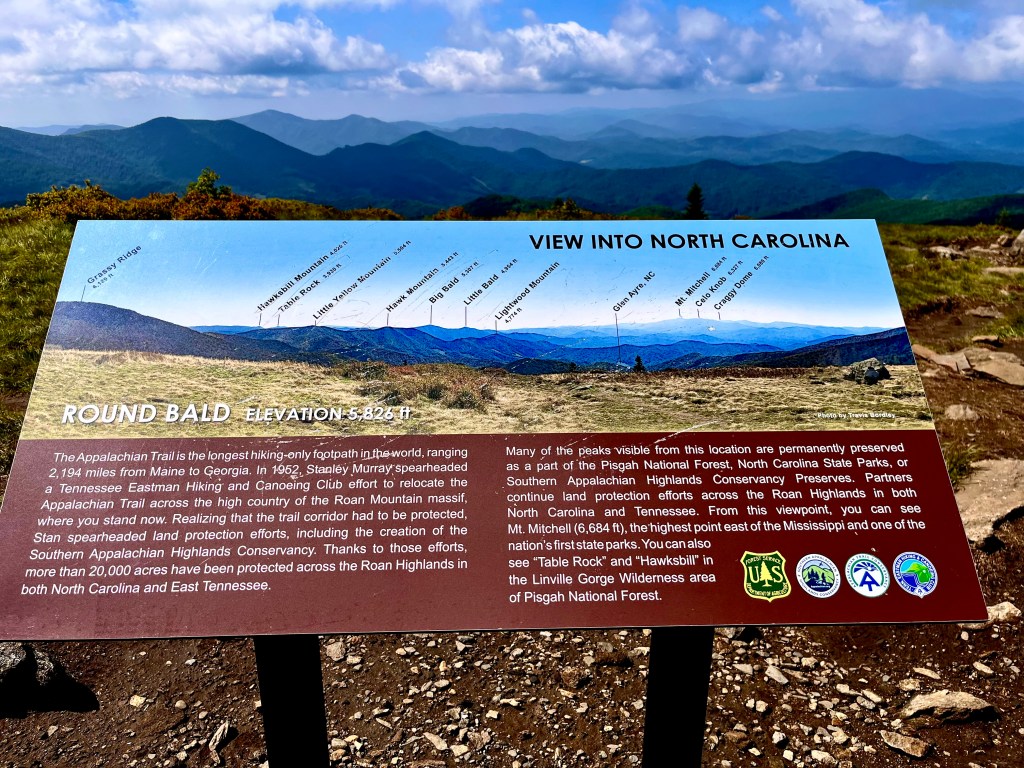
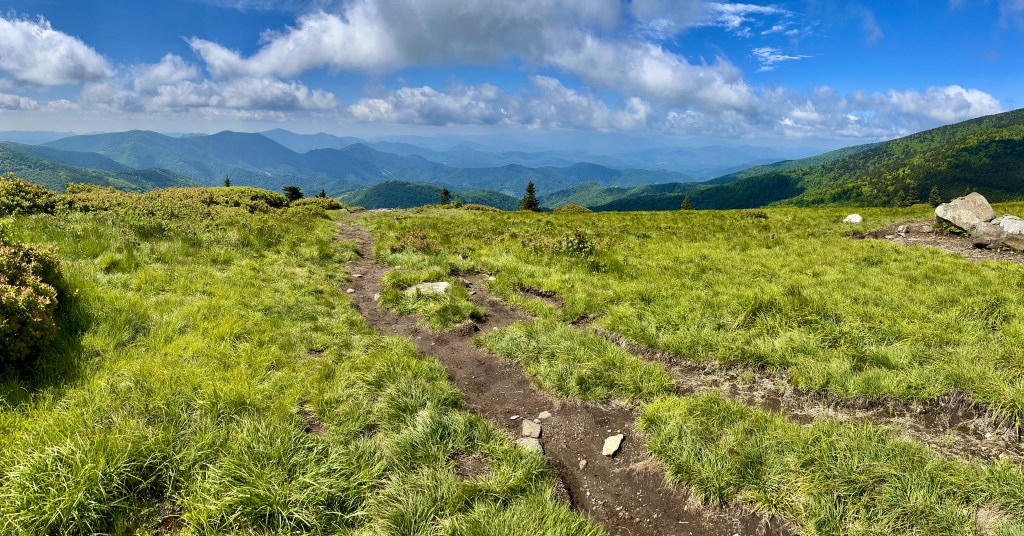
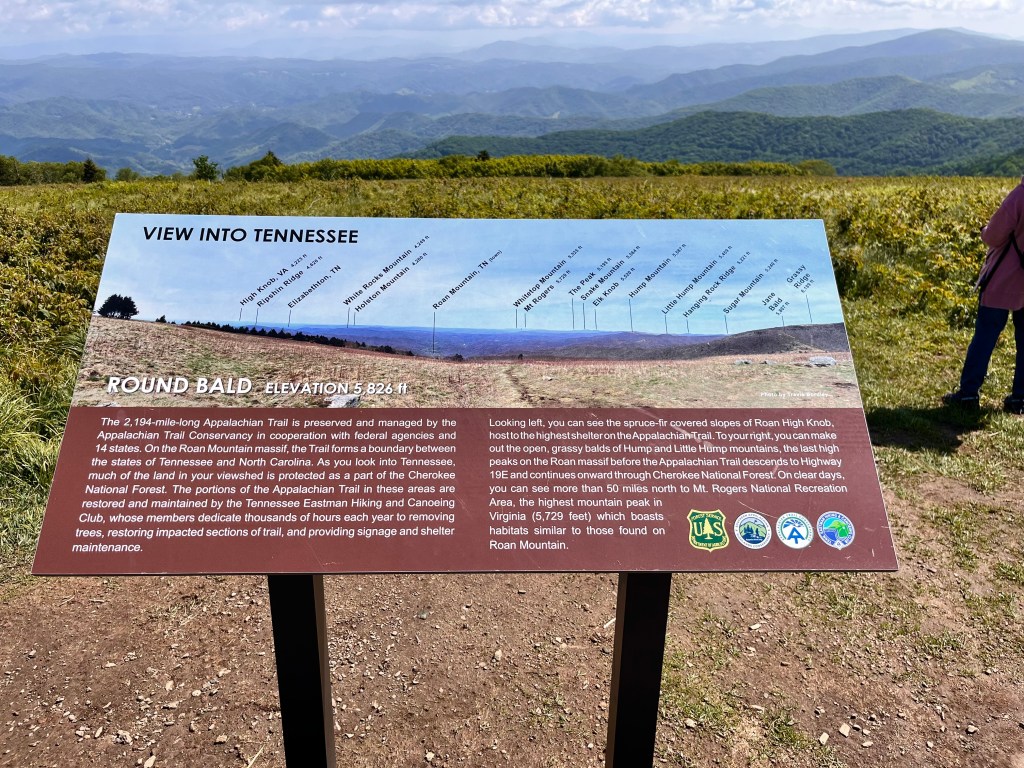
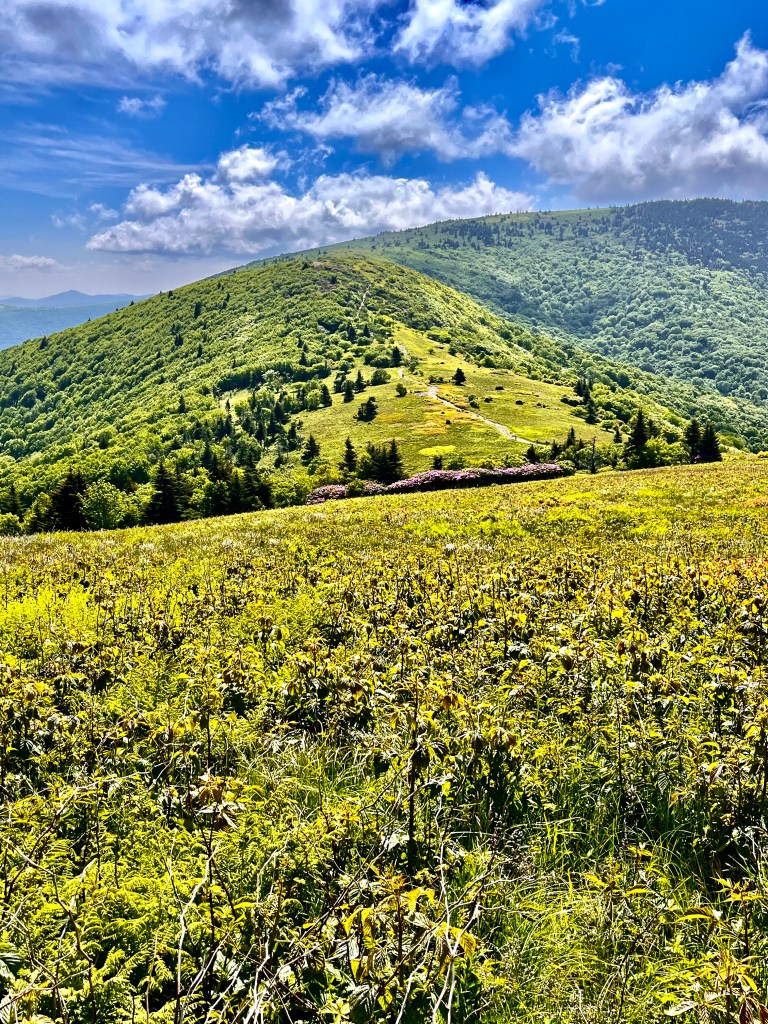
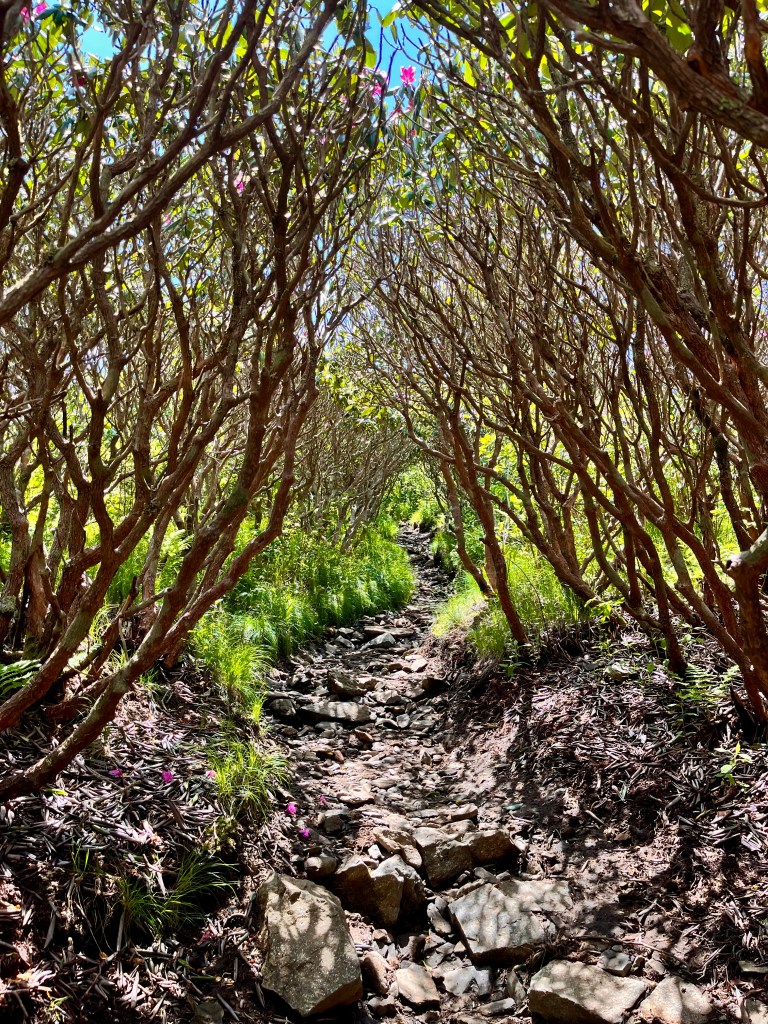
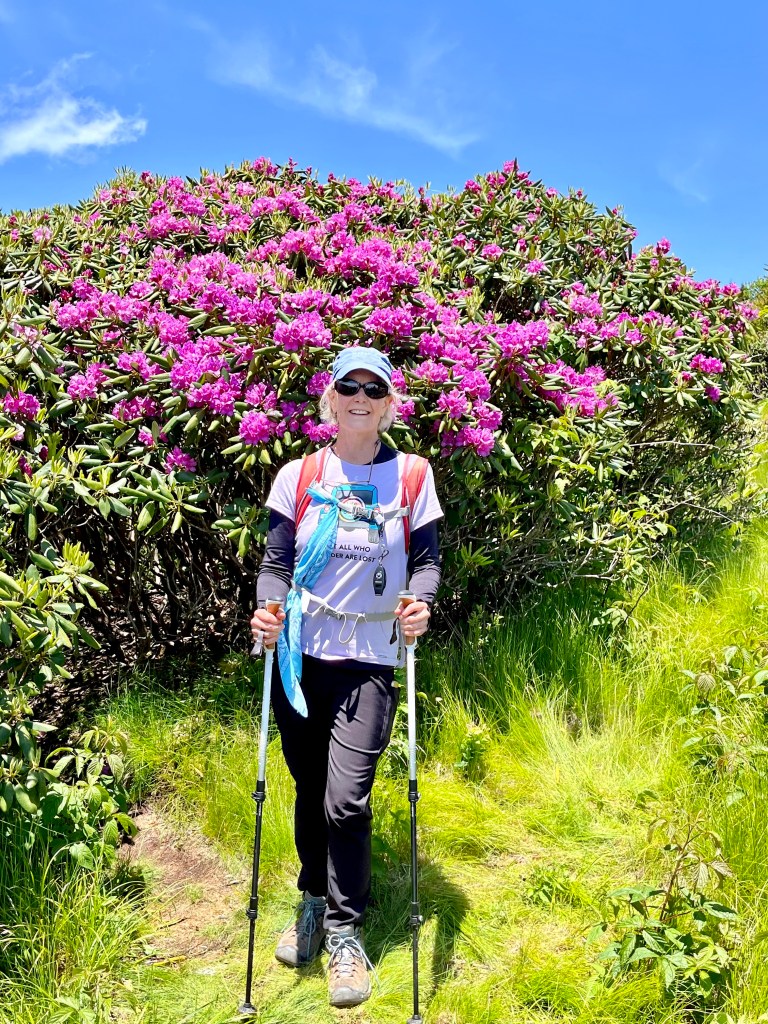
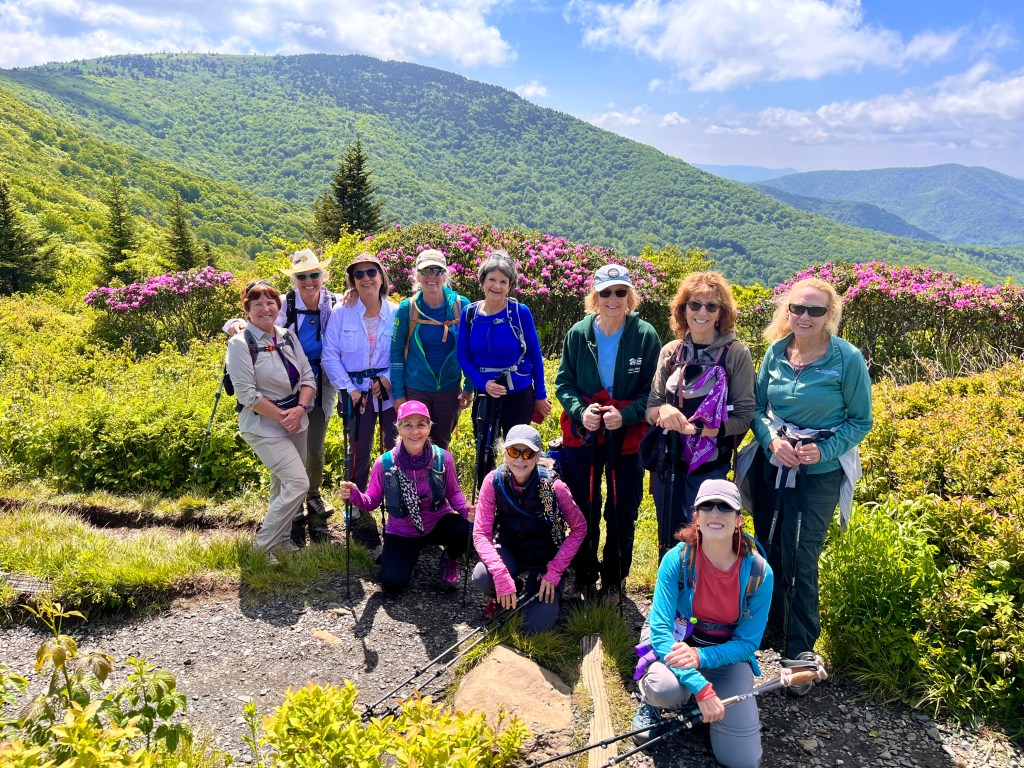
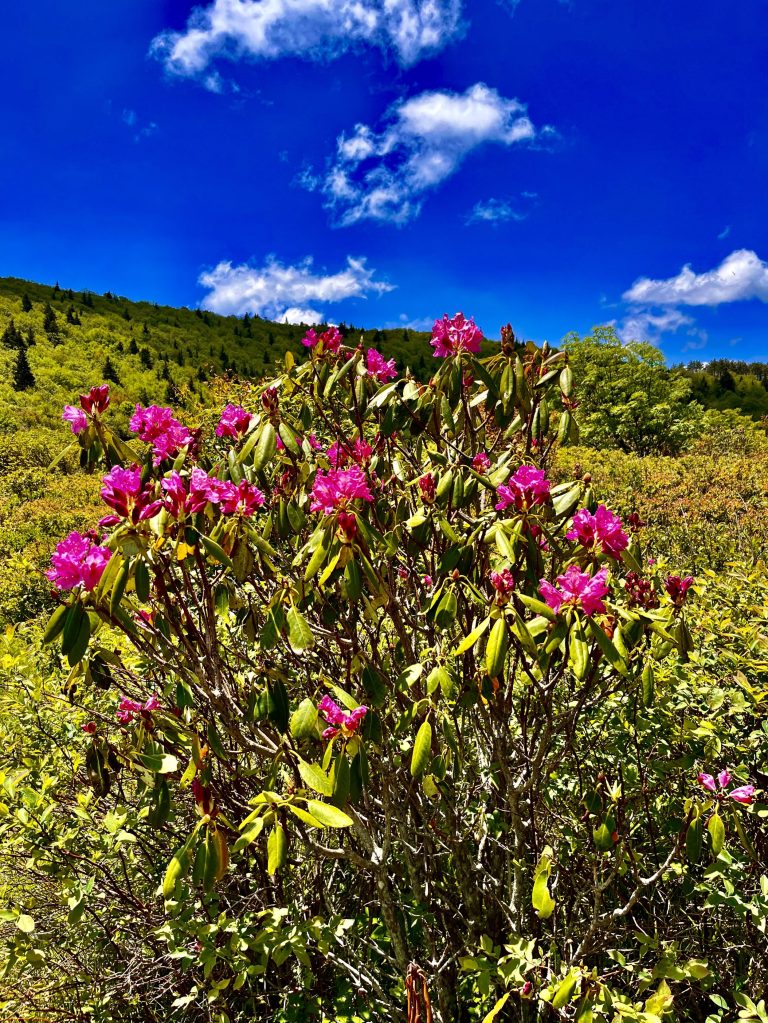
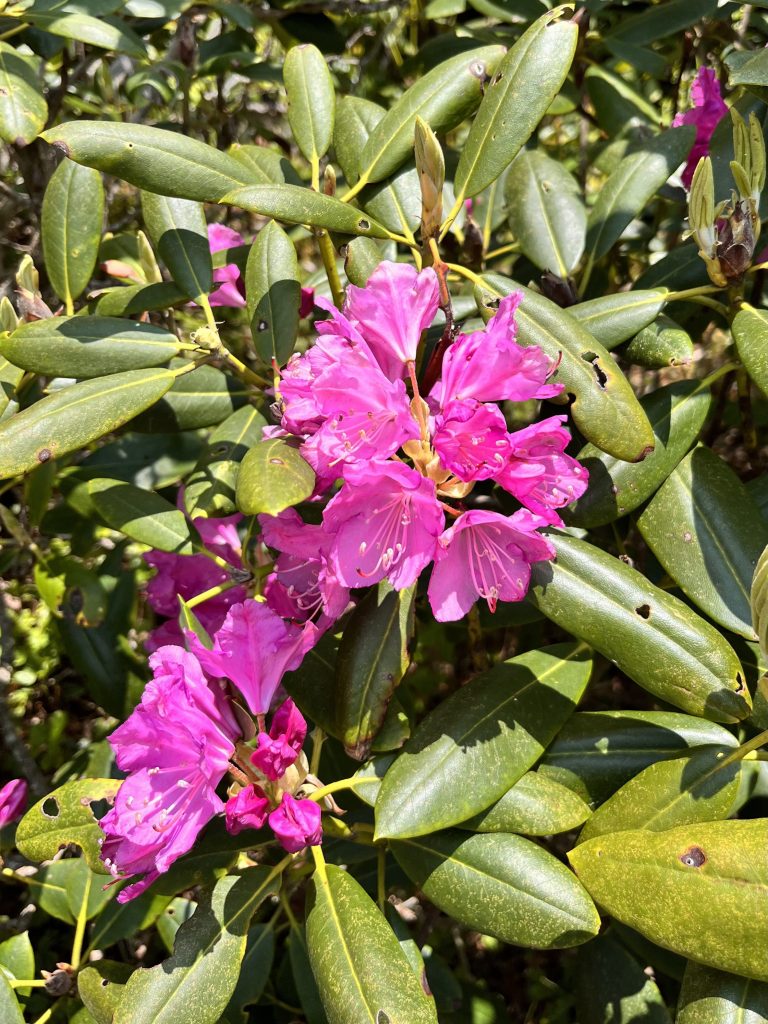
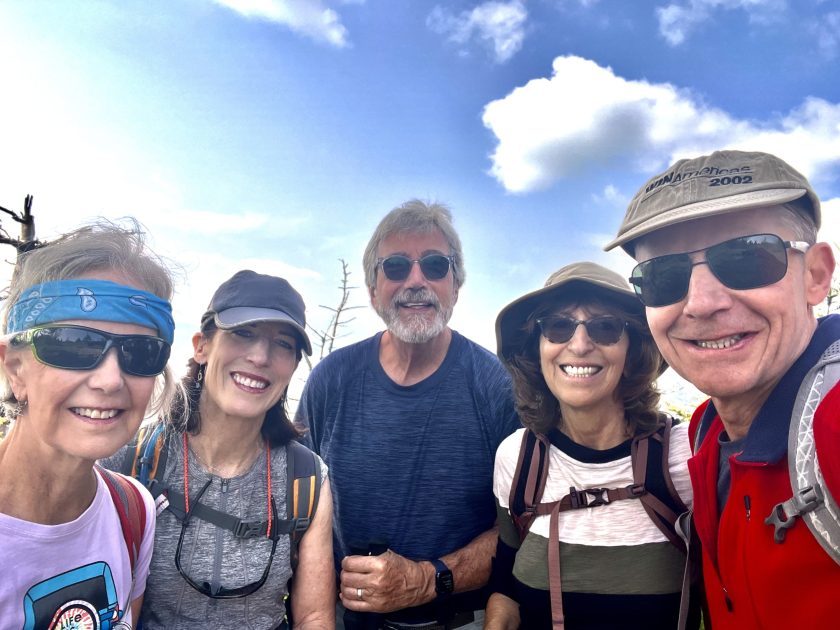
The third hike was on a part of the Appalachian Trail at a point where it crosses the North Carolina and Tennessee state line. We started at Carvers Gap and trekked to Round Bald, Jane Bald, Roan Mountain, and reached our turnaround point at Grassy Ridge Bald at 6,165 ft. elevation. Most of the trail was in the open sunshine traveling from one treeless bald to another. There was, however, a section of the trail that went through a dense evergreen forest that was dark and damp and there were a few rhododendron tunnels on the ascents to the balds. We were treated to the glory of the blooming rhododendrons that decorated the trail, mountainside, and meadows. It was hard to keep a good pace as the photo ops were abundant. The group engaged in fun conversation as we took in the grand views of the mountain ridgelines in every direction looking into North Carolina on one side and into Tennessee on the other side. The bright blue sky gave a striking background to the deep pink blossoms and the cool breeze made for a near perfect day of trekking in this grand world. As we neared the end of our hike, we stopped to chat with a local artist capturing the splendor on his canvas. As I thought back on the day, I was struck by the contrast of the dark, damp, almost eerie forest to the bright, sunlit trail full of vibrant color and beauty. While the difference adds interest, I like the sunlit section better than the dark section both on the trail and in life.
The women who hiked with me and members of my hiking group.
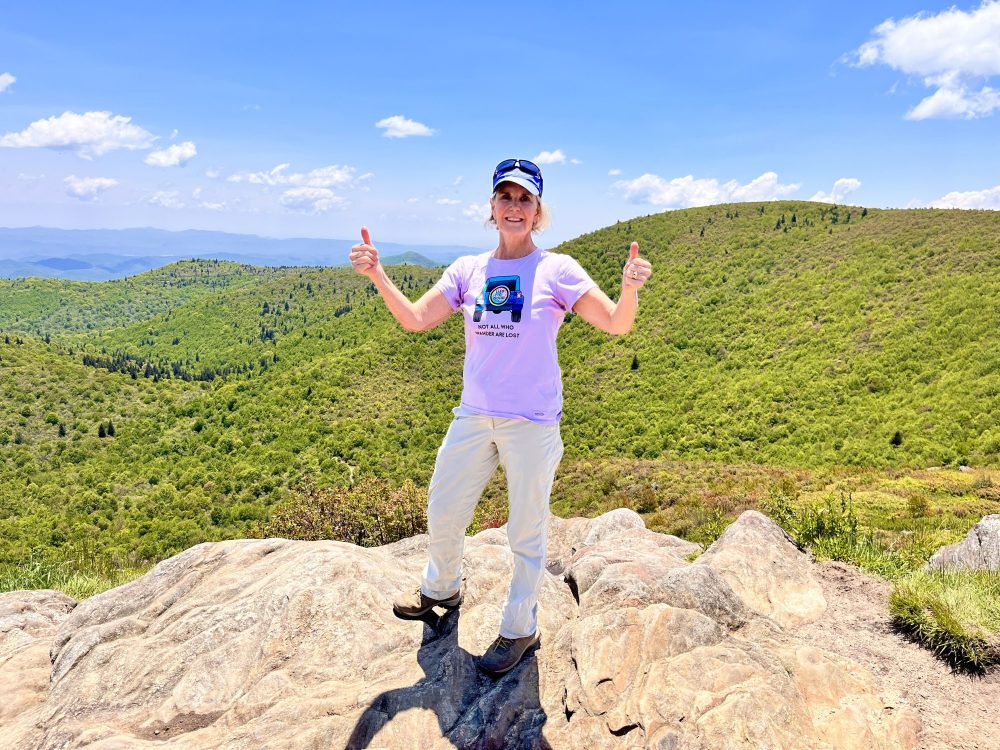
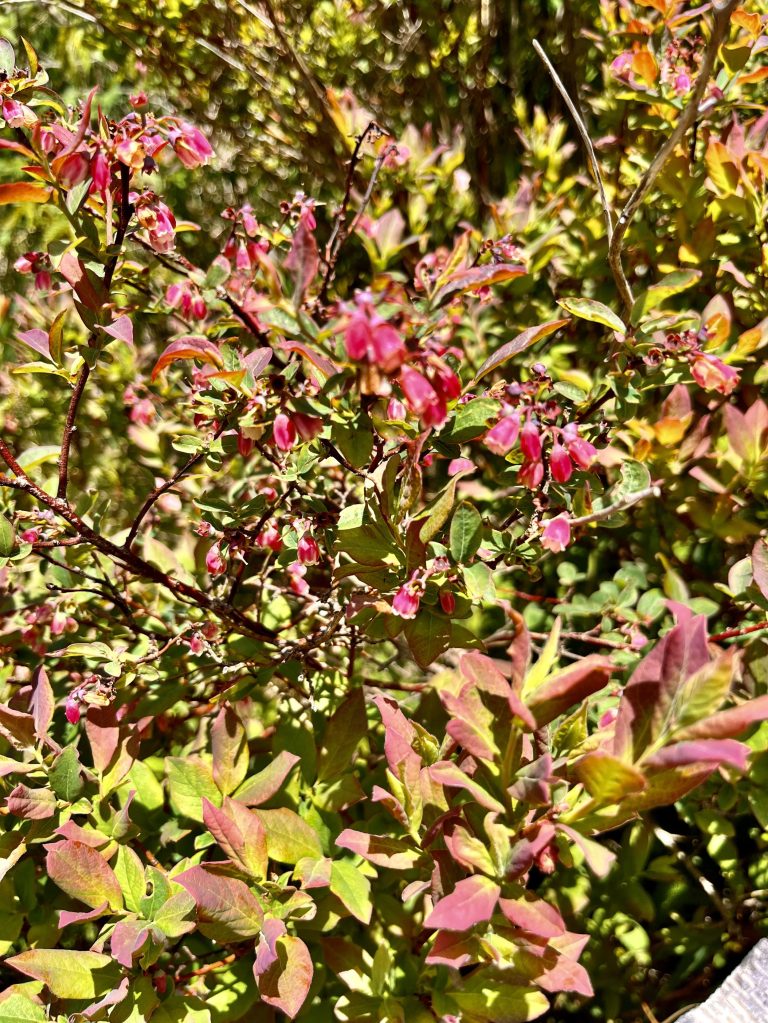
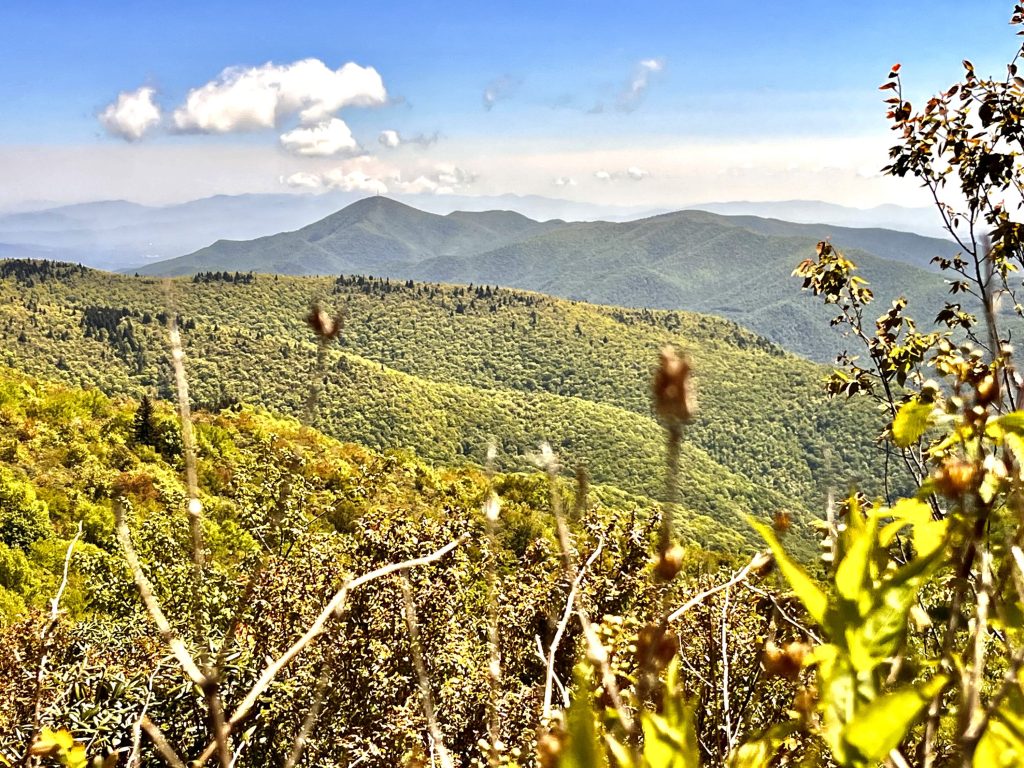
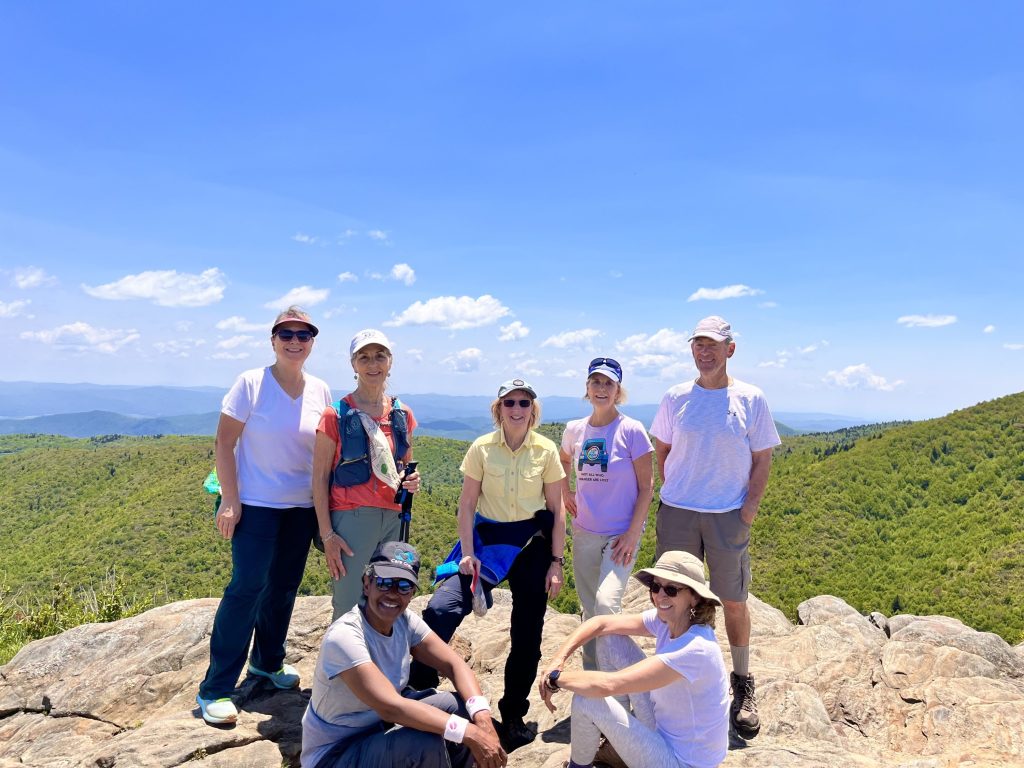
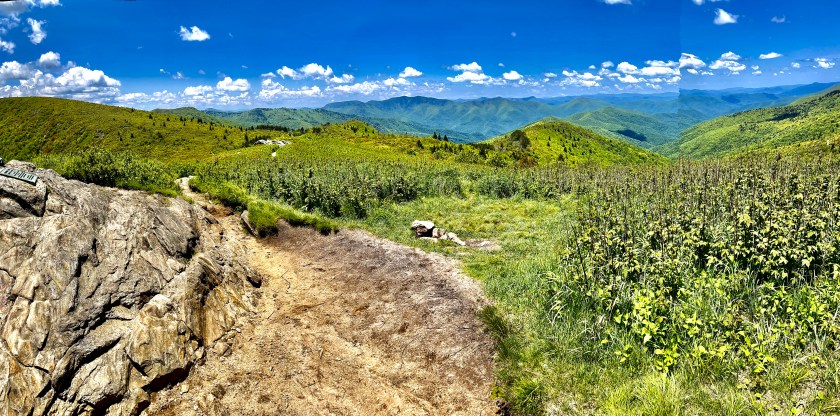
This conditioning hike was on a very popular trail a short distance off the Blue Ridge Parkway at Black Balsam Mountain. It started at an elevation of 5,650 ft. and we reached our highest point atop Tennet Mountain at 6,057 ft. Our loop started on a very rocky road that was wet and muddy almost like we were wading a shallow mountain stream. Then we left the roadway to ascend Grassy Cove Top. The trail was in full sun exposure for most of the way and the trail was like a trench that had been cut into the side of the mountain. The whole landscape was a sea of blueberry bushes with the blossoms still on the branches. There weren’t many places on the trail affording a view but the flowers in the underbrush and the occasional giant evergreens on the way were interesting. We retraced our way back to the road and took another trenchlike trail up to the peak of Tennet Mountain. This trail was also exposed to the sun but had waypoints along the trail with glorious views of the valleys and mountains beyond. At the peak there were sweeping 360-degree views of the majesty before us. It is impossible to capture the experience with a two-dimensional picture that one experiences in person. We took our time taking in the grandeur, eating our snacks, taking pictures, and chatting with other hikers also beholding the beauty. We descended off the peak and opted to forgo Black Balsam Peak but instead cut through to the road we entered on and headed back to our cars. I know that there are those who think our 6,000 ft. mountains are only rolling hills, but I challenge anyone to follow me on one of my treks up to the top of these peaks and look out to the valleys and ridgelines and then make their judgement. For me, the peaks of the mountains of western North Carolina will always be mountains that I love to wander upon.
Trench like trail to Grassy Cove TopBleuberry bloomsMt. Pisgah in the distanceCatawba RhododendronsJulie, Debi, Marguerite, Diane, me, Debbie, Rich
My week started with a visit to my Movement Disorder Specialist first thing Monday morning. I met with Tyler Southern PA-C at Asheville Neurology. The semi-annual evaluation usually consists of going over my medications, discussing new issues and a brief physical evaluation that has me doing a repetoire of certain tasks like walking down the hall, touching my finger to my nose and so forth. As I completed my “catwalk” for Tyler I balanced on one foot for several seconds. I was hoping for him to offer that my balance was great but had to setttle for his “pretty good” comment. I asked for a prescription of Diamox, a medication often used to treat or prevent altitude sickness and Tyler was happy to fulfill that request.
Next stop was to an optical store to get new prescription glasses both clear and sunglasses. I wanted a place where the staff would take time to consider my needs at high elevations. The higher one goes in altitude, the more damaging the ultraviolet rays from the sun can be to the eyes as well as the skin. My research beforehand led me to The Optical Shoppe which is a family run business, and it did not disappoint. I spoke to Susan Henderson, a Licensed Optician and the Owner of the shop, who was very delightful and even offered a discount when I presented my official Team Fox letter. I decided to use my old frames and only replace the lenses. Susan made helpful suggestions and treated me with professionalism and courtesy.
Next stop was to REI to get some of the gear I needed. The Fox Foundation sent a 2 ½ page list of equipment, clothing, footwear, and supplies needed for the trek. We will be traversing through five different climate zones and will have to be prepared for each of them. They range from farmland, tropical rainforest, the Afro-alpine moorland, alpine desert, and finally the artic zone. Since I do a lot of hiking, I have most of the things needed but still wanted to acquire a few more items. REI was having their biggest sale of the year so I was hoping Monday morning would be slower than other times and since I would be asking for help, did not want to impose an inconvenience upon the staff. I entered the store and asked to speak to the manager. Within a few minutes a friendly woman named LJ came up to me and shook my hand. I presented my official Team Fox letter and explained the purpose of my visit. I asked if there was someone who could help me find and choose the appropriate items I would need. She said that could be arranged and called a young man named Austin from the clothing section and assigned him to assist me.
Austin was all smiles and excited about my adventure. He started by bringing me an item from the Cotopaxi line. I told him I had actually been to Cotopaxi Volcano in Ecuador. That led us into a fun conversation about places we had lived and hiked around the world. He showed me different fleece pants and outer rain pants that I was looking for. He was very knowledgeable about the structure and fabric of the garments and made helpful suggestions. I settled on the ones I wanted and then he handed me off to Andre who was just as delightful as Austin. He took me to the equipment section and helped me decide on a duffle bag, new daypack with a rain protection cover, lots of snacks needed for energy especially in the high altitudes and a whistle to clip to my daypack. Then he very courteously offered to check me out at a back register, so I didn’t have to wait in the very lengthy line. The shopping excursion was a wonderful experience made special by my own personal shopping assistants, Austin and Andre.
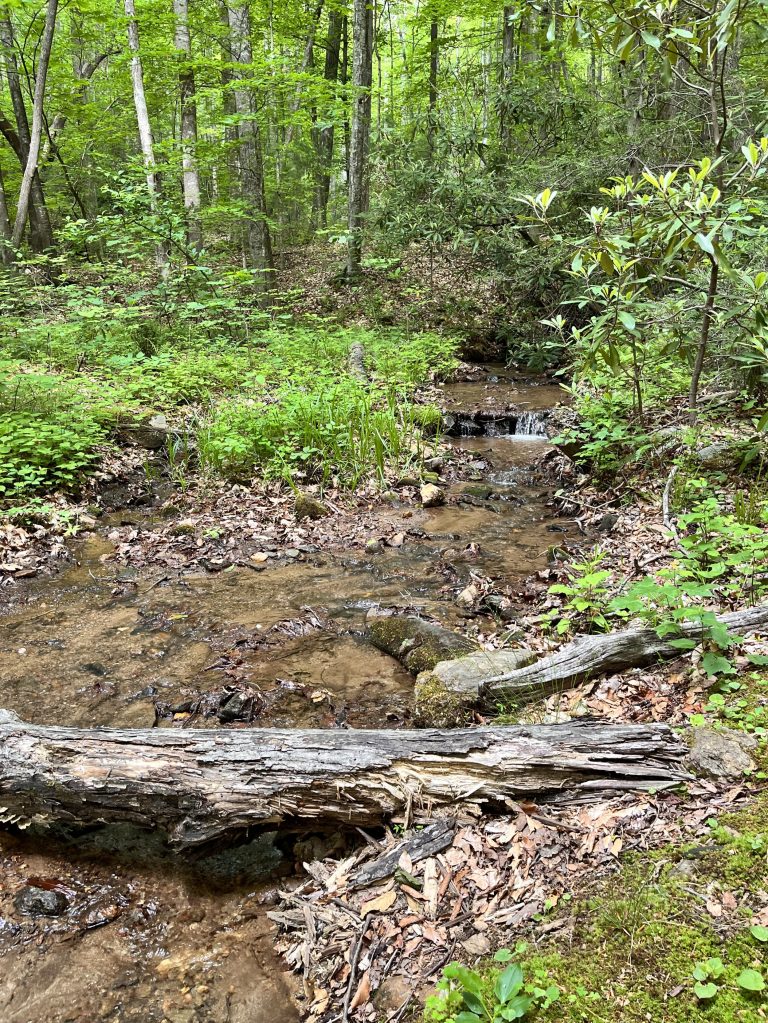
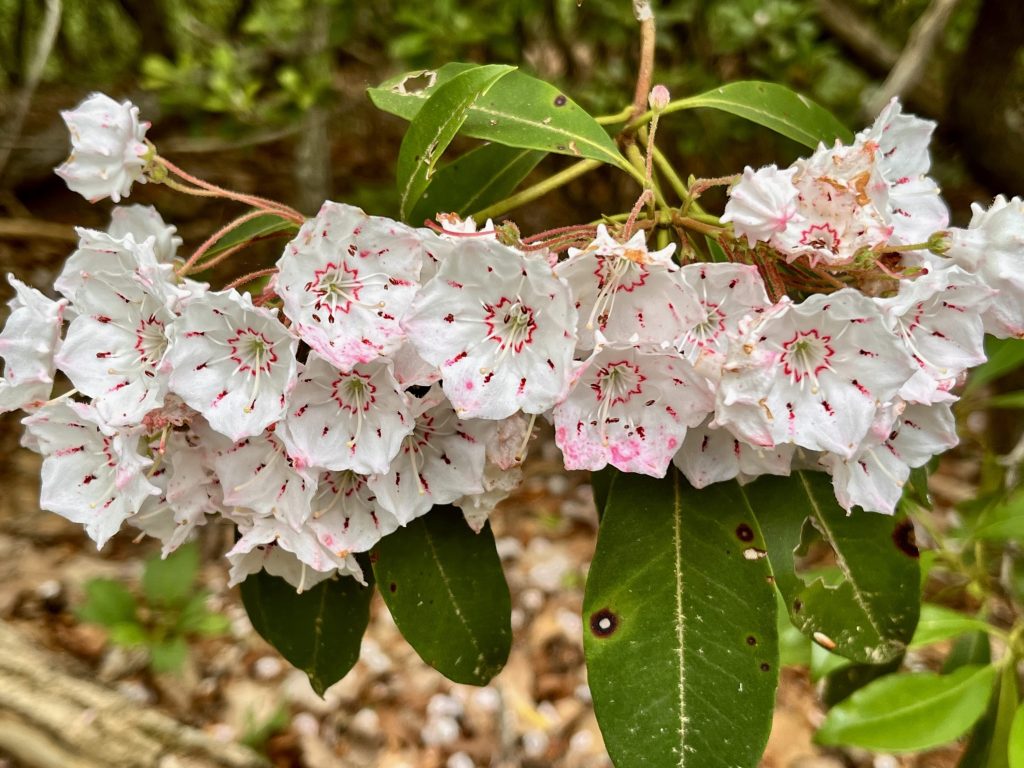
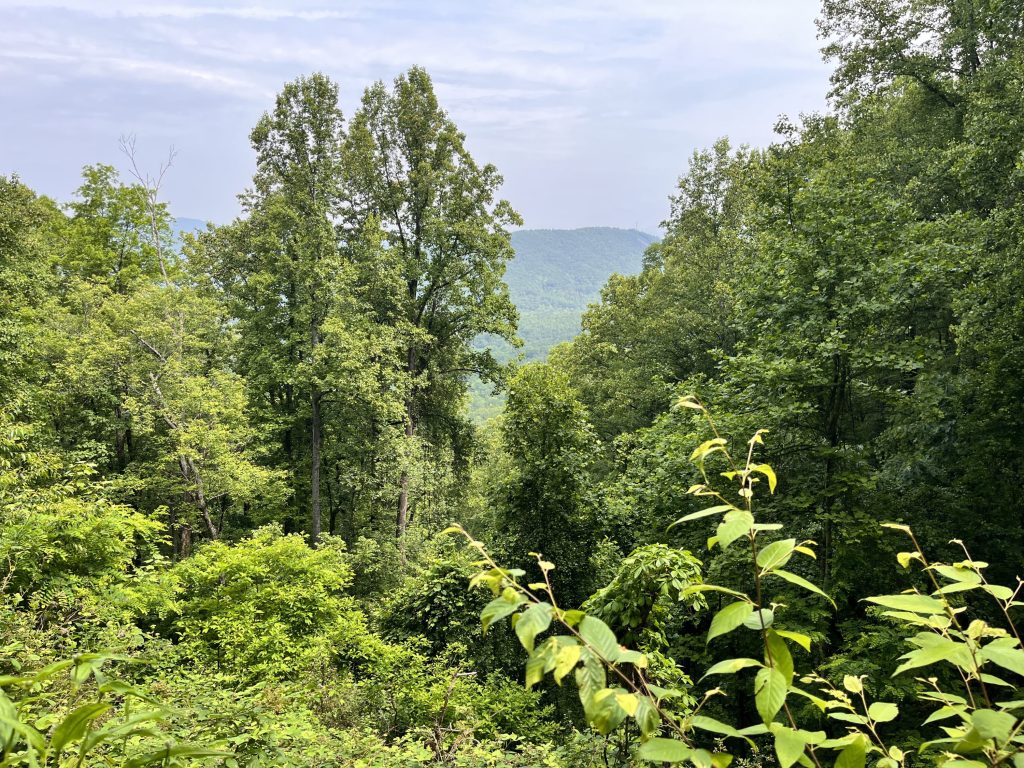
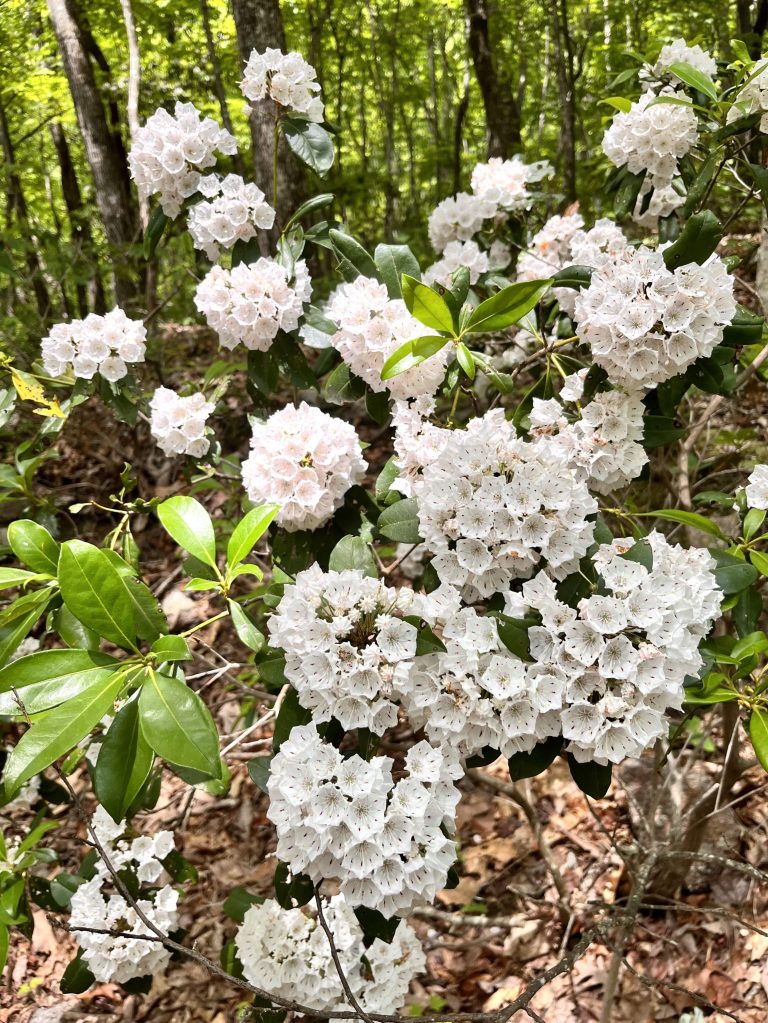
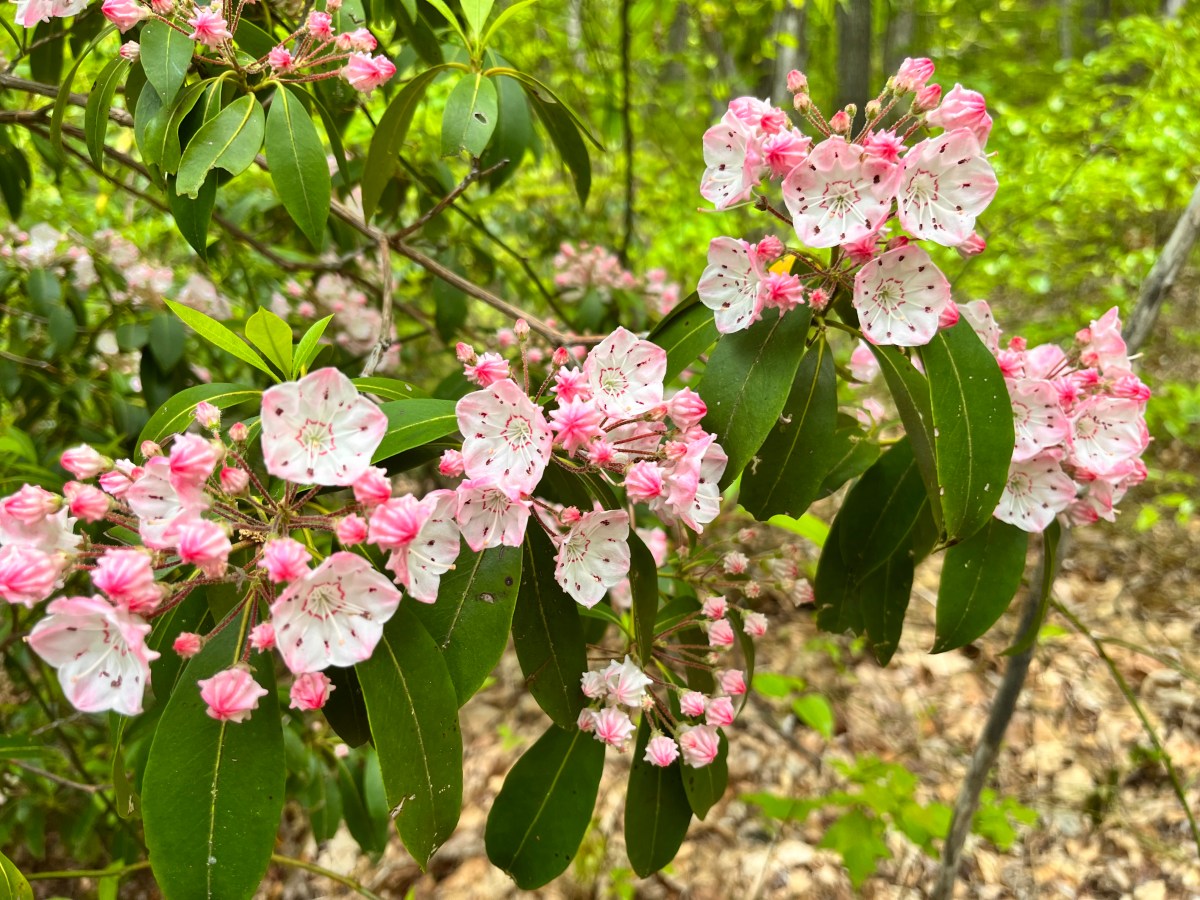
Tuesday and Thursday were conditioning hike days. The first hike was on a trail about three miles from my house called Greens Lick. The 7.6-mile trail with 1,200 ft. elevation gain was a shaded, forested path. The Mountain Laurels were in full bloom and the trail was bountiful with glorious flowers bursting forth in beauty. We traversed over several small streams and found lookouts with beautiful vistas. The adventure was accomplished in 3 hours and 11 minutes.
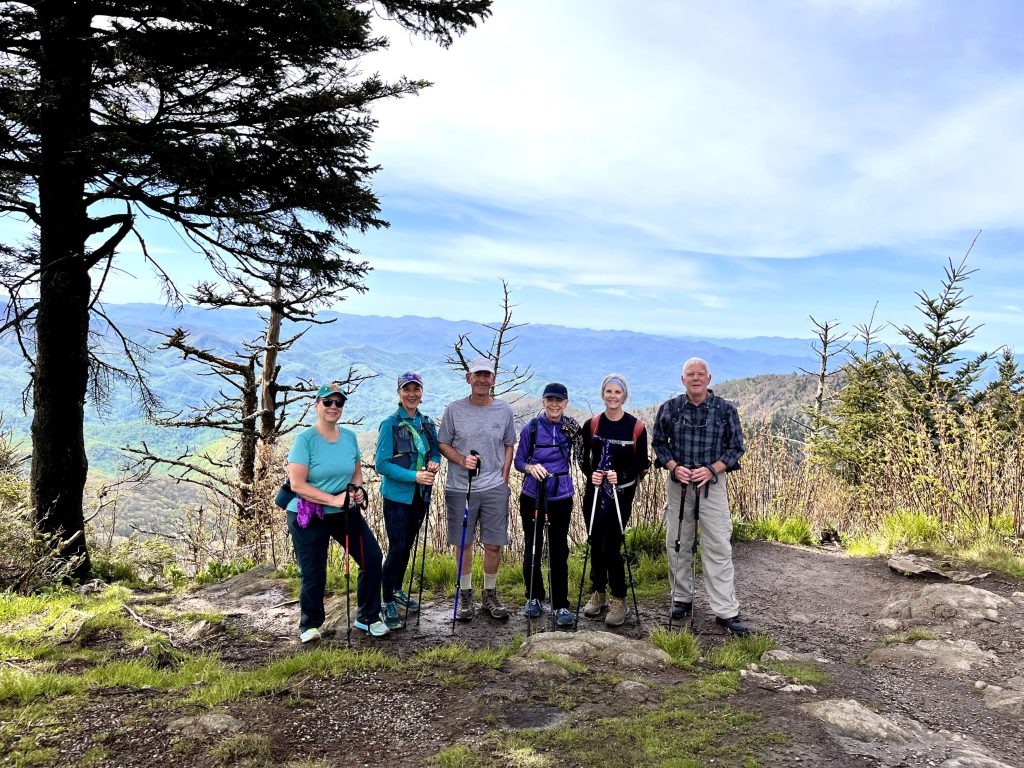
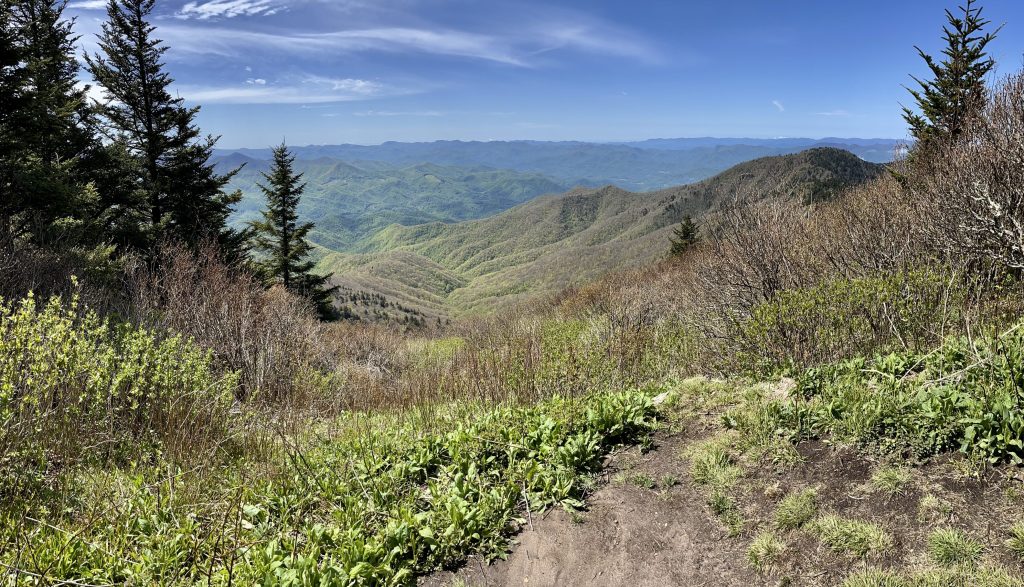
Thursday I returned to Waterrock Knob with a different group of hikers to accompany me on this challenging and technical hike. Once again, the sky was blue and the sun shining. The views were beautiful as before but this time there was more haze in the air restricting the clarity of the ridge lines in the distance. There were different blossoms showing off their grandeur than just two weeks prior. The steep parts of the trail offered a good workout to all my muscle groups and challenged my balance. We visited the downed plane wreckage again and felt the sacredness of this mountain shrine to two men who lost their lives on this mountain. So, another week of getting ready has come and gone and now to enjoy a holiday weekend.
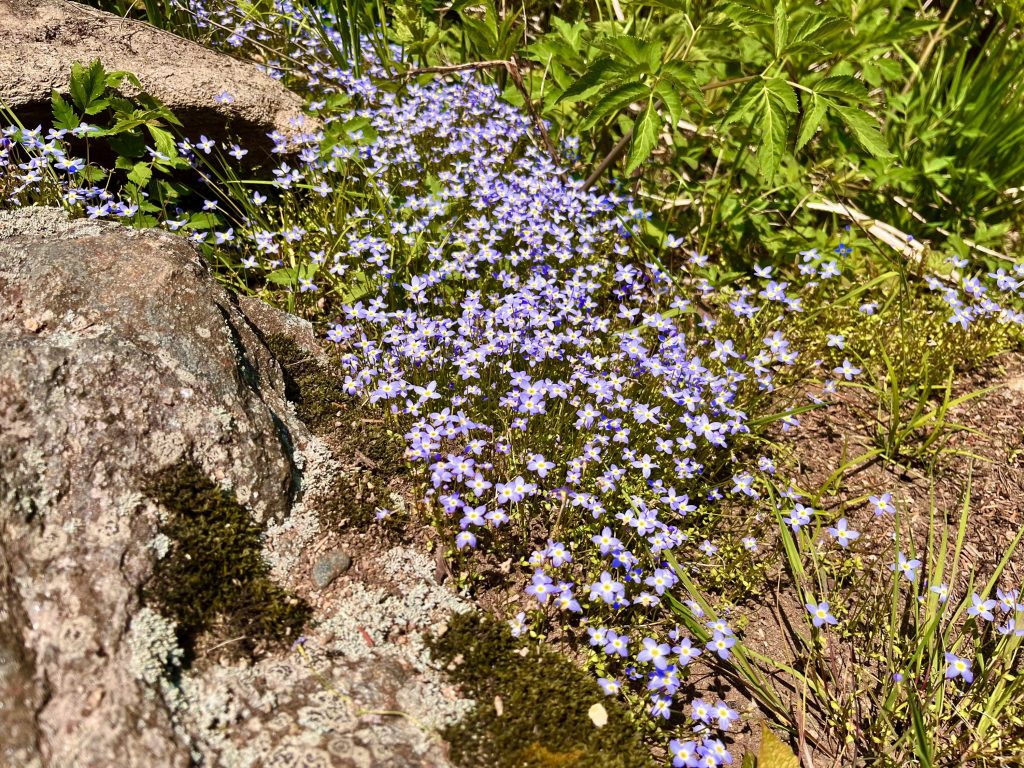
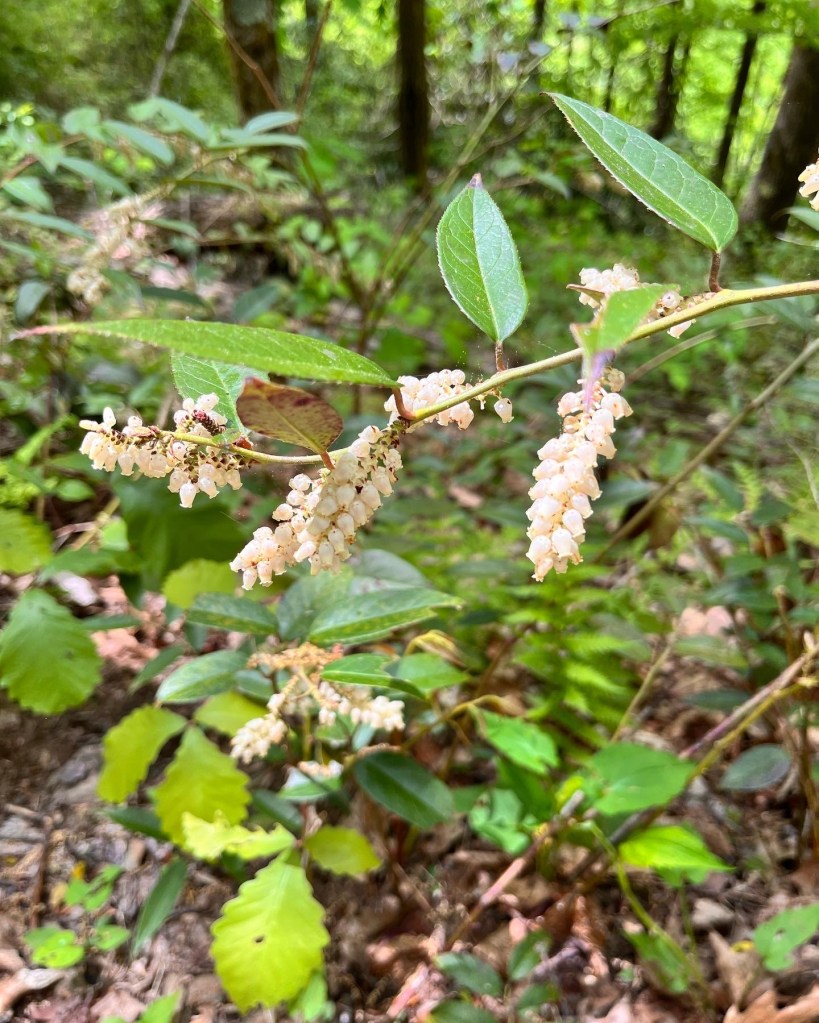
Native pink azaleaBluetsCatawba RhododendronMe with Susan, Stockton, Debbie and Mark
I spent my career being a healthcare provider and had a job that required a lot of responsibility. When I was diagnosed, I was still working and was concerned about people in the work place judging my abilities and skills. This is one of the reasons I was hesitant to be open about my diagnosis of PD. My Movement Disorder Specialist thought I was capable of doing my job safely and encouraged me to continue to work. Before I retired, I had the privilege of working for two years as the anesthesia provider for Dr.Leonard Overstreet, a plastic surgeon in Hendersonville, NC. Dr. Overstreet always treated me with the utmost professionalism and confidence. He never questioned my abilities, observations, or clinical judgments. I greatly appreciated being treated with such respect and appreciated the gratitude shown to me for my services. I left his practice to retire walking tall with my head held up. I will be forever grateful to him and his staff for their kindness and professional regard of my services.
It has been overwhelming to have many friends, family members, hiking buddies, businesses and even people I don’t know support me not just with fundraising but with accepting me as I am. Since coming out, I have been surprised about how freeing it has been to not hide and cover up my diagnosis. It turns out that the world is a kinder, gentler, more accepting place than I believed it was. One of my goals now is to remove the stigma that is often associated with PD and to help others with the diagnosis be willing to trust others to love and accept them. It is great to have a “fan club” cheering me on not just to reach the top of Kilimanjaro but to live a full and vibrant life. I have not lost friends but gained them and that has been very meaningful to me. I am so very thankful for all the ways people have supported me and I will make every effort to show my appreciation by reaching that summit on August 15.
Dr. Overstreet and Blue Ridge Plastic Surgery has generously donated to my fundraising campaign and as a way of saying thanks I would like to offer his contact information. He is a world class plastic surgeon who has performed surgeries on many of the local residents of Western North Carolina and also celebrities and clients who have come from all over the United States seeking his services. He is a fantastic surgeon who is very kind and professional to all. I am grateful for the influence he has had in my life. Thank you so very much Len, Linda, Lacey and the rest of the staff at Blue Ridge Plastic Surgery.
BLUE RIDGE PLASTIC SURGERY Dr. Leonard Overstreet, III Certified by the American Board of Plastic Surgery
Blue Ridge Plastic Surgery offers a full line service of cosmetic and reconstructive surgical and non-surgical procedures.
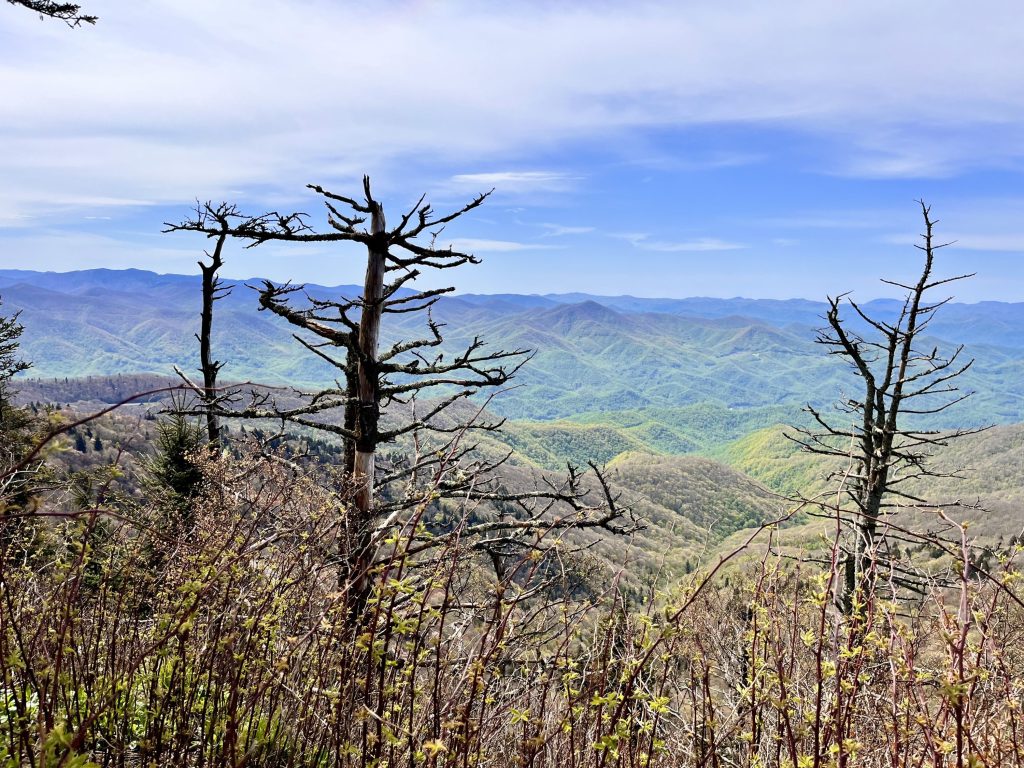
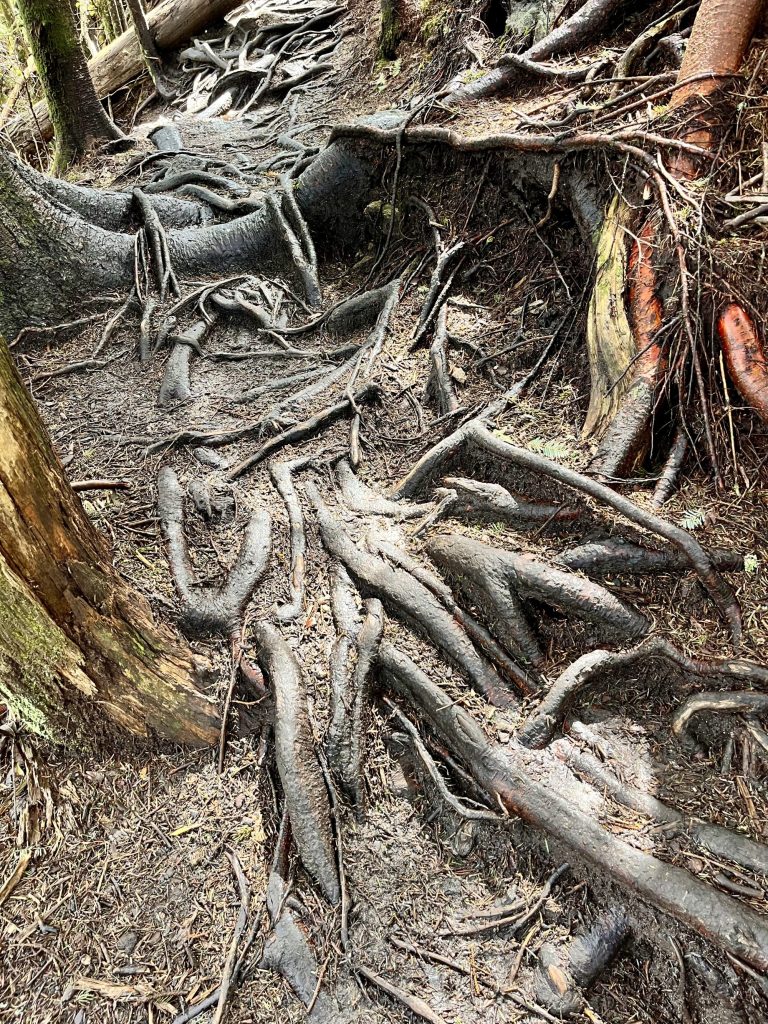
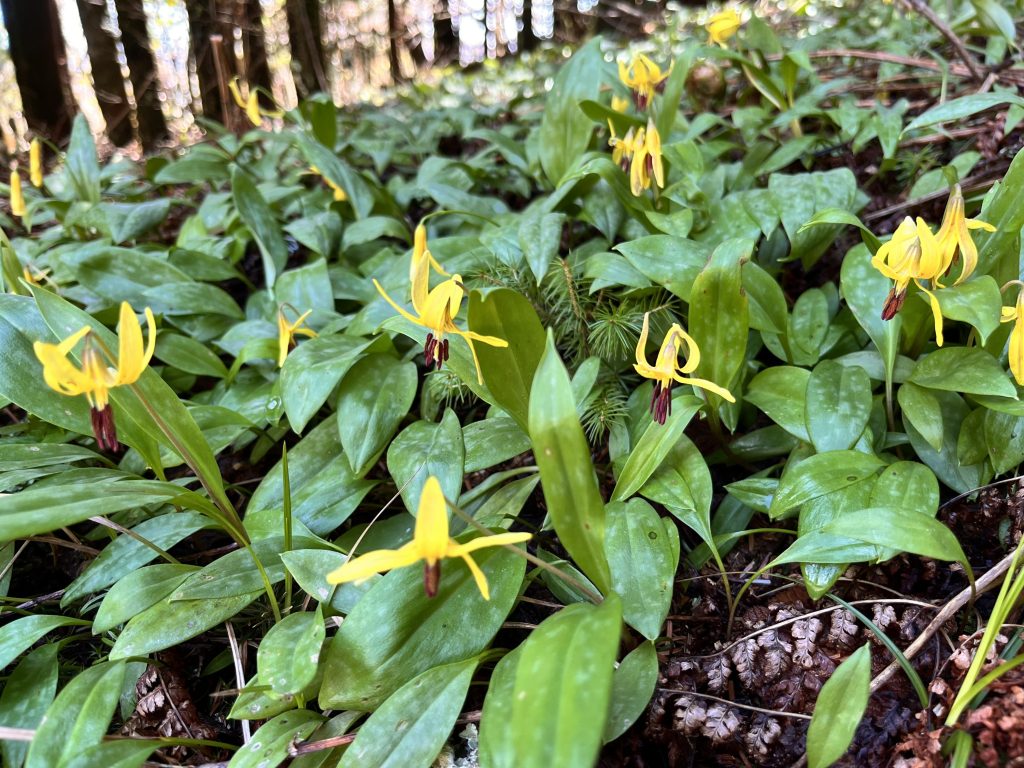
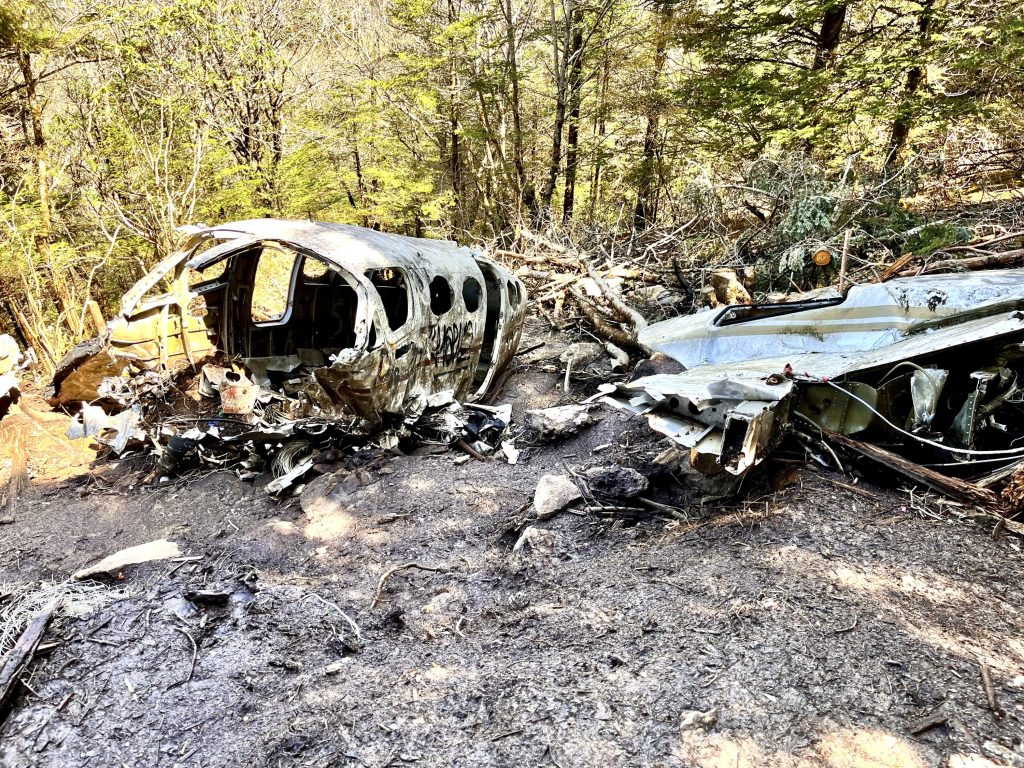
This week I did two great hikes. The first was to Waterrock Knob off the Blue Ridge Parkway near Balsam, NC. It rained during the night before the hike clearing the air for stunning vistas. This was a challenging hike with lots of slippery roots and terrain that was either straight up or straight down. Total distance was only 3.7 miles with an elevation gain of 1286 ft. but the technical difficulty made up for the short distance. I love flowers, gorgeous views and waterfalls and this trail had two of the three. Along the way we visited the site of a Cessna 414 which crashed into the mountainside on Thanksgiving Day 1983. It rests at 6292 ft. elevation. Unfortunately, the two passengers did not survive.
Members of my hiking groupThe gnarly roots on the trailTrout liliesRemains of the plane crash
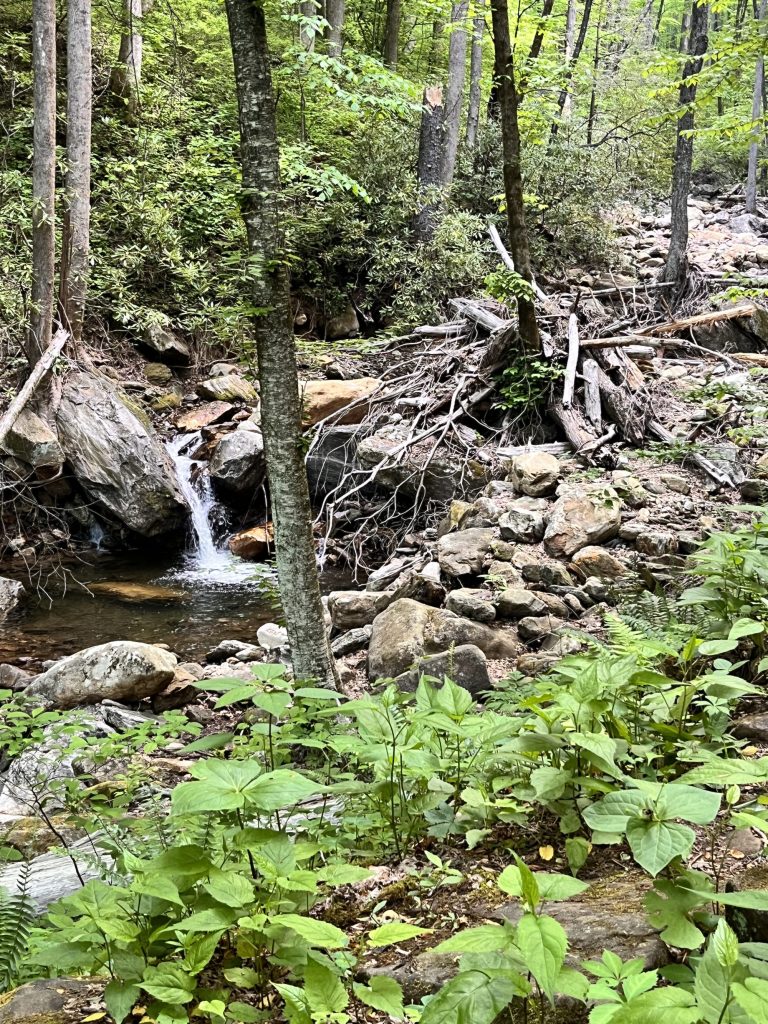
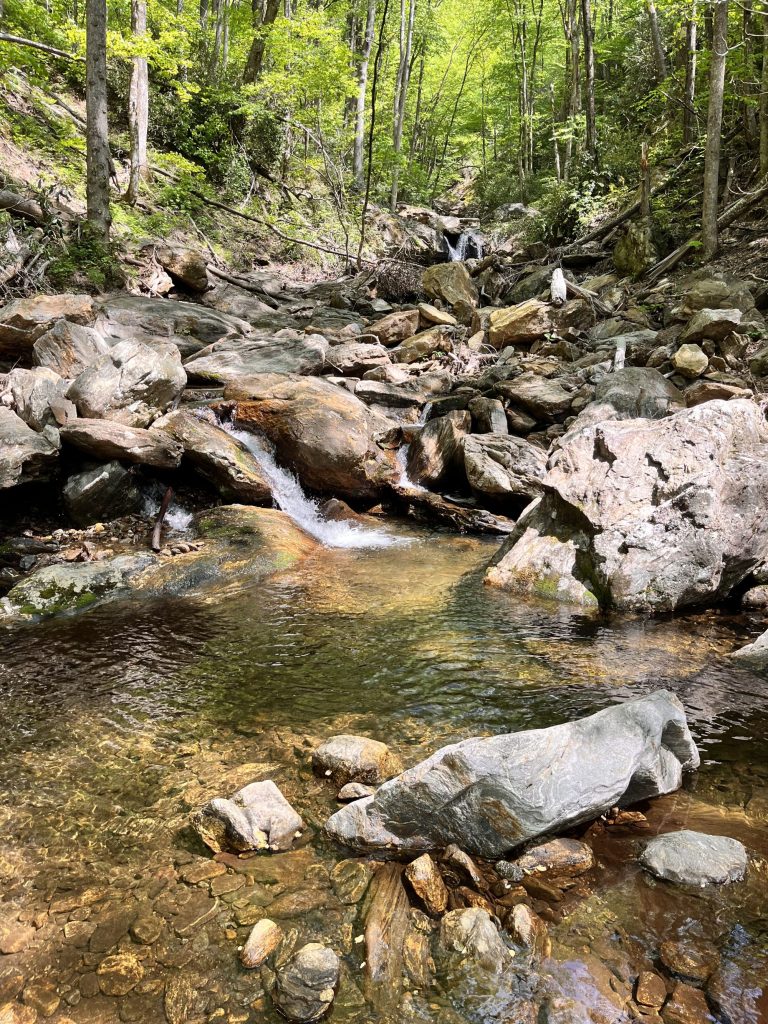
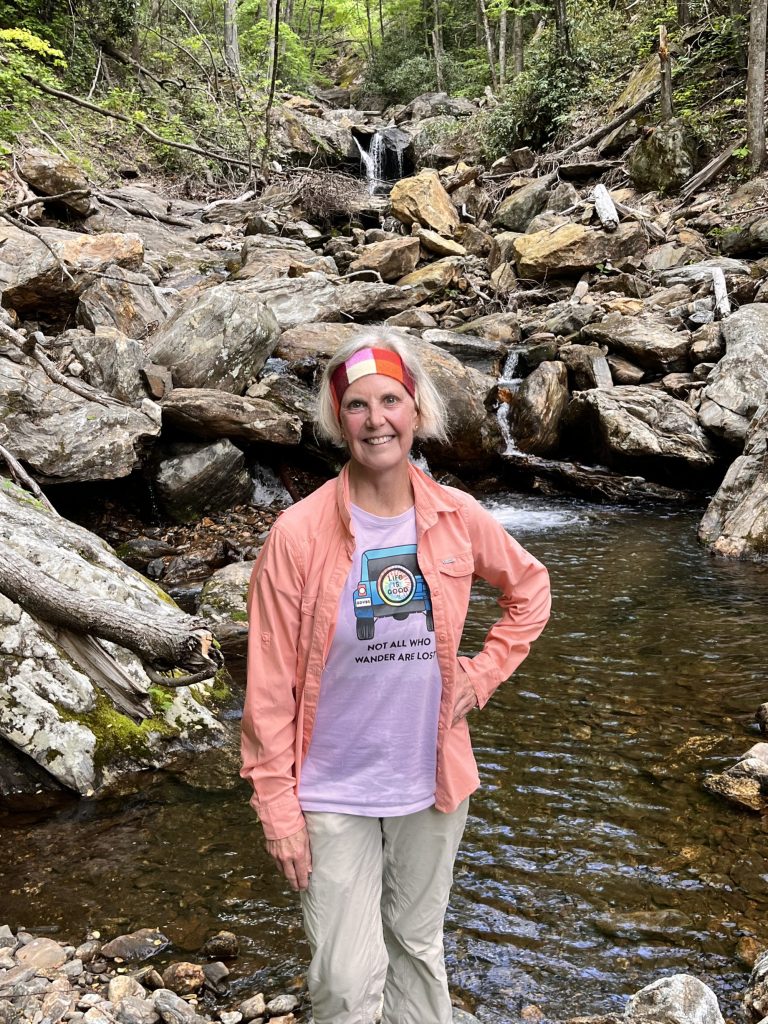
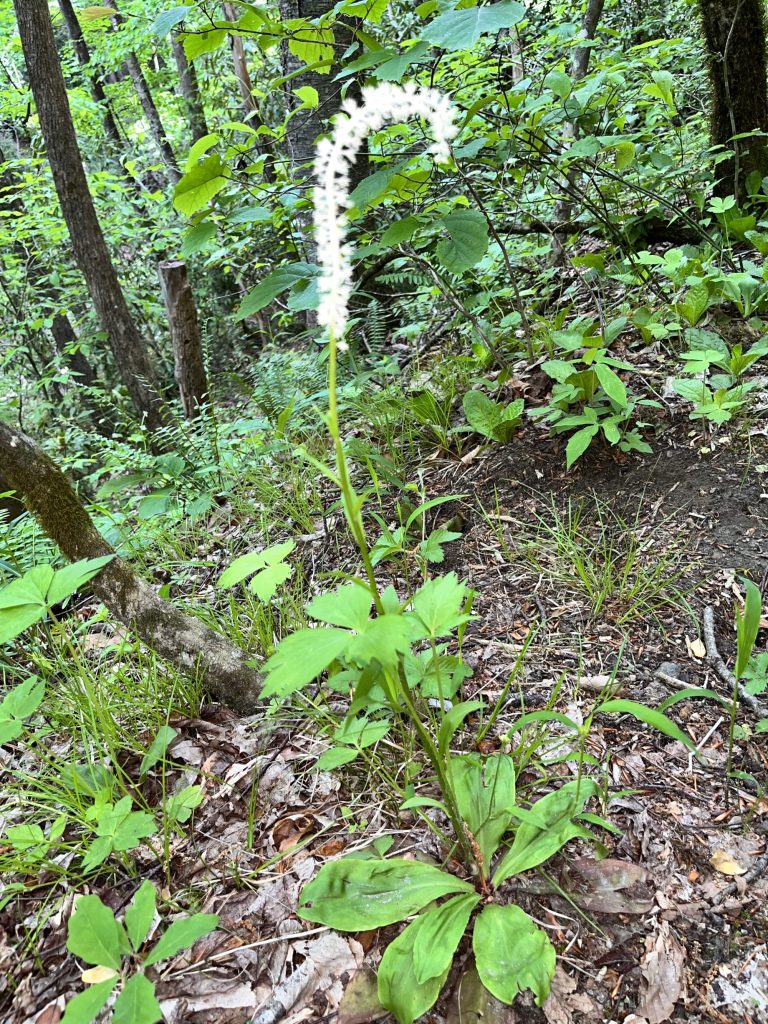
The second hike was in the Pisgah National Forest near Brevard, NC. We hiked to Shuck Ridge Creek Falls with a round trip mileage of 10 miles and 1617 ft. elevation gain. We were blessed with pretty flowers, a lovely trail following a stream for much of the way, and a waterfall too.
It was the summer after I turned 60 and it seemed I was feeling the pangs of aging already. I was struggling to reach a dish on an upper-level shelf in my kitchen. I was sure I had a shoulder injury and started paying attention to the range of movement and strength of my right arm. Oh no! I realized I couldn’t wipe the kitchen counter very well and with further attention noticed that I was doing a lot of tasks with my left arm and hand. I am right-handed but hadn’t noticed that I was becoming ambidextrous. I couldn’t miss that I had a tremor when I would use my right arm to eat. A tremor that occurs when in motion is called an action tremor as opposed to a resting tremor which occurs when the body is still. This was confusing because resting tremors are more characteristic with PD. I made an appointment with my primary care physician to discuss these issues. She referred me to a physical therapist and prescribed a medication for the tremor. The medication did help with the tremor quite a lot. The physical therapist did not find a rotator cuff injury but did think I had some adhesive capsulitis and gave me some exercises to do at home. But now that I was paying attention I realized there were other things going on. My husband noticed I wasn’t swinging my right arm when I walked. I noticed I was always the last one to finish eating a meal. By the time the third person asked if I had a back or neck injury because I turned my body very slowly, I knew something else was going on.
I delved into the internet searching for an explanation to these symptoms. I repeatedly typed in my symptoms looking for a diagnosis. And then like a flashlight finally shined on that recess in my brain illuminating it so I could see, I knew. I knew I had Parkinson’s Disease. I was sure. It was clear as could be and I wondered why it had taken me so long to figure it out. After all, I was a healthcare provider for 39 years at that point and was still working. I called as soon as I could to schedule an appointment with my PCP again. This time, I told her I believed I had Parkinson’s Disease and requested she refer me to a Movement Disorder Specialist or MDS. She didn’t do much of an evaluation herself to verify my suspicion but agreed to make the referral. It took three months to get a first-time appointment. Three months! That seemed like an eternity now that I knew and was desperate to get relief.
It was like putting a jigsaw puzzle together. At first the pieces were scattered in front of me. But as I started putting them together the picture got clearer, and the pieces started to fall into place more easily. Once the picture started taking shape more and more pieces became visible and popped into their spot. I had become aware that my sense of smell was not very good about 10 years earlier. When I looked it up on the internet at the time, I discovered that it was one of the first signs of PD. At the time, I completely dismissed it as I was sure that would not be my situation. I come from a lineage who has very lengthy longevity and that too was going to be my destination. But now, the picture was changing. This revelation explained why my facial expression looked different in the family Christmas pictures taken that year. It explained why I didn’t swing my arm when I walked or why I turned my body so slowly and why it took me longer than others to eat my food. By this time, I was noticing a tremor in my right leg especially when I was stressed. I had trouble sleeping and I struggled with depression at times.
There are four main hallmarks of PD. They are stiffness, bradykinesia or slow body movement, tremor, and balance issues. Of those four I had three. But what I didn’t know was all the other facets of Parkinson’s Disease that can and often accompany the condition. Every person who has PD experiences it in their own unique way such that no two people have the same symptoms or presentation. Typically, a person is diagnosed with PD by giving a description of symptoms and by physical exam. I did not have a blood test or any diagnostic exam. The MDS confirmed within minutes of seeing me the diagnosis. He looked at me and said “yes, you have Parkinson’s Disease. The good news is that no one dies from Parkinson’s Disease, they die with Parkinson’s Disease.” Since I was still working, he wanted to be aggressive in treating me with medication and wrote a prescription which I filled on the way home. With the first dose I felt better than I had in a long time and within two months my symptoms had faded from sight. But it is a progressive disorder so over time the symptoms have become more pronounced. I learned in my research that the best way to slow this progression is by engaging in regular exercise with the best result from vigorous exercise. I was already a very physically active person and loved to hike but now I was on a mission to out hike this disease that threatened to keep me from moving. I joined various hiking groups but when COVID came along and people were afraid to engage in group activities, I started my own hiking group and continued to hike throughout the pandemic. The benefits have been very rewarding for many reasons. Not only does it help with the primary motor symptoms but many of the nonmotor symptoms. Many people like me before my diagnosis do not realize all the symptoms that can accompany PD. Here’s a list of many of these lesser-known issues people with PD can experience.
Fatigue
Low Blood Pressure
Urge incontinence
Constipation
Restless legs
Skin and sweating problems
Sleep disorders
Eating, swallowing and saliva control
Weight loss
Speech and communication problems
Eye problems
Pain
Muscle cramps
Mouth and dental issues
Mild memory and thinking problems
Anxiety
Depresssion
Hallucinations and delusions
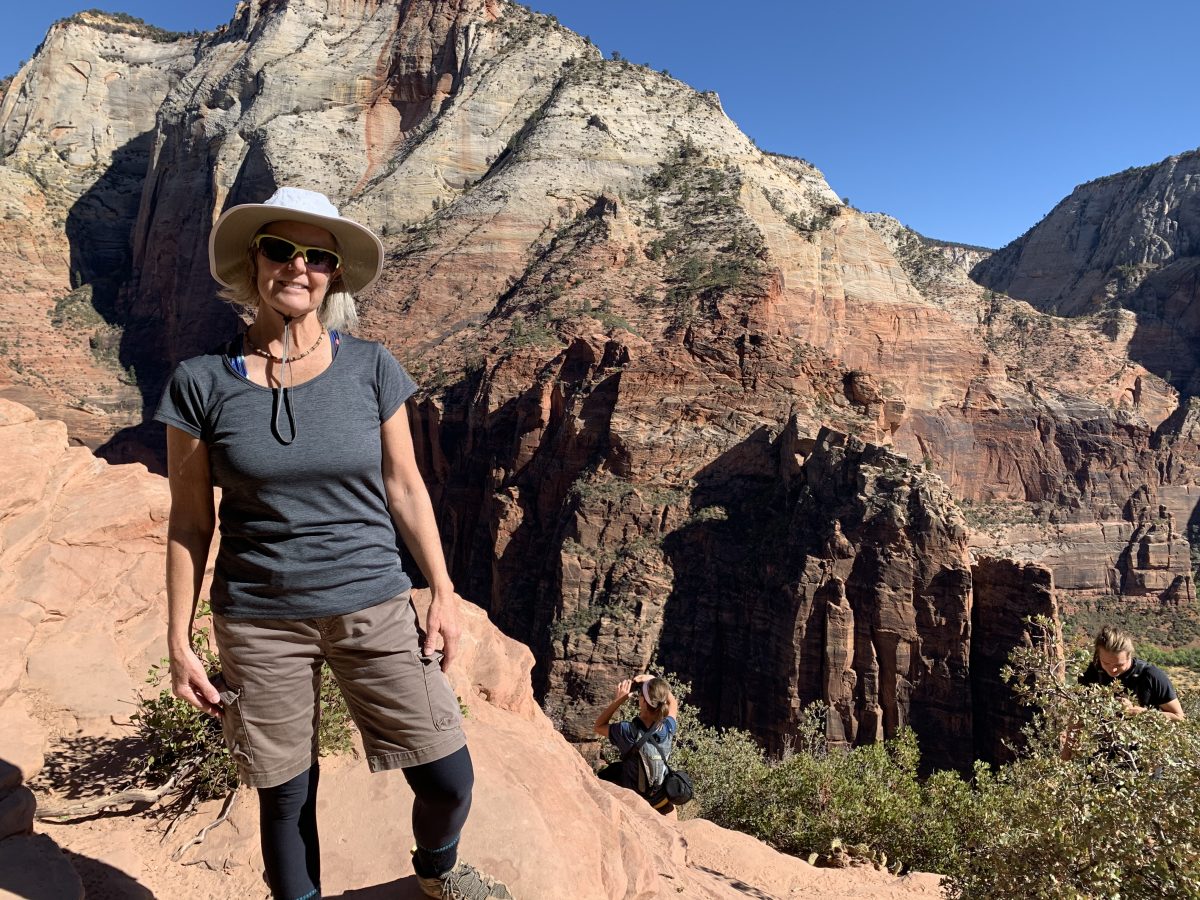
The Title picture of this post is from November 2011 – long before I knew I had PD.
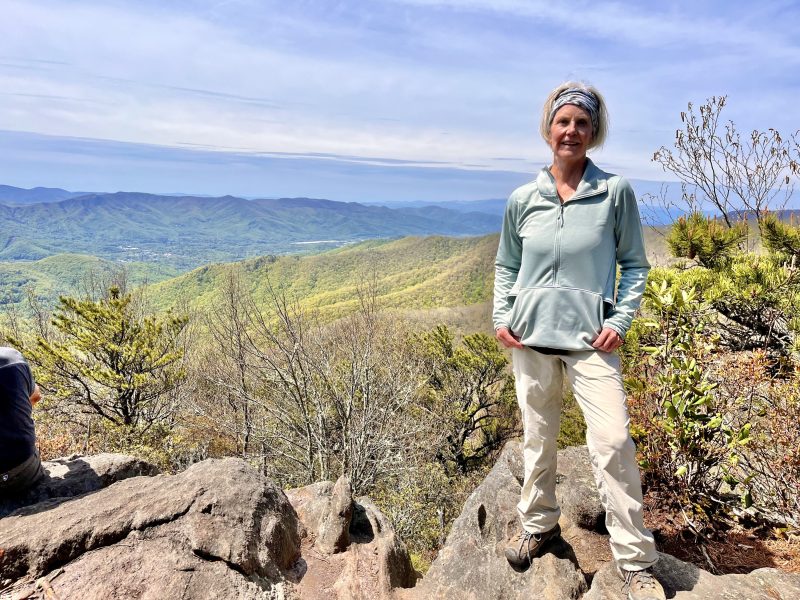
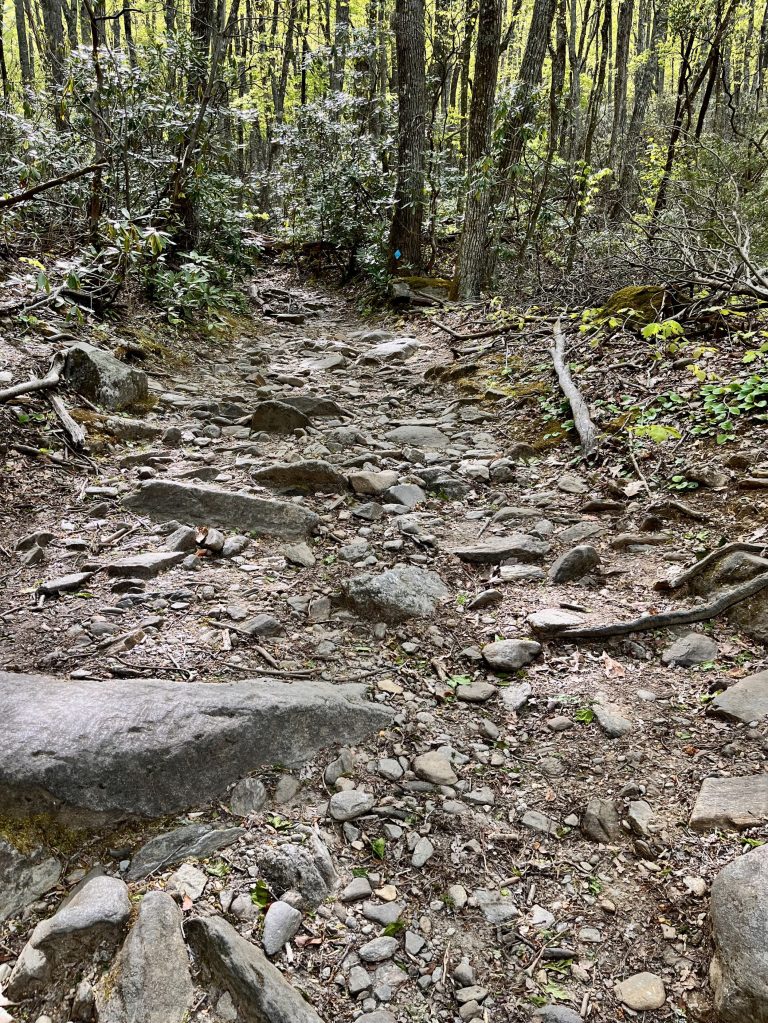
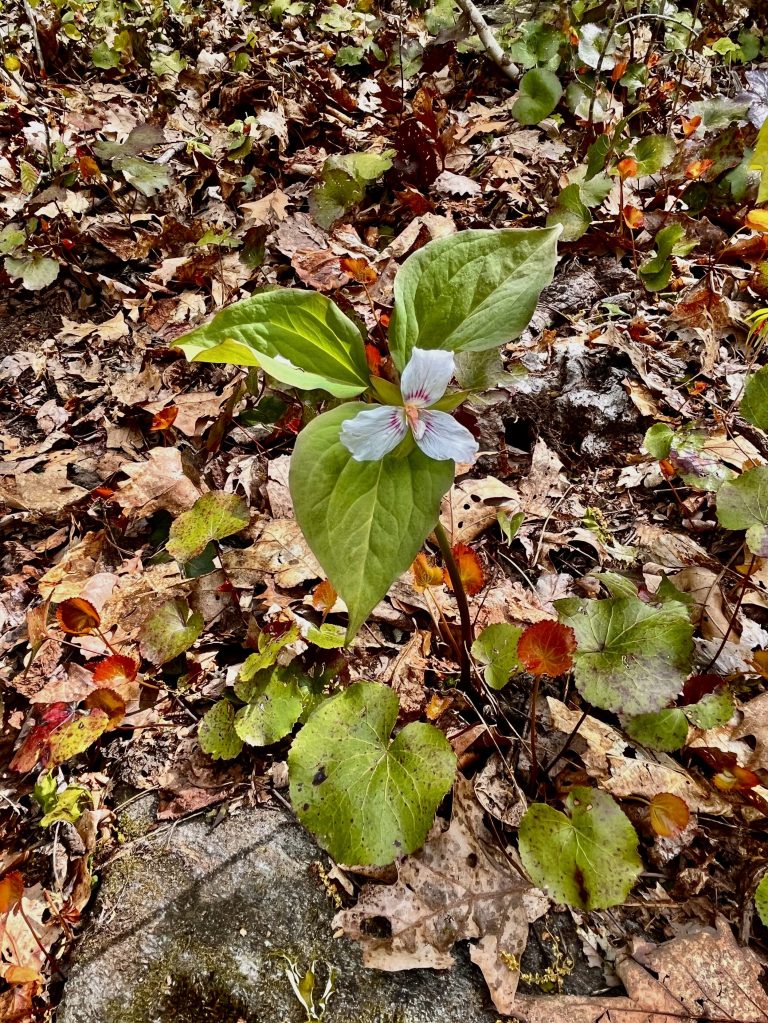
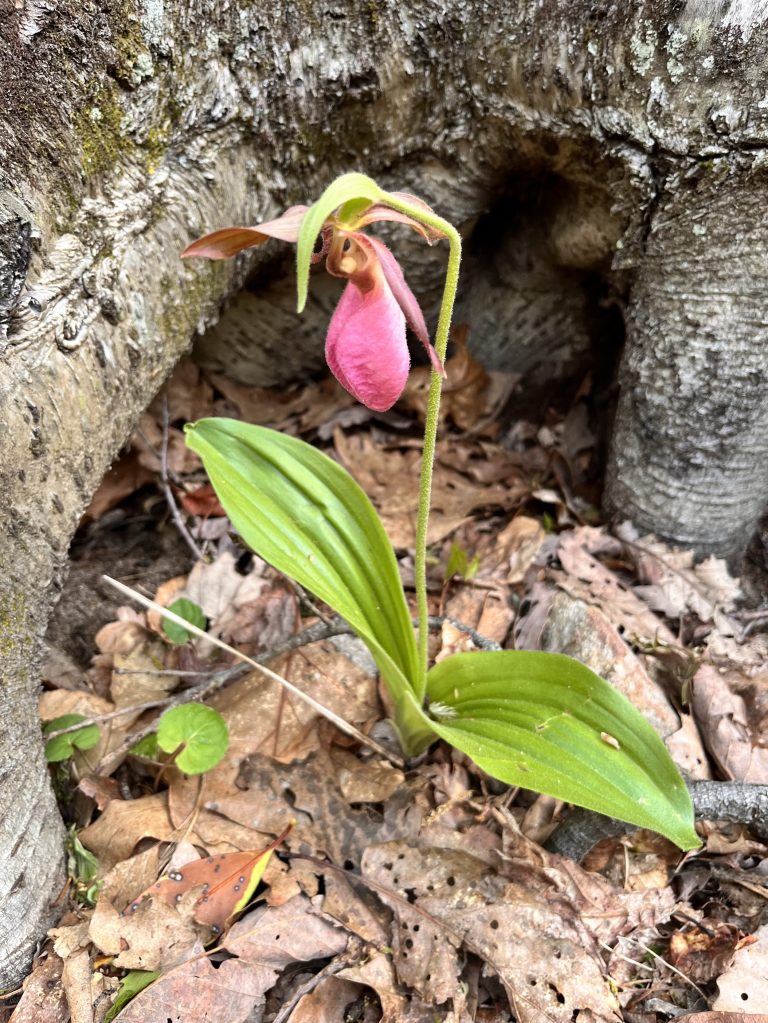
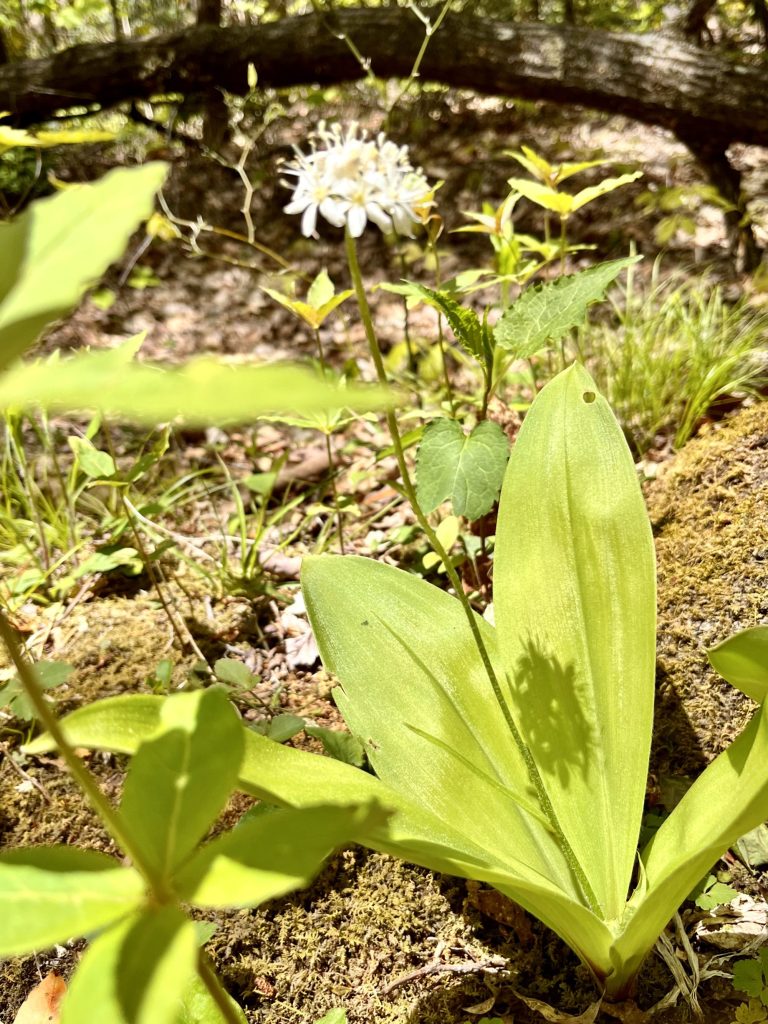
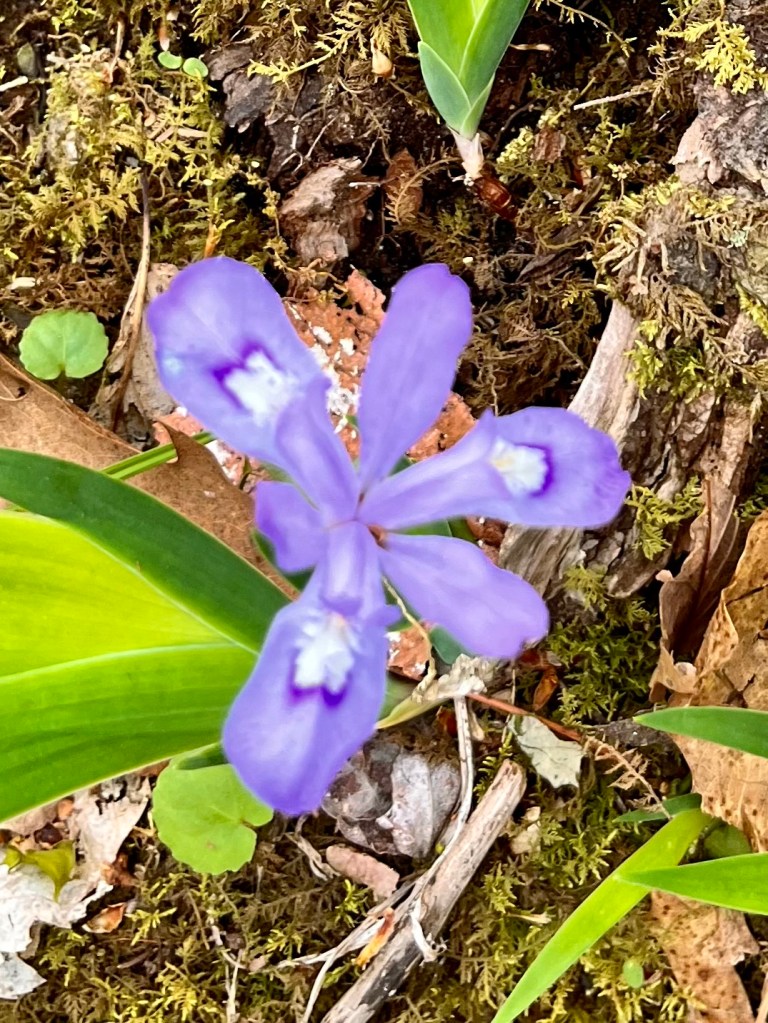
I joined a group of hikers from a Meetup Group I belong to. It was a glorious spring day with a gentle breeze, blue sky, and perfect temperature. This mountain trail in the Montreat College area, had lots of roots and rocks as do most of the trails in Western North Carolina. The spring flowers have been amazing this year and today’s hike did not disappoint with many beautiful sightings. There were Dwarf Crested Irises, Clinton Lilies, majestic Pink Lady Slippers, and a rare find of several Painted Trilliums along the way. We hiked 8.75 miles with an elevation gain of 1800 ft. in about 5 hours. Along the way was Greybeard Falls which though small in height, are still quite pretty to view. The best payoff was the view from the top of the trek at Walker’s Knob at 4774 ft. elevation. The view of the valley below was breathtaking.
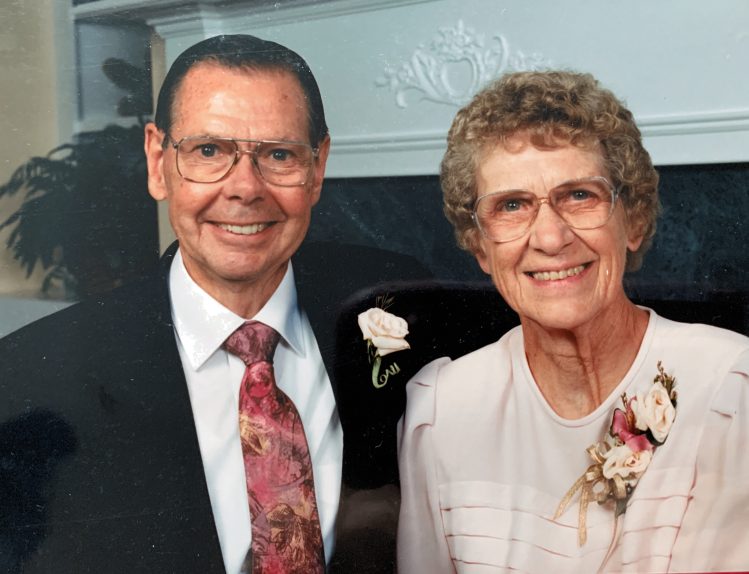
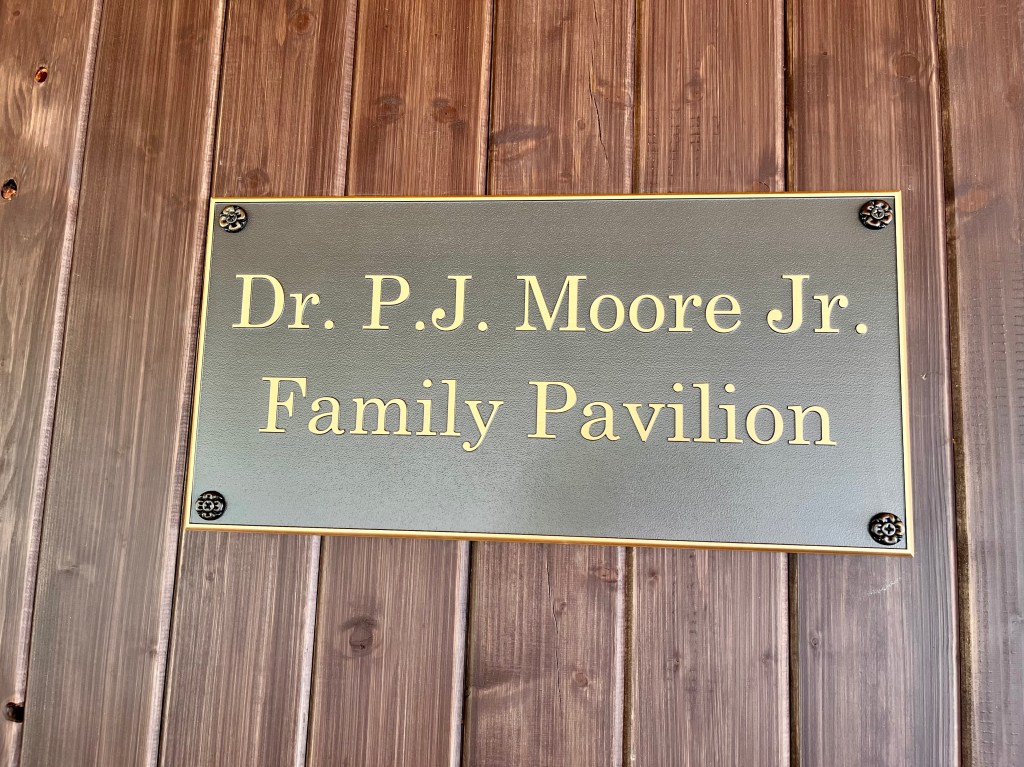
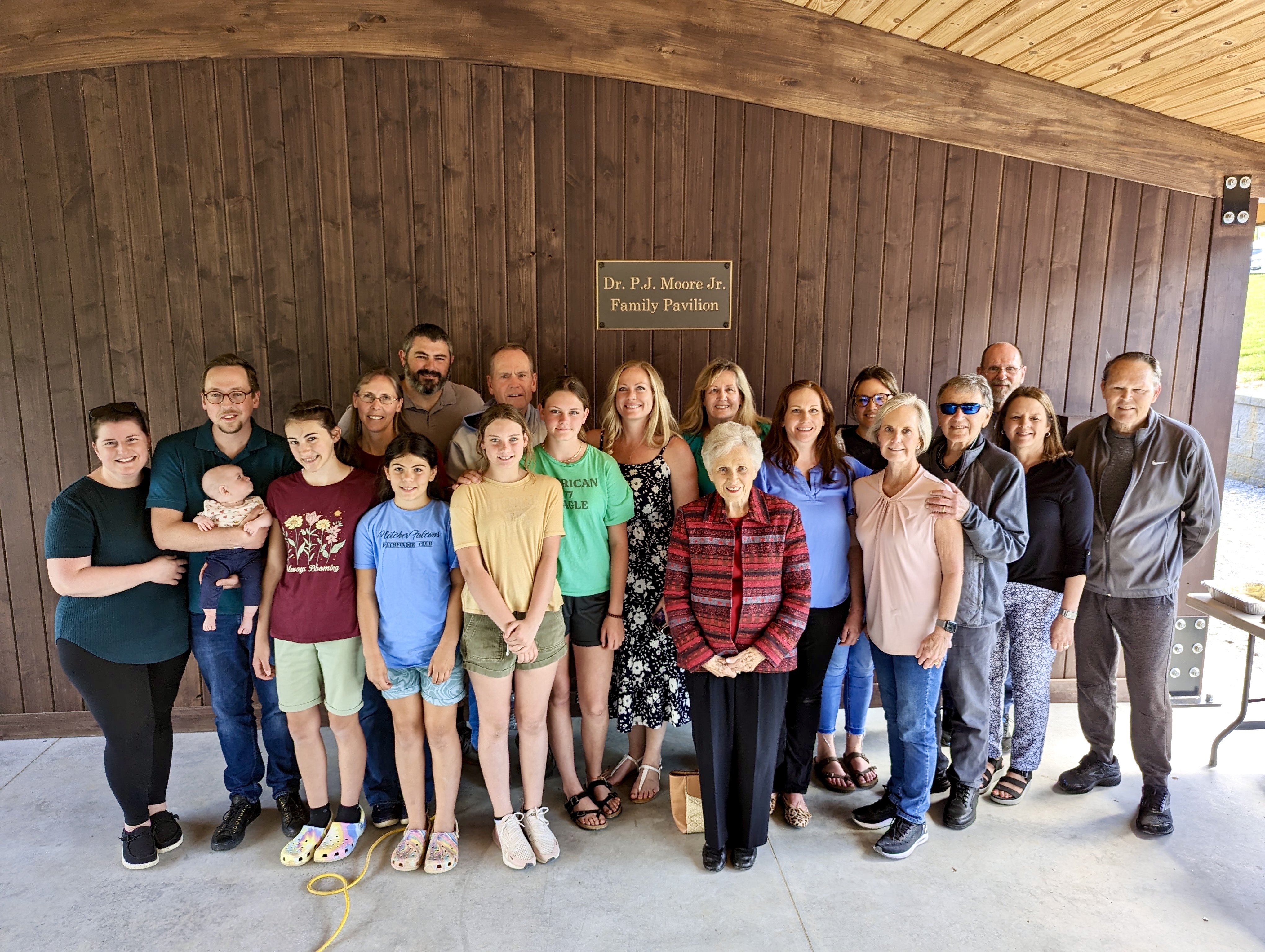
On April 16, 2023, Fletcher Academy, which is a small independently owned Seventh-Day Adventist boarding academy in Fletcher, North Carolina dedicated a newly built outdoor pavilion to my father and our family. This was in recognition of my parents’ dedication and the sacrifices they made to that community in the course of their lives. The following is a speech I gave at the event. I recalled historical information as well as memories from my childhood. While the information is specific to that community, I think one can gather the extraordinary example of service I was shown by them.
Seventy years ago, Dr. PJ Moore, Jr. and his wife Dora Deanne were asked by a small, independent, self-supporting Seventh-Day Adventist institution to move to the rural mountains of Western North Carolina. The medical facility known as Mountain Sanitarium was in financial distress and on the verge of losing it’s accreditation. Without a physician to bring in patients, it would have to close. If the sanitarium closed all the other entities of the institution would have to close too. That included a school of nursing, a boarding academy, Captain Gilmer Elementary School, and several small enterprises like a dairy farm, a printing press, a community store, a laundry service and maybe others as well. Dr. Moore was in the process of building his surgical practice in Pickens, SC and they did not think it was in their best interest to move to a financially unstable place. So, they put a fleece out as Gideon of the Old Testament did, to get a definite sign from God seeking His guidance. They decided that if the institution found another physician to join him, they would know God wanted them to go to this place. They felt certain they would not be moving to the mountains, but they were wrong. Dr. Arthur Pearson agreed to go to Mountain Sanitarium so Dr. Moore and his wife and three boys, along with his office nurse, MaryEllen Chapman and her mother, Mrs. Richardson moved to this area in May 1953.
The first day he saw patients, he saw two people and both had been his patients in Pickens who followed him to the mountains. Though it was slow going at first things did pick up and the institution began to grow and flourish. It was hard work with long difficult hours. His responsibilities went far beyond being a surgeon as he served on several boards, at one point he was the President of the institution during a time when that position was vacant, helped on many fundraising committees and filled many other roles all while doing his duties as a physician. He got the medical facility renamed to Mountain Sanitarium and Hospital to facilitate insurance billing. He oversaw the building of a new medical office facility and a new hospital building called Fletcher Hospital. By the time Park Ridge Hospital was being built he was retirement age. It was at this point that it was bought by the Seventh-Day Adventist church organization. It is now known as Advent Health Hendersonville.
Since he was the only surgeon on staff, he literally was on call 24/7. He put an amplifier on a phone that had a jack in the carport so the ring could be heard from anywhere on their seven acres of property. When it would ring, we would run to pick it up and answer – “Dr. Moore’s residence. Who would you like to speak to?” He delivered babies, did C-sections, took out tonsils, set bones, did skin grafting, performed all manner of general surgery and did lots of general medicine practice. There were few vacations or weekends away. His income was structured so that a large percentage went back into the institution and upon retiring from his practice he had no retirement money.
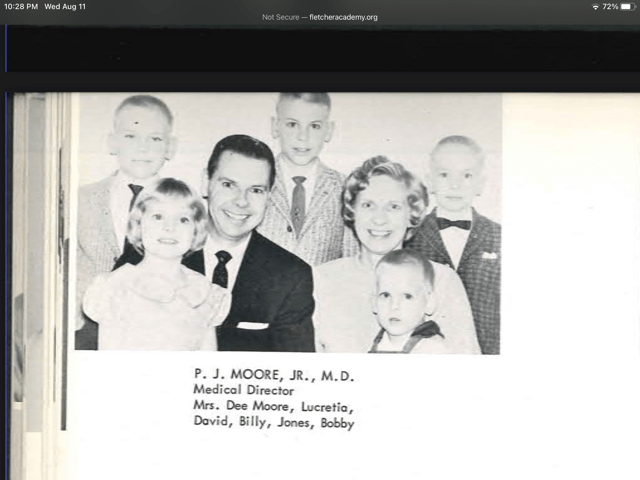
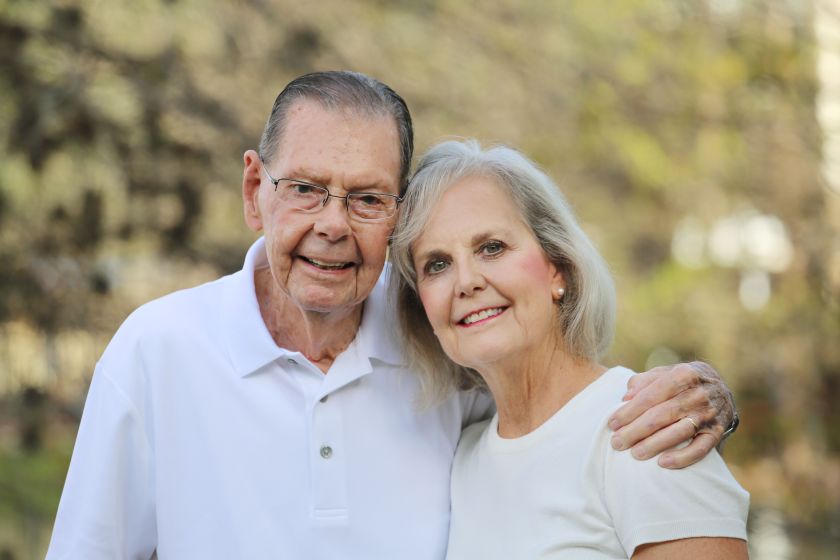
Dee and PJ as they were affectionately called, added two more children, a daughter and a son, to their family after they moved to the mountains. With PJ devoting so much time to his responsibilities that left Dee to manage the home by herself. They had met during WW2 where he was a Captain as a surgeon and she a First Lieutenant as a nurse. She was a farm girl raised on a dairy farm in Ohio and he a city boy raised on the streets of Spartanburg. She was not raised in the Seventh-Day Adventist faith but was raised with solid Christian beliefs. They seemed to be an unlikely match until you find them in this rural, mountain setting. He was the brilliant surgeon and physician and she the farm girl well equipped to manage life in this isolated, rural setting. She eagerly accepted the Seventh-Day message. This included adopting the practice of keeping a 24 hour Sabbath from Friday at sunset to Saturday at sunset, as a holy day. It also meant lifestyle changes though not required by the church yet widely practiced by the church which included among other things, eating a vegetarian diet and abstaining from caffeine. They believe in having a personal daily relationship with God and obeying His directives in their life. So they embraced their calling to rescue this faith-based community. She grew a garden, home preserved the fruits and vegetables it produced, knew how to sew and mend clothes, learned to cut the boys hair and could do anything a mountain woman needed to know how to do. After they built a new home just a little way down Howard Gap Road from the schools and hospital, she cleared the land, landscaped the grounds and turned their home into a community park for the residents and children of the area. The huge front lawn served as a ball field for many a game of baseball or football. There was a badminton court in the drive with regulation appropriate lines. He built a large swing set and had a horse shoe rings setup. For many years they hosted the annual picnic at their place. She worked hard for weeks ahead to make it just perfect for people to enjoy the event. They had a literal farm with horses and ponies that people got to enjoy petting or riding.
Many a Saturday night the student nurses or academy students might be found at their home for games or supper. The student nurses benefited from movies he took of his surgical procedures and used for learning opportunities. She offered haircuts to academy boys or even some of the men in the area for only 50 cents a cut. There were many times when people would show up at the house seeking medical care and if Dr. Moore wasn’t home Dee filled in to provide the advice or care needed. It seems there wasn’t anything they wouldn’t do to help the residents of this neighborhood.
Then Dr. Moore found a pawn shop selling off band and orchestra instruments. He called Dee and asked if he should get them. She told him to get all of them. Then she started making calls to families asking if their child would like to learn to play the violin, trumpet, trombone, or other musical instrument. Though she had never taken lessons on these instruments except for the violin, she offered lessons to get them started. Soon a small orchestra began in their basement. The students took off with their musical talents and soon outpaced her ability to teach them. The school decided to hire a band and orchestra leader and Fletcher Academy became the school of the Southern Union of Seventh-Day Adventists with the best musical program.
She often took her brood to the local lake here on campus to swim. Usually, it was after we had done our chores but one particular day, it was in the morning. She would sit on the sandy beach of the far side of the lake with an inner tube beside her keeping careful watch over her children. There were two academy girls swimming in the beach area who had come to the lake on their own. One of the girls was not a good swimmer and got out from the shore a little too far where the water was over her head. All of a sudden, I saw mom race toward the water and go in with all her clothes on inner tube in hand. She reached the girl and rescued her back to the shore. No fuss was made. There was no special mention of this act. It was just mom doing what mom did – taking care of anyone in need.
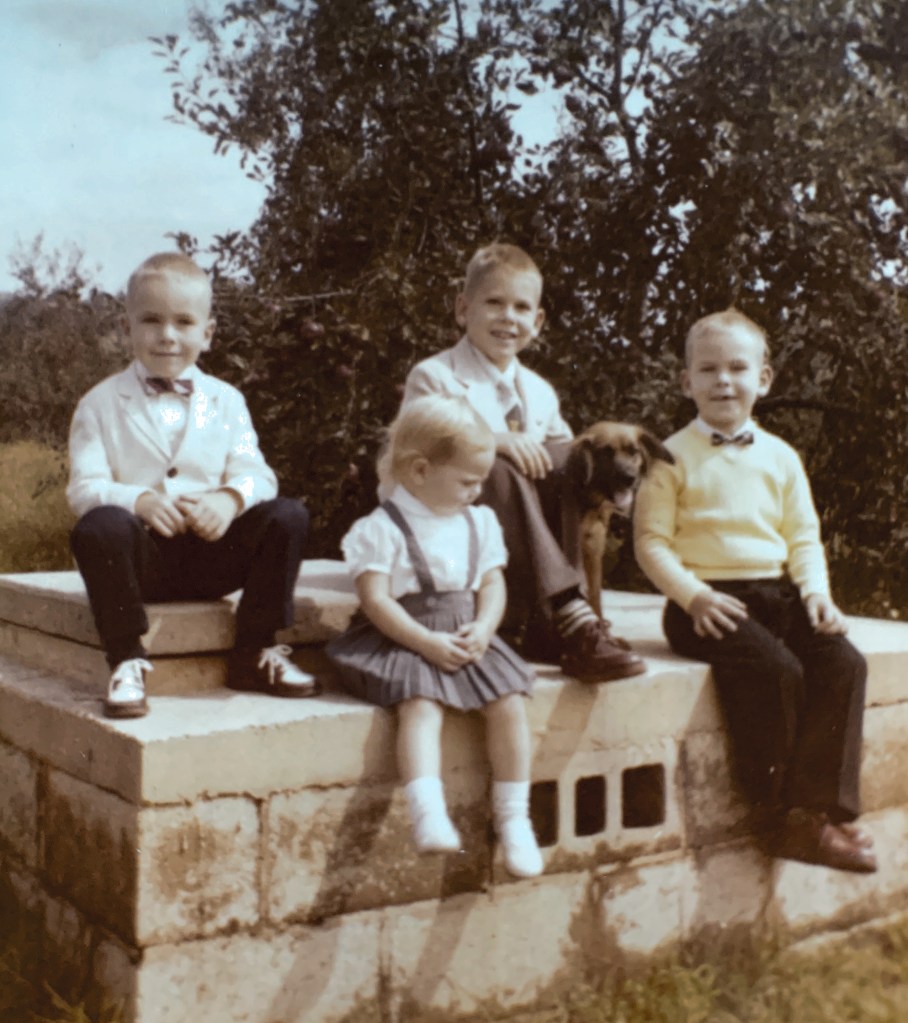
The school had an apple orchard on the gentle hill behind our house. We Moore kids enjoyed playing in that orchard both climbing the trees and eating the apples produced. From the first little green orbs to the sweet red, yellow and golden ripe apples we helped ourselves. Every year mom would pay the school for a bushel of apples to pay for all the apples we and our friends consumed.
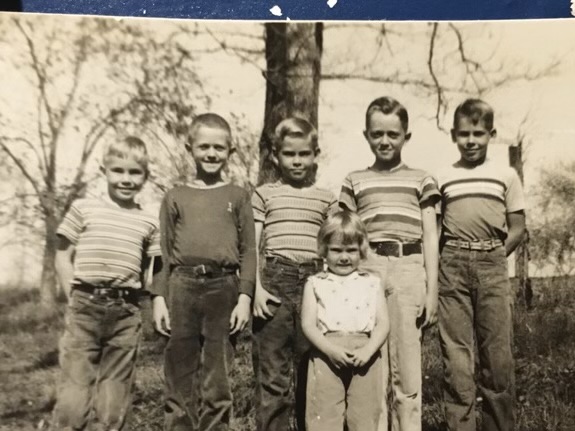
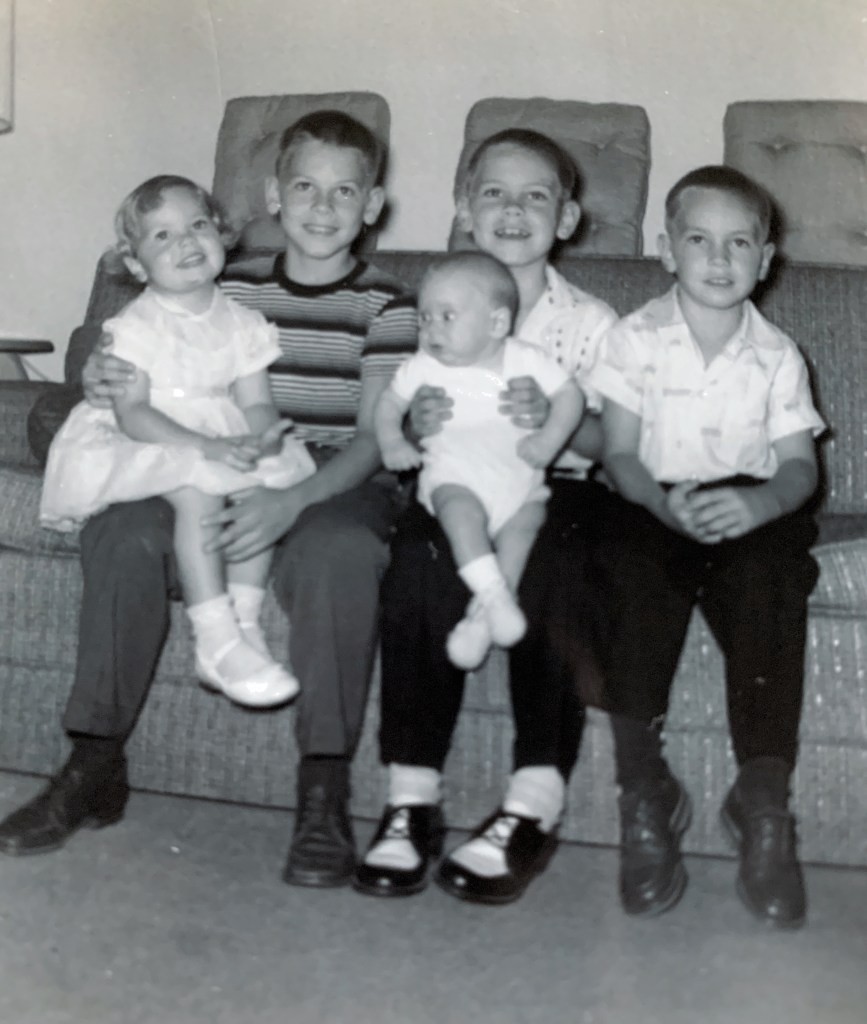
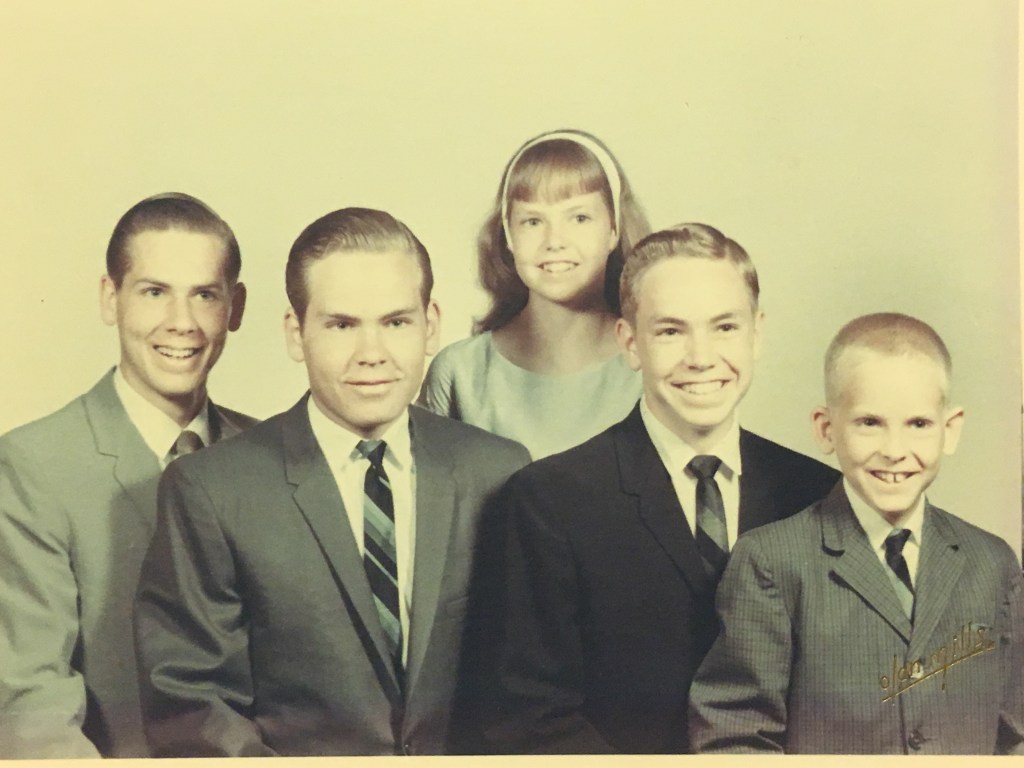
Me in the front with my three older brothers and two neighbor boys.
When I was in the eighth grade, the mother of one of my girlfriends was seriously injured in a car accident. Mom knew that Kathy’s mother would not be able to care for her so invited Kathy to stay with us until her mom was well. Kathy stayed for several weeks. I remember the day Kathy called mom from the school to tell her she made 100% on her spelling test. It was a first for Kathy and it was because mom spent time helping her learn her words. But while Kathy was the first young person to stay at our home she wasn’t the last. Mom took in over 20 young people into their home so they could attend Fletcher Academy. She gave them a room, took them to their classes or work, cooked food for them, washed their sheets, helped with homework and treated them like any of the Moore kids were treated.
The campus and grounds of this Seventh-Day Adventist community look very different today than what I remember as a child. We used to have church in the little chapel and I do remember the bell tower where the cafeteria is. But just about everything else was added after my parents came in 1953. I witnessed Pearson Hall, the new Captain Gilmer Elementary school building, the academy administration building, girls dorm, boys dorm, Lelia Patterson Center, Fletcher SDA church, Advent Health Hospital and office buildings, Fletcher Park Inn, and the many neighborhoods that have all been developed and built since they arrived. I can’t even imagine how many lives have been affected and changed due to the life of service in answer to the calling God gave them. I have many times referred to Dee and PJ Moore, my parents, as the two most incredible humans I have ever known and I will always feel that way. How fitting it is to dedicate this structure to them. Together they were a formidable team with him the leader and prominent figure ministering in a formal way. She was the quiet force behind him who ministered in an undercurrent but with just as much force. She was the gardener and outdoorswoman who would be so happy and proud of the efforts to maintain a farm, reconstruct a little lake, have walking trails and this shelter to unite the school and community together. They would be honored and humbled by this tribute. My brothers and I are so very grateful that they will be remembered for their contribution to the preservation of the vision of the early pioneers at the turn of the 20th century who decided to found a faith-based community dedicated to serving God here in this setting of the mountains of Western North Carolina.
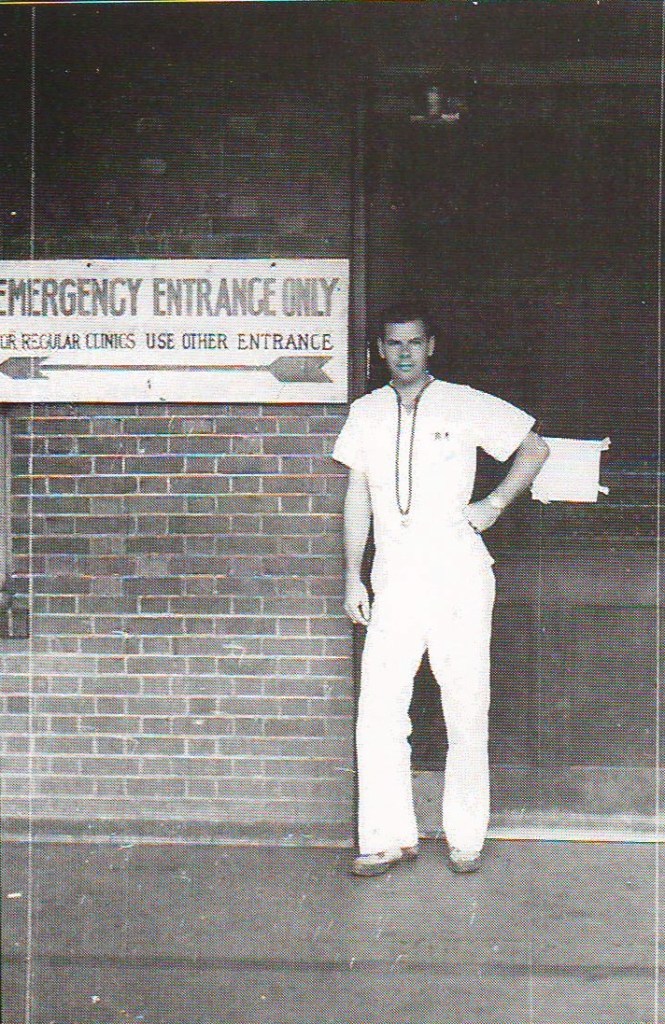
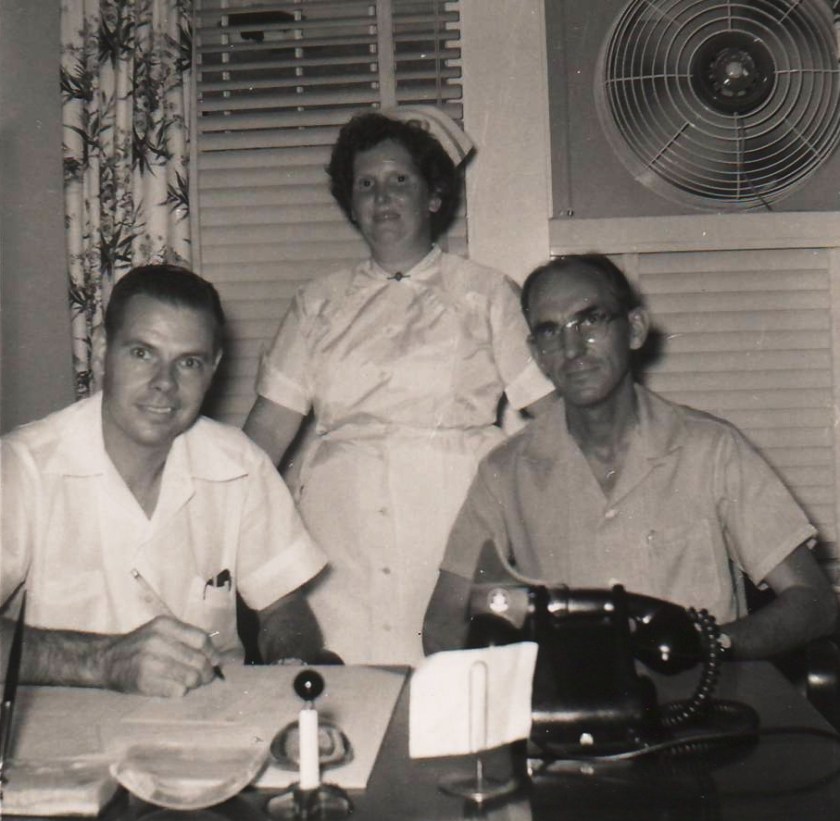
Dad with his office nurse MaryEllen Chapman and the other physician who joined him, Dr. Arthur Pearson.
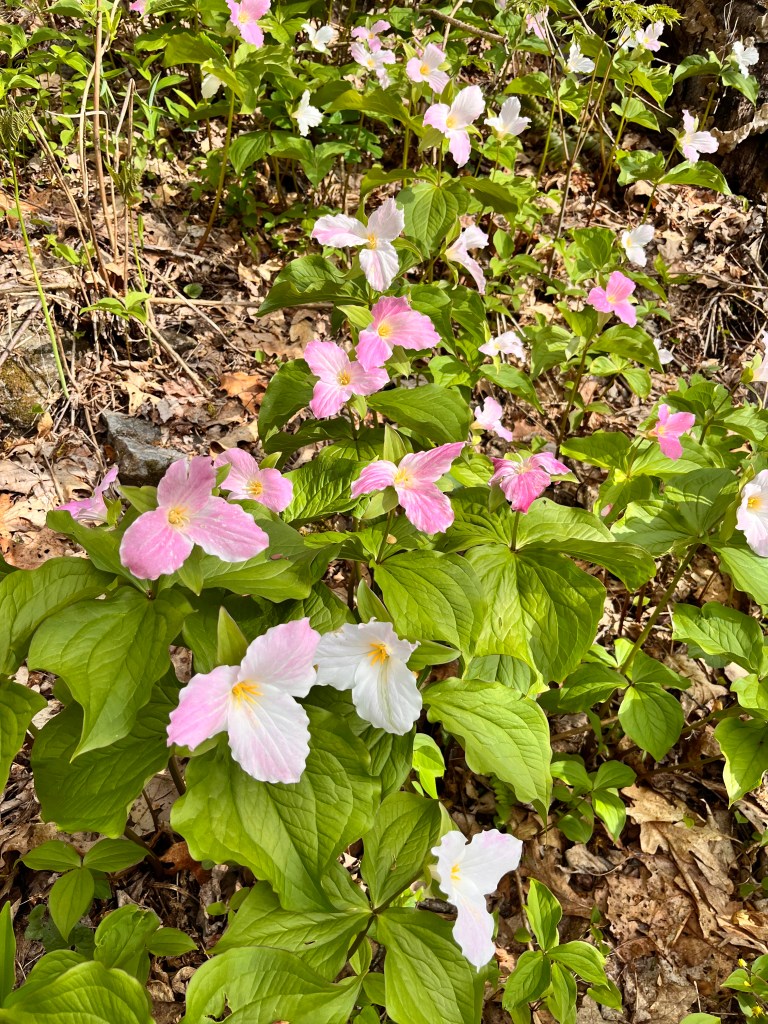
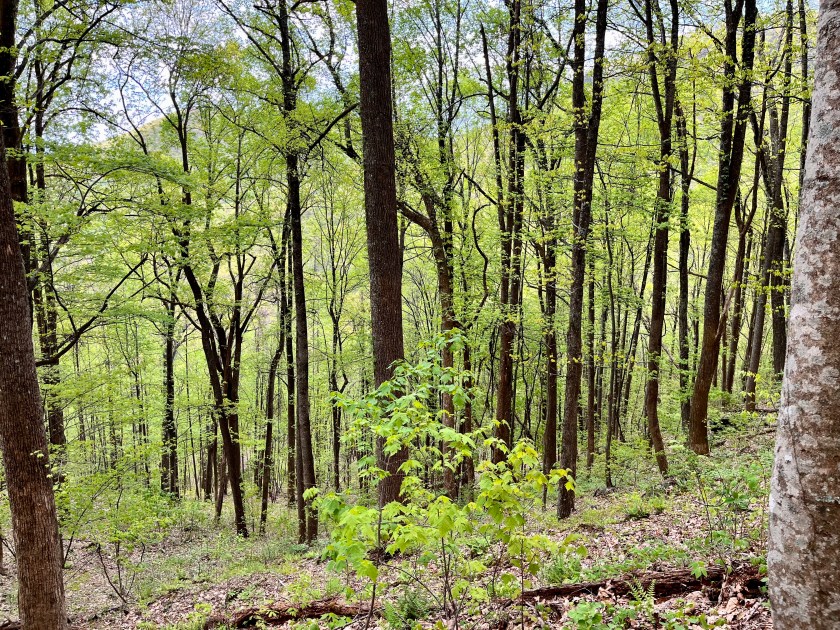
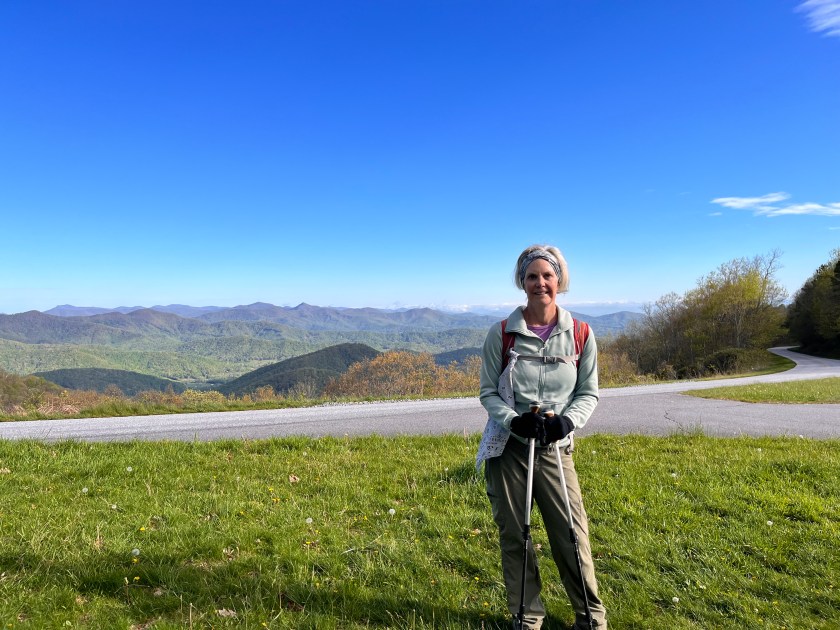
I went with a group of hikers from my church. We hiked the Mountain to Sea Trail starting at the Mt. Pisgah trailhead and traversed down to the North Carolina Arboretum parking area. Even though we were going down in elevation the undulating trail had several parts with steep elevation gain amounting to 2200 ft. total gain. The trail passed through large patches of Trilliums, Ramps, Mayapples and many other varieties. There were lookout spots with stunning views of the horizon. It took me 10 hours to make the trek and yes, I was tired when done. So, another conditioning hike accomplished.






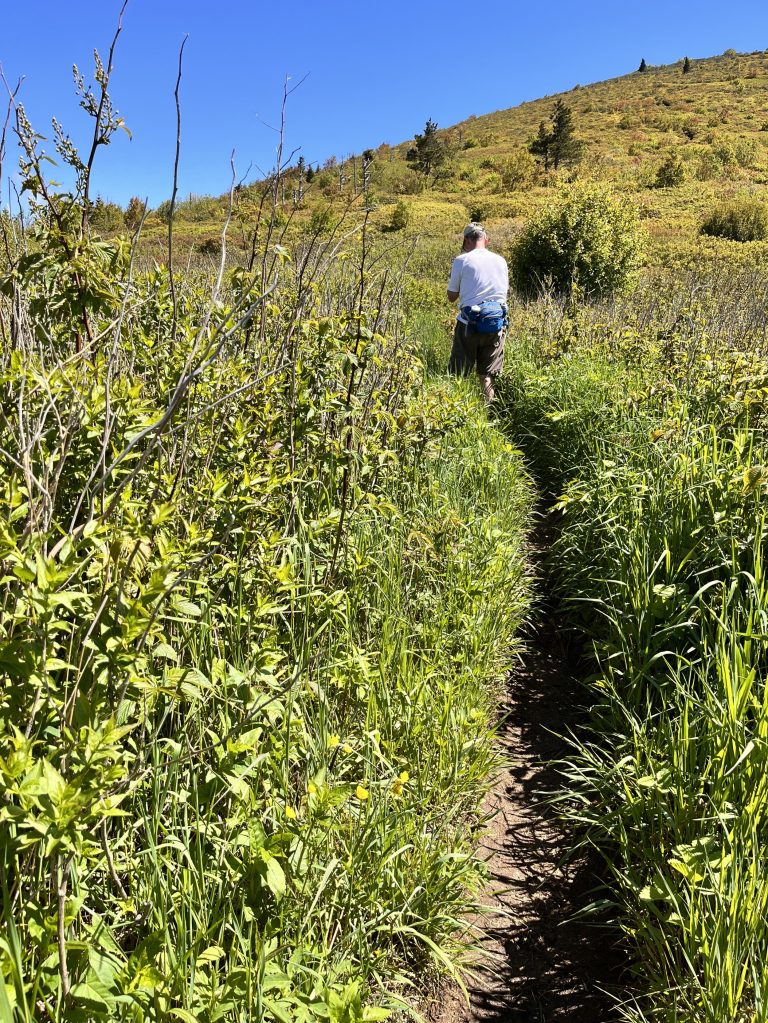




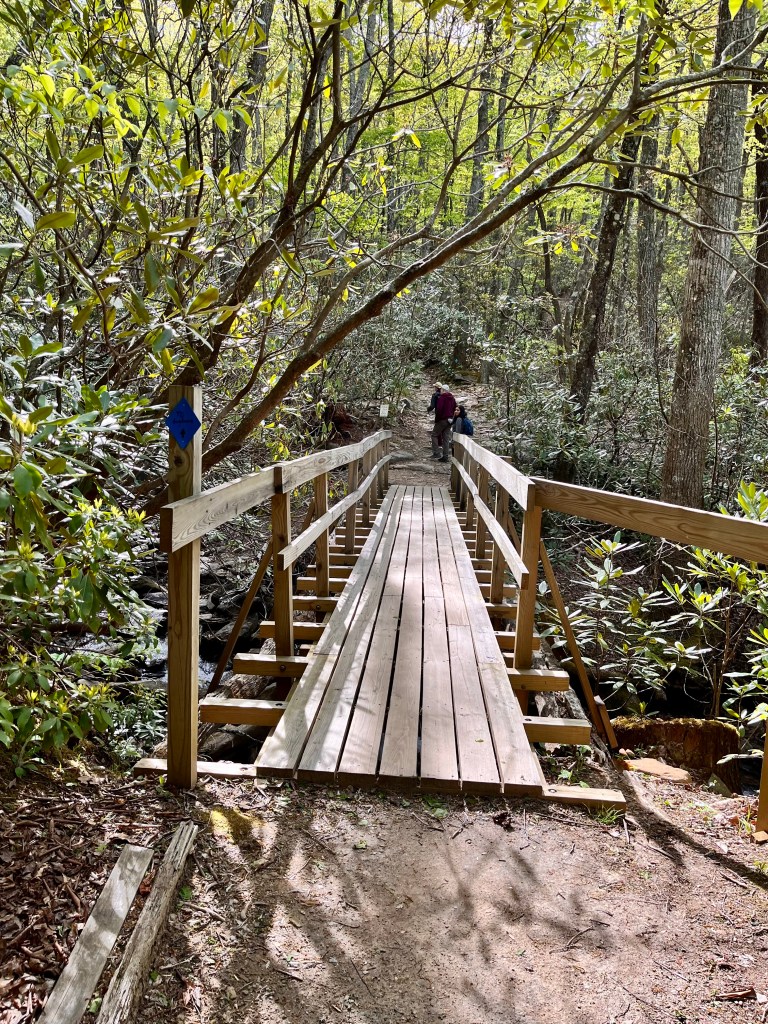
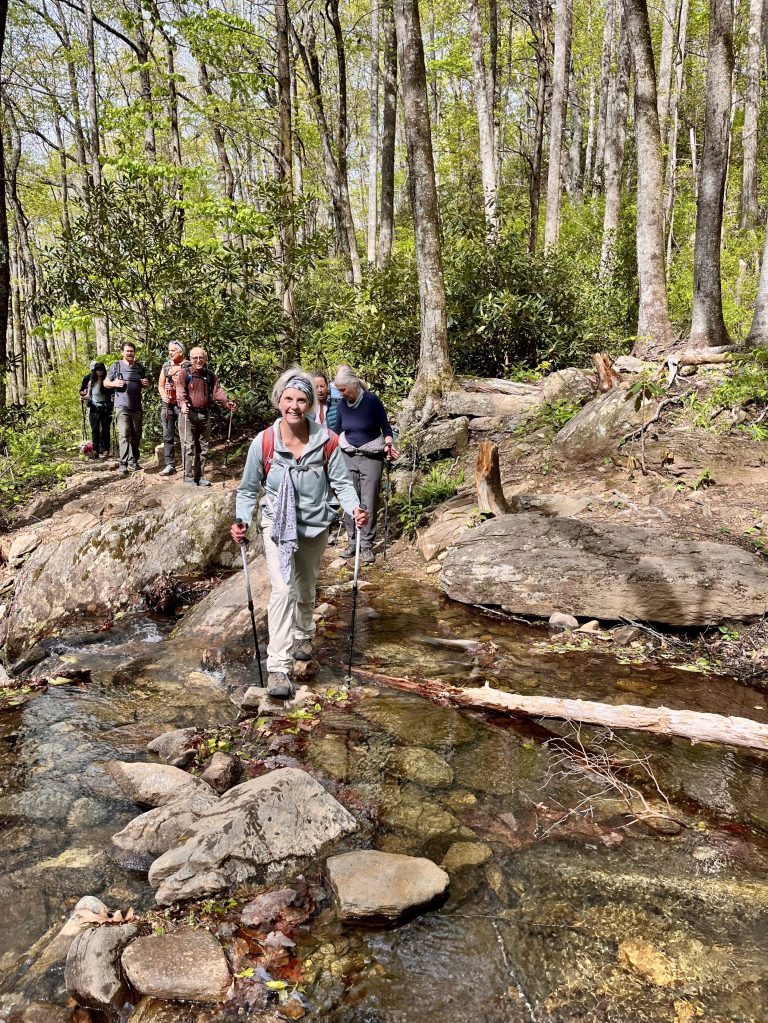
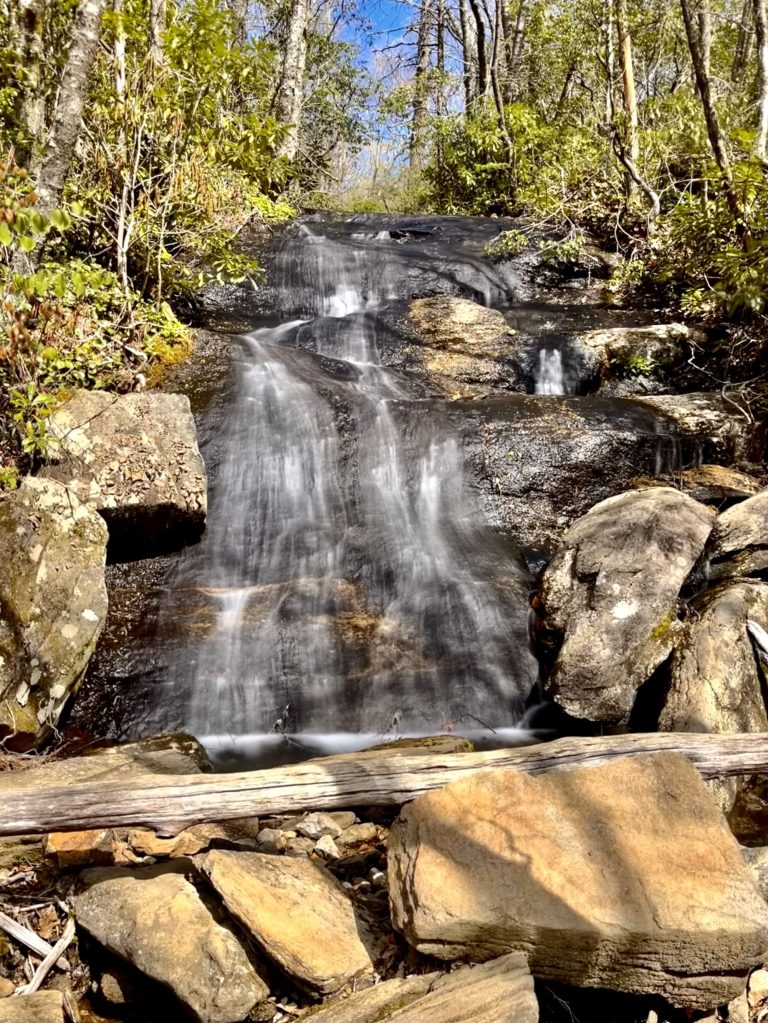
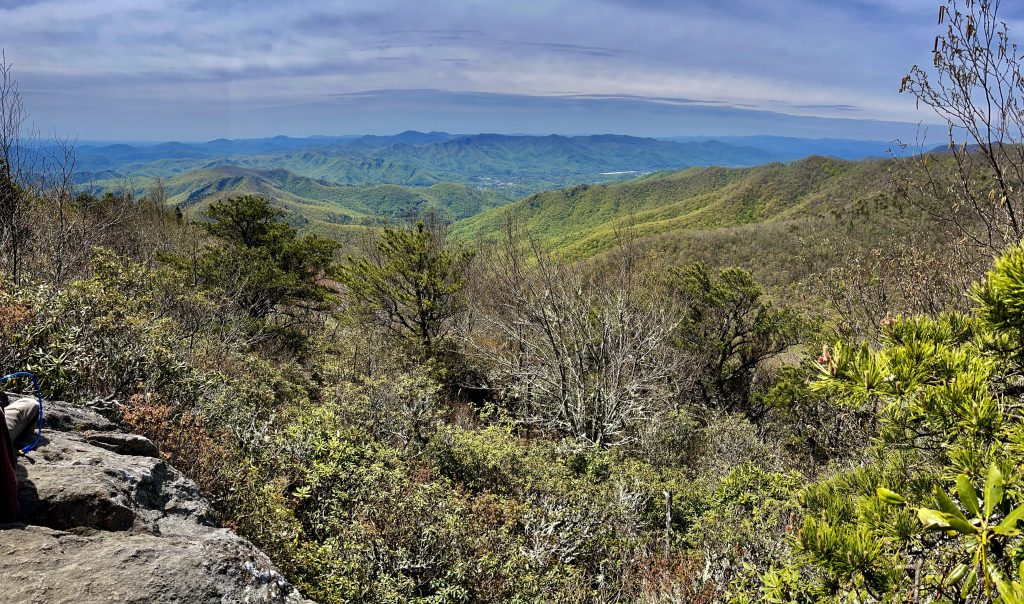







 Trekking Upward