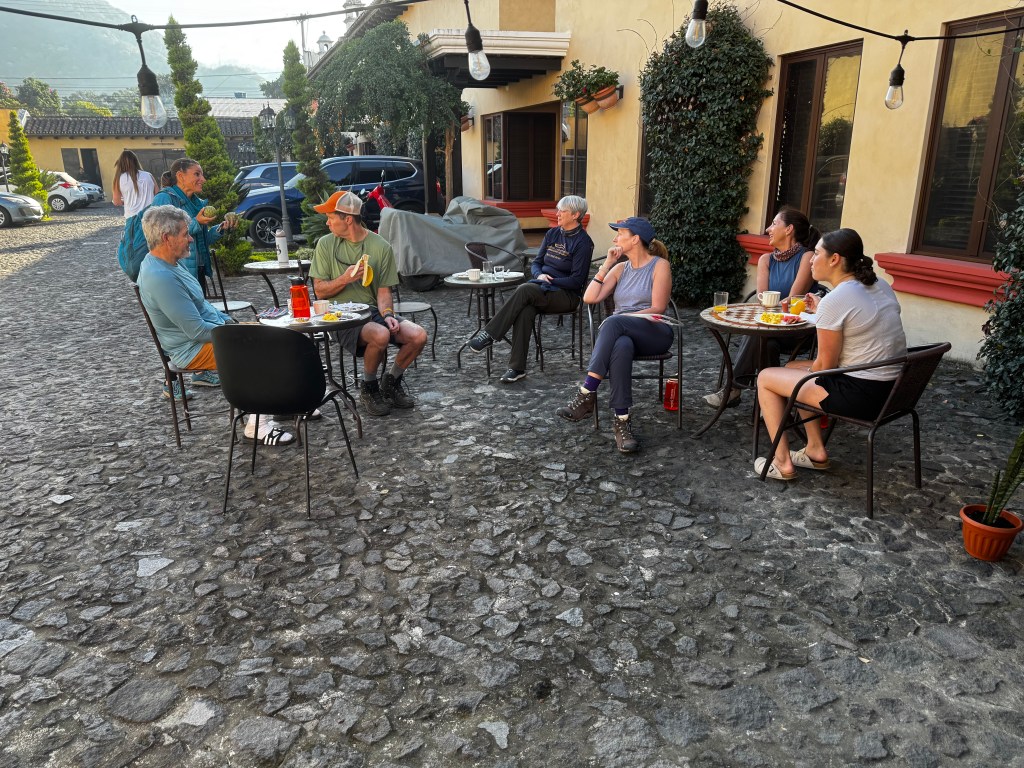
The morning of the second hike, breakfast was scheduled for 7:00 a.m. with a planned departure at 8:00 a.m. Since we would be spending the night on the mountain, we had to pack all our belongings and store them at the hotel. I had done most of the work of getting my daypack, the overnight gear pack for the porter and my stored luggage ready before I went to bed. After breakfast, we were provided sandwich items to pack our own lunch for the trek. I made a half sandwich of pesto, cheese and lettuce, added an orange and a snack size bag of nuts to complete the lunch meal and went to my room to brush my teeth. After everything for the group was stored, we boarded the bus and headed off for the day’s adventure. I knew this hike would be a big challenge and had mixed feelings of excitement yet apprehension.
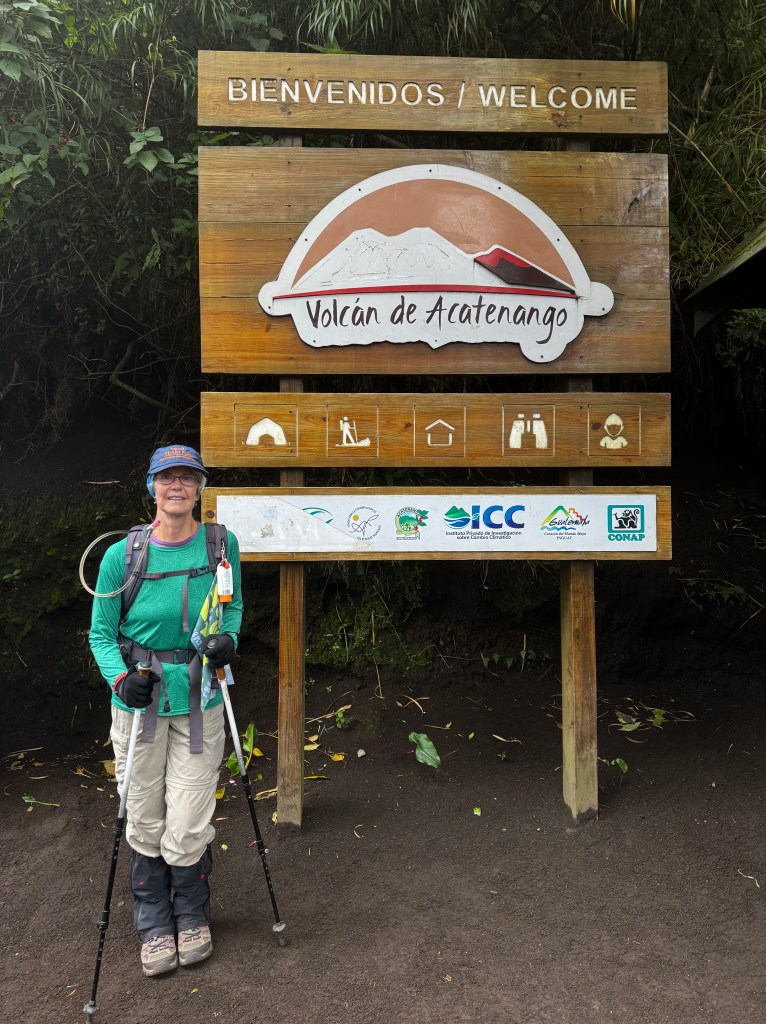
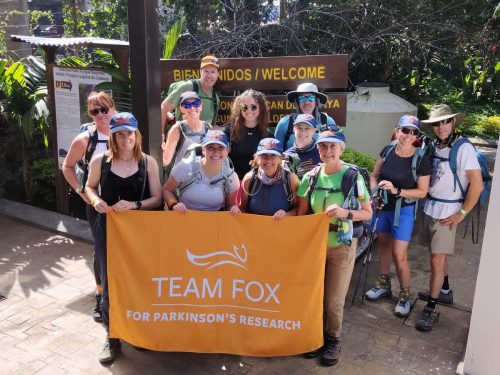
It was a pleasant ride to the trailhead, and I was wowed by the beautiful mountain scenery we passed through. Our guides, Luisa and Vinnie introduced me to the porter who was to carry my overnight gear. They also met with porters who would be trekking along with us and carrying the gear the group would need. We took group pictures and the day’s journey began. It was a pleasant morning with a cool temperature and overcast sky. The trail started through what seemed to be farmland with a narrow path protected on either side with barbed wire. As we went up higher it changed to dense forest lush with tropical greenery and flowers. Right at the beginning, I felt my gait was off with my right leg requiring more strength to move it and mild pain in my sciatic area. I wasn’t worried as this is a frequent happening for me and it has always smoothed out after 20-30 minutes.

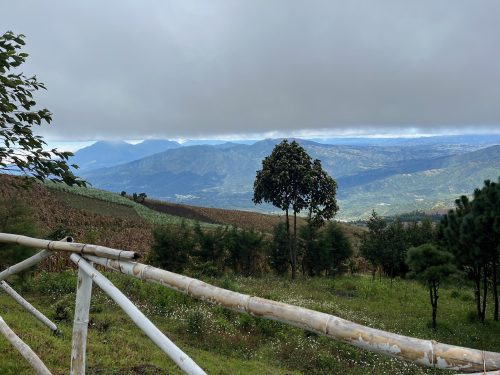
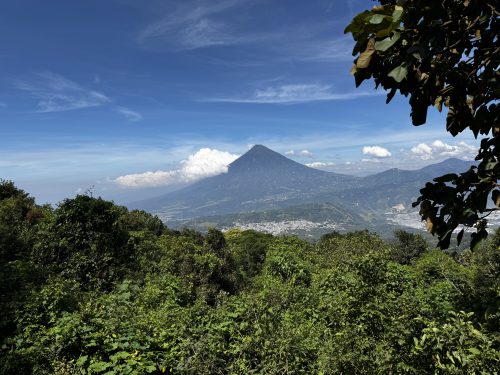
The trail soon became very steep with areas of large stairs carved out of the ground or areas of vertical trail that had a fine gravel over the dark soil. We were starting out at around 8,500 ft. elevation so the altitude contributed to my shortness of breath. We made a short stop at a place with benches and a pretty view of the valley. I was hoping my right leg would be easier to move but for some reason it did not get better for most of the way to our end destination. This made the climb even more difficult than I had expected. We were less than a mile up the trail and I was already out of breath and tired. Ugh!
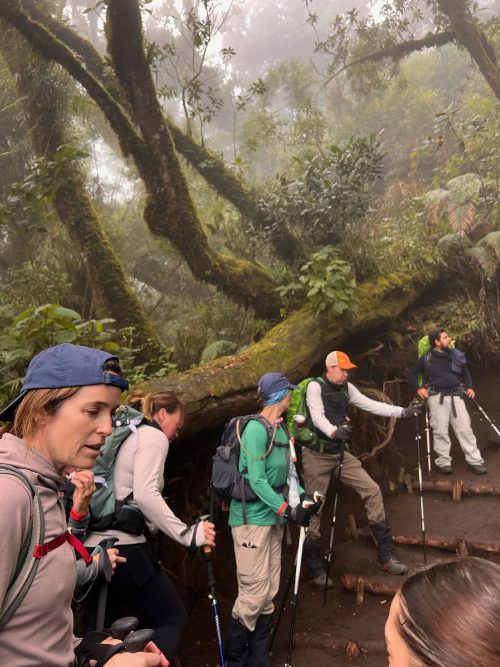

The group spread out with those able to go faster at the head and the slower ones bringing up the rear. I stayed mostly in the middle of the group. I welcomed the breaks along the way and by about halfway to our destination was ready for a lunch break. I ate my sandwich and passed my orange off to my porter. I shared with him some of the energy snacks I had added to my pack as well.
After lunch, we pressed on to our destination. I was grateful for Lauren and Zoe, the two hikers in their 20’s who stayed with me for a lot of the trail to make sure I was doing okay. Lauren offered to sing or tell stories to distract my mind from the demands the climb was making on my body. I was struggling just to breathe. How did she have the energy and breath to talk and even sing! Oh, how I marveled at the energy of youth and wondered why I thought that at 70 years old I could take on this challenge. Not only was I struggling with the physical demands but the mental challenge was starting to wear me down.
If things were difficult already they only got worse. As we got higher in elevation and farther along on the trail the weather conditions really deteriorated. It shifted to being cold, damp, windy and at times it was raining. We stopped to put rain covers over our daypacks and I put on gloves and a wind breaker. As long as I was moving, I stayed warm except for my hands. They got so cold I could not move my fingers. It was all I could do to grip my hiking poles. My gait was still off. We were probably at 11,000 ft. elevation and I was exhausted and struggling to move upward. Vinnie offered to carry my pack, but when I resisted, he insisted. The independent warrior inside myself was struggling to accept help as I wanted to carry my own weight, but I knew it was the right thing to do.
As we continued our ascent, Vinnie offered words of encouragement, assuring us that the trail ahead would become less steep and more manageable. Up to this point, we had been climbing directly up the mountain, pushing ourselves with every step. Now, the path shifted direction, and we began to traverse across the cone of the mountain, maintaining an elevation roughly 1,000 to 1,500 feet below the summit.

Traversing the side of the mountain
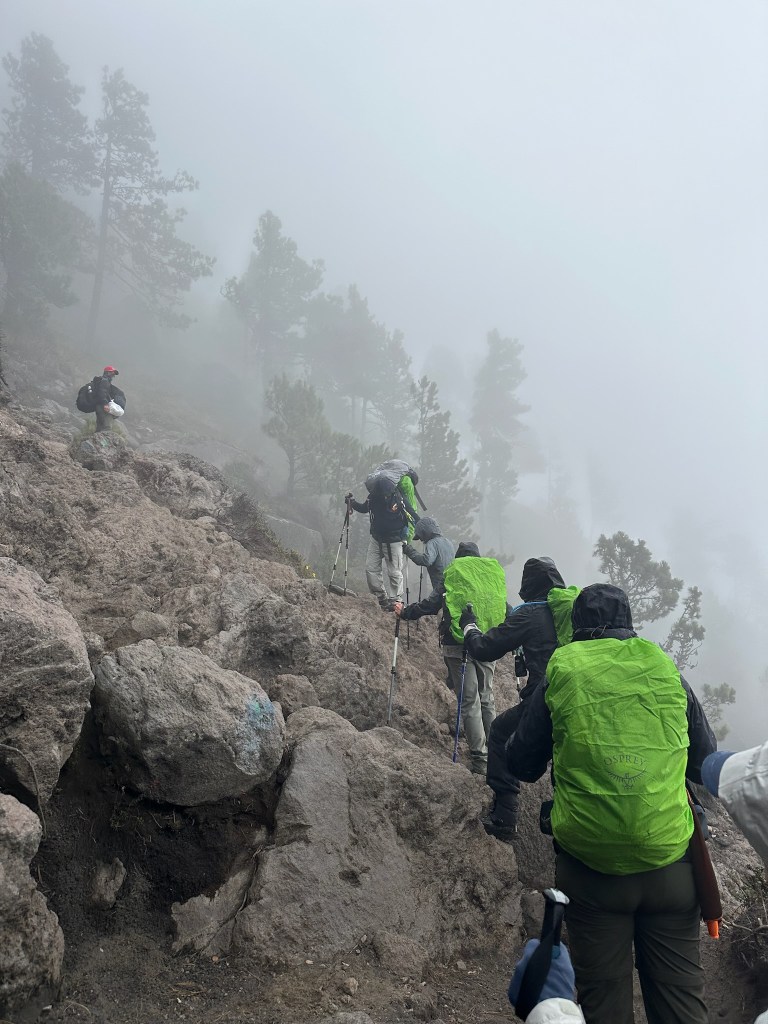
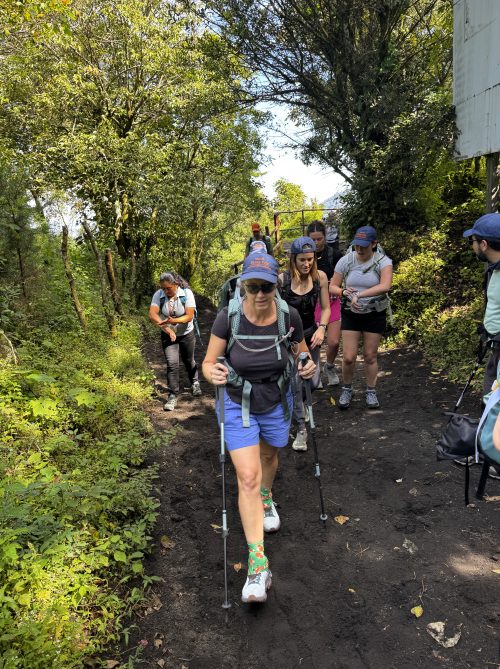
Although the incline eased somewhat, the trail became no less demanding. The narrow path clung to the side of a rocky, treacherous slope, requiring complete focus and caution. Each step had to be deliberate, and I found myself concentrating intensely on where to place my feet and hiking poles to maintain my balance and ensure my safety. (If you zoom in on the second picture, I’m just behind Vinnie in the gray jacket with a hood and no pack.)
Luisa described our lodging for the night as cabins and there would be an outhouse with a toilet. She promised brand new sleeping bags on mattresses, and pillows for our heads. We were looking forward to hot chocolate and cookies before being served a hot supper. It was getting closer to sunset, and I was eager to arrive at our destination for the night. I wanted to step inside a cabin where I would be protected from the wind and rain. Perhaps I could crawl into a sleeping bag before supper and warm up. I could at least take off my wet wind breaker and put on the warm rain jacket I had packed in the overnight gear bag.
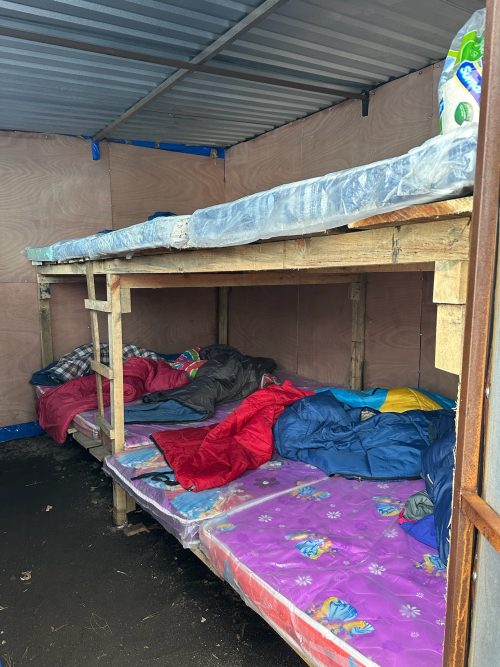
Finally, we were there. Yay! But to our dismay, the “cabins” were plywood shacks with corrugated metal roofs. There were upper and lower platforms where the mattresses were placed side by side. Wooden slats were nailed to the posts to create a ladder to access the upper level. The flooring was bare dirt, now wet from the rain. There was no outhouse. The visibility was poor through the dense clouds. To top it off, the shacks were locked and we would have to wait for Luisa to get the keys to unlock the doors. Someone found one of the shacks open, so we went inside and sat on a bench to wait for the rest of the group to arrive.
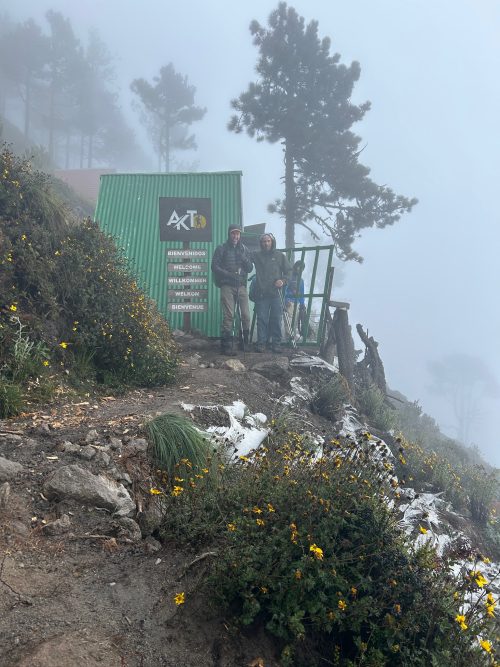
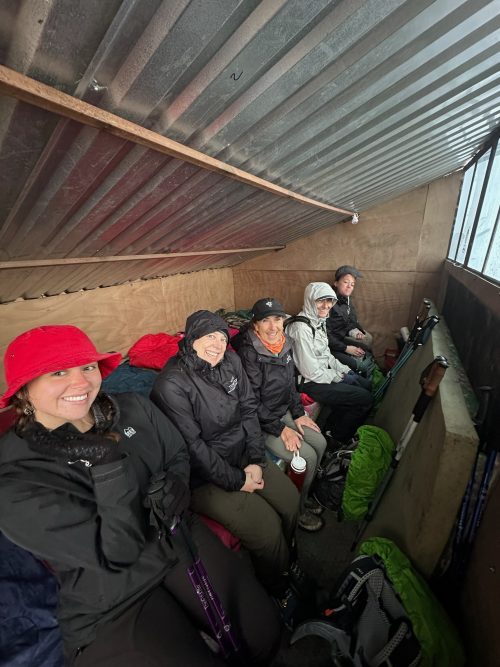
We had only been at the shacks for around 10 minutes when Luisa arrived with urgent news. She informed everyone that Devon, a forty-four-year-old woman who has been living with Parkinson’s Disease for nine years, was missing. The announcement prompted immediate concern among the group, and Luisa explained that we needed to find her.
Given my exhausted physical state after the strenuous day’s hike, I knew I would not be able to join the rescue mission. My mind raced through various possibilities, imagining different scenarios that might explain her disappearance. Fortunately, after about ten tense minutes, Devon was found safe and sound. The group was reunited at the overnight site, and there was a collective sense of relief. Devon explained that she had taken a “nature stop” and accidentally followed a divergent trail. Realizing her mistake, she retraced her steps and managed to find her way back to the correct path. What a trooper she was as she didn’t even seem winded after all the extra effort!
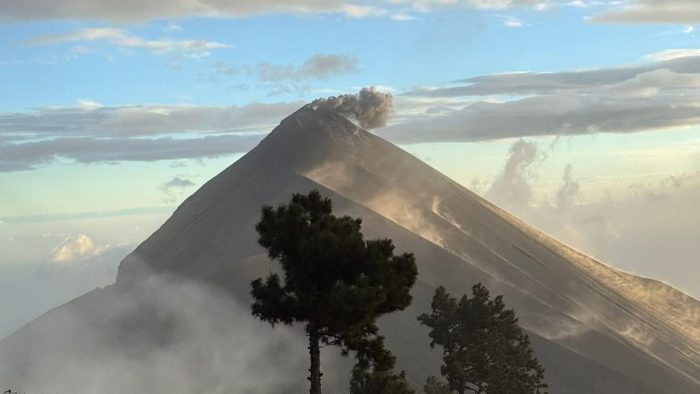
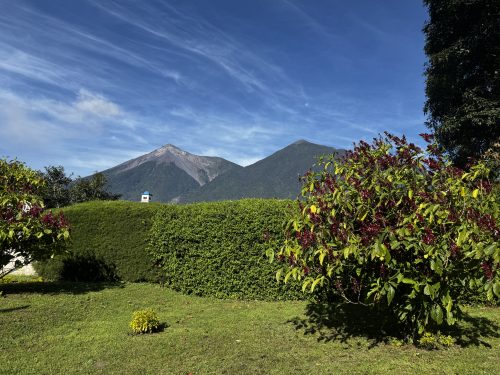
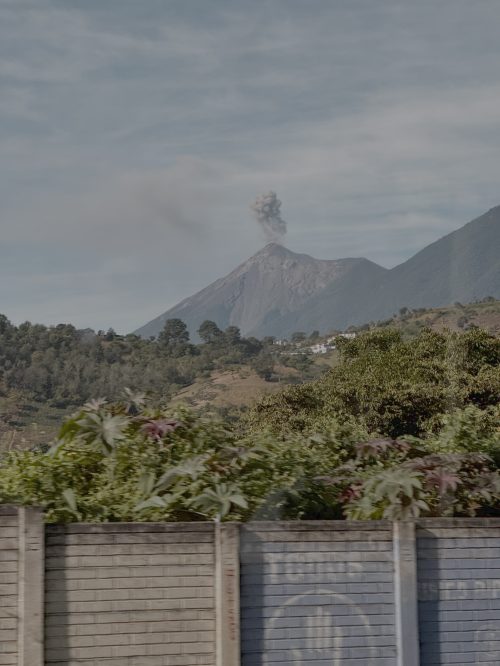
Once Luisa unlocked the shacks, we went inside to claim a sleeping spot and place our packs on the ground. Through the row of windows at the top of the front wall, we noticed some patches of blue sky and were relieved to have a break in the weather. There was an open-air pavilion with two walls and a metal roof strategically located with a perfect view of Fuego. We were able to see black smoke rising from it’s crater about every 15-20 minutes following it’s eruptions. I was still very cold and parked myself in the corner of the two walls looking for as much protection from the wind as possible.

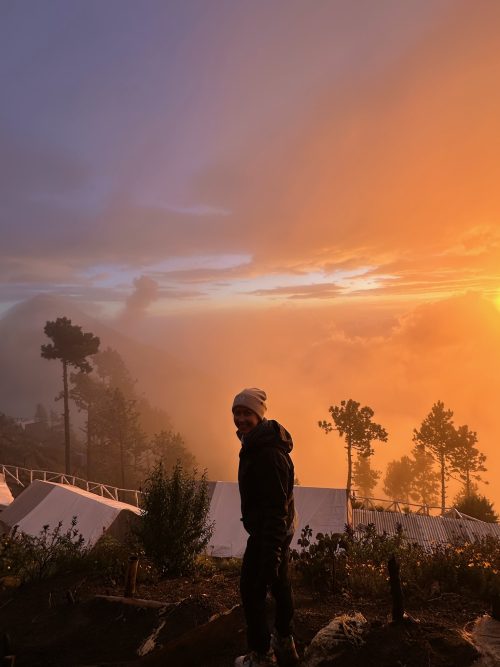
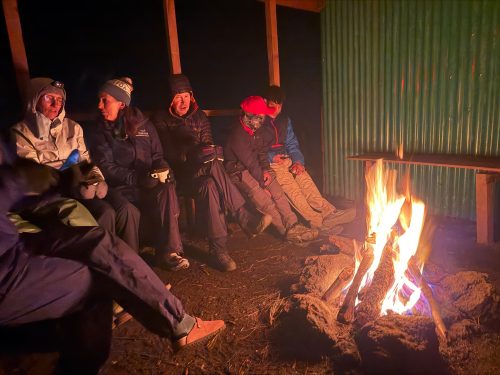
The setting sun provided a beautiful view full of color and texture. My fingers were not working good enough to take my own pictures, so I hoped the others would share their pictures later. I sipped on hot chocolate as I watched my teammates posing in the brilliant glow of the setting sun. The porters brought firewood to start a fire, but it was damp thus making it hard for the wood to lite. Jay, a 59-year-old man with Parkinson’s Disease, took charge of fire making. He skillfully placed the kindling and the sustaining pieces of wood to get it going. Finally, Jay asked if anyone had hand sanitizer. He wanted to use it as an accelerant to get a blaze going. That worked and soon there was a nice campfire going that emitted welcome heat. However, it also produced a lot of smoke which seemed to follow me no matter where I was.
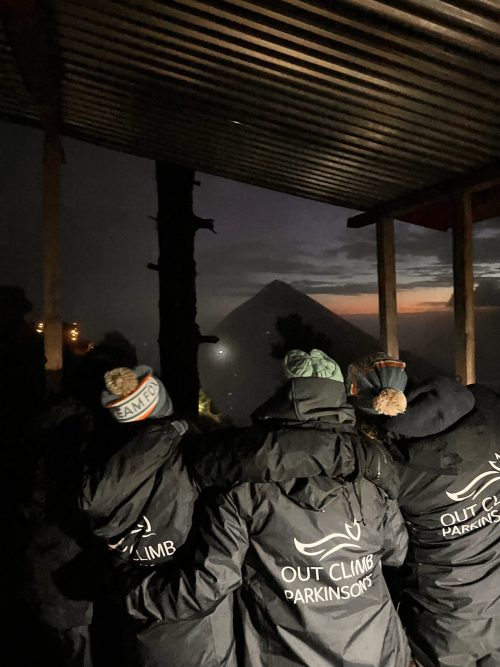
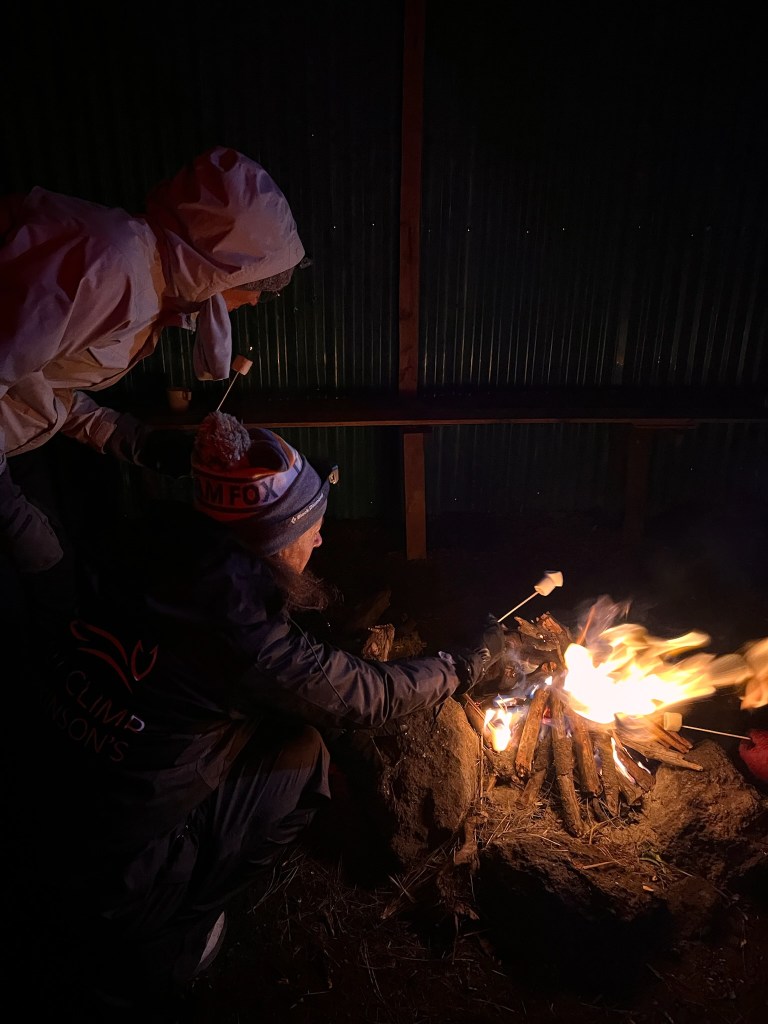
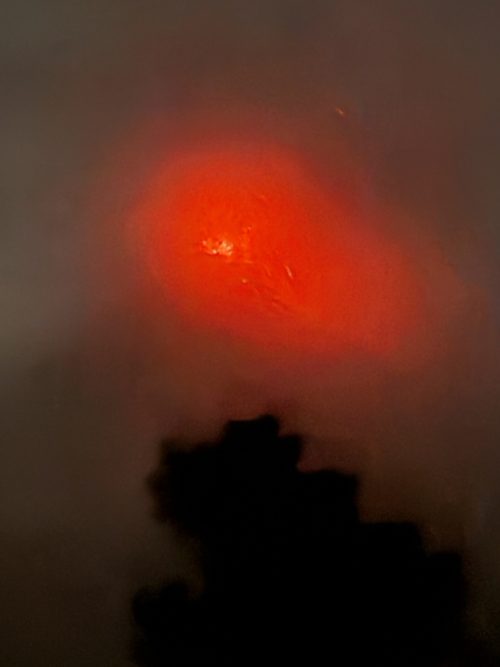
While we were enjoying the sunset, Luisa and Vinnie and the porters were busy cooking our supper. They went to the extra effort to have a vegetarian meal for me consisting of rice and grilled vegetables. It was delicious and I ate til I was full. Once it was dark, we got to see Fuego’s red lava bursting forth from its peak in a fiery display of bright red illuminations. Unfortunately, there was still a lot of cloud that distorted the spectacular view. It was still a thrilling sight to behold.
Since we were tired and since we were planning to get up around 4:00 a.m. to hike to the summit to see the sunrise, we decided to go to bed. Most of us decided to forgo brushing our teeth or changing into sleepwear. The lack of a proper restroom meant we had no choice but to relieve ourselves on the ground beside the shack. Of course there was no privacy screen. LOL The cold, damp air made staying warm a priority, and fortunately, there were a few extra sleeping bags in the shack. We unzipped these and spread them out over ourselves as top blankets, grateful for the additional insulation they provided.
Michelle, a 56-year-old woman hiking in honor of her sister, lay right next to me. Throughout the night, we edged closer together, sharing body heat to stay as warm as possible. I kept on both layers of shirts and all three pair of pants I had worn during the hike, including my rain pants. My sleeping spot was at the end of the platform, so I placed my rain jacket beside me for easy access in case I needed it during the night. For a pillow, I used the packing cube that had held my change of clothes, making do with the limited comforts available which weren’t very comfortable. I felt especially thankful for the pair of slip-on shoes I had packed, as they made it much easier to step outside for the one time I needed to use the “bathroom” during the night.
It was a rough night. I must have dozed off right away and slept for a few hours. After I got up to go to the bathroom, I had trouble falling back to sleep. The wind rattled the roof such that it sounded like a pack of rats were scrambling around above us. Or maybe someone was throwing marbles on the roof making a loud racket. Fuego erupted frequently with loud explosions each time. Some of the women had to get up more than once during the night to go outside.
Luisa was checking the weather conditions during the night and finally decided it was too windy, cloudy, and cold to try and go to the summit. Not so secretly I was happy about her decesion. As the light of dawn shined through the windows of our shelter, we were already awake. Shortly thereafter, the guys paid us a visit, and we laughed at the tales each reported on their night’s experience. The guides and porters brought coffee and hot chocolate to us while we were still in the sleeping bags. We got up around 5:30 a.m. and made the decision to skip breakfast and get on the trail to descend the mountain. I needed a little something to eat to avoid getting sick from taking my medicine on an empty stomach. Luisa brought me a cup of potato salad that I managed to consume while I was packing my bag, putting on my boots, and finding warm gloves and a headband to wear. Once the group was ready, we took a picture and started our descent.
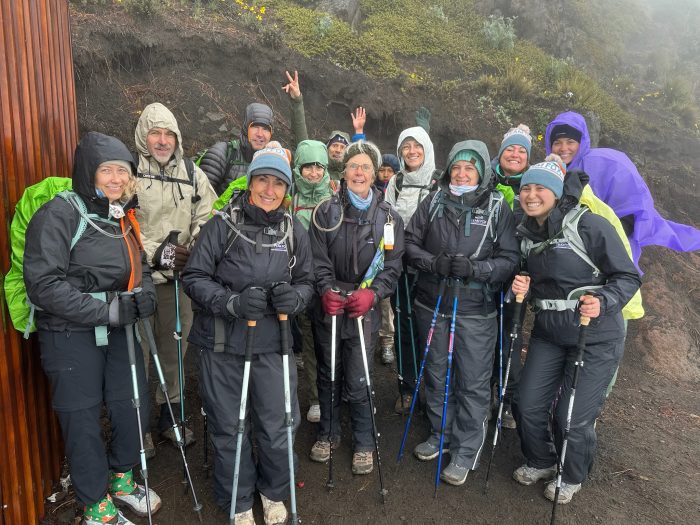
Going down a steep trail can often be harder than going up. Once again I had to watch every foothold and pole placement. The weather was much better than it had been on the trek up the mountain. It didn’t take nearly as long to get down the mountain than it had taken to get up the mountain. I was glad when we all were on board our bus and heading to a macadamia nut farm to have breakfast or by then it was lunch. I don’t know how long the drive was but was very happy when we got to the destination.
The restaurant was nestled among beautiful trees and shrubbery. Our group’s long table was in an open-air room, creating a sense of being in a garden. When I read the menu, I noted that breakfast items could be ordered all day. I spied macadamia nut waffles and instantly knew that my energy deprived body was craving the feel-good effect of carbs. When my stack of macadamia nut-butter drizzled waffles arrived, the group said there was no way I would eat all of them. They were wrong. I devoured every morsel and had room to snack on the French fries ordered for the table. My mood was buoyed as we traveled back to our hotel in Antigua.
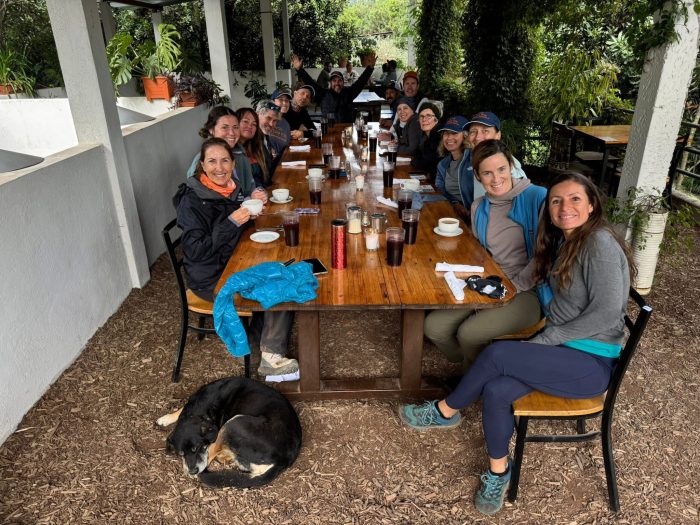
It felt so good to be back at the hotel. After reclaiming our luggage from the storage center, Jo, my tentmate from the Kilimanjaro climb and now hotel mate, and I sorted out the dirty clothes we had accumulated over the past few days and started a load of laundry in the washing machine in our suite. I found places around the room to hang the wet gear in hopes that it would dry out by the next morning. Jo and I took turns taking a much needed and refreshing shower. It is amazing how a shower can adjust one’s attitude.
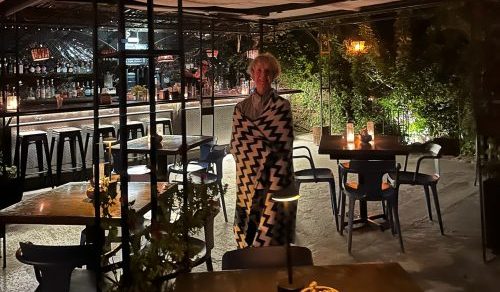
It was dark when we set out for the short walk to the rooftop bar and restaurant where the group was having dinner. The air was rather cold and despite wearing a fleece pullover, I was grateful to wrap up in a blanket supplied by the restaurant. From a corner of the rooftop, we could see Fuego’s fiery eruptions and hear the loud explosions. We laughed and giggled as we recalled the ordeal we had experienced on Acatenango. Some of the stories will remain on the mountain and in the hearts of the team. As we walked back to the hotel, I was grateful we would have a day off from hiking as we relocated to Lake Atilan, where we would take on the third volcano challenge.
© Copyright 2025. Lucretia Pintacuda. All rights reserved.


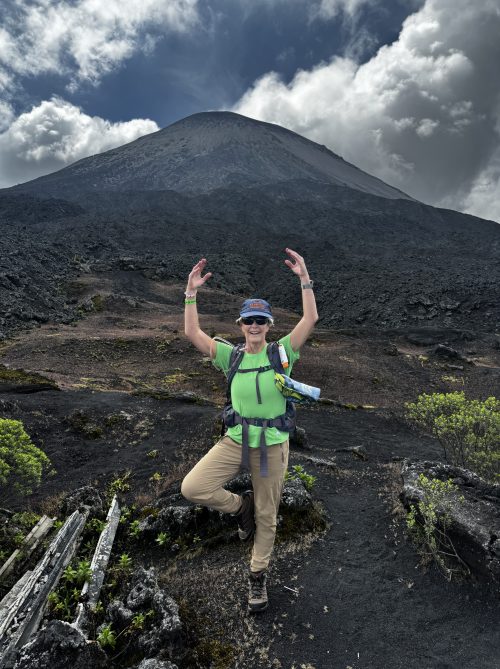
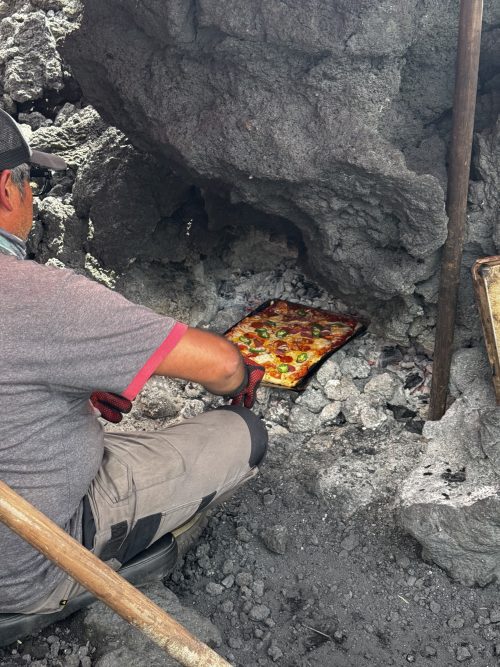
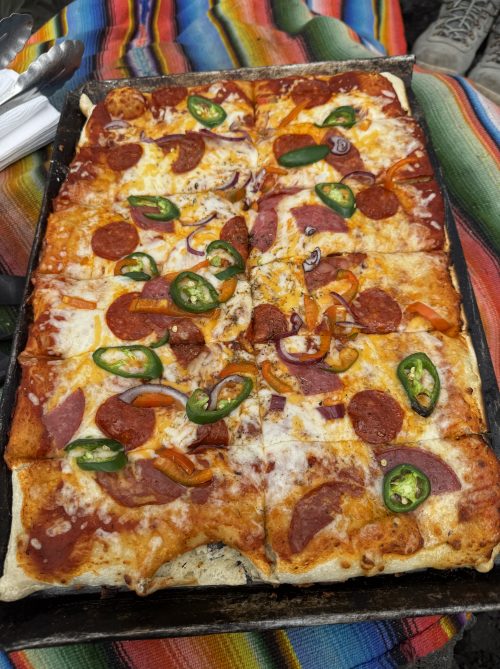
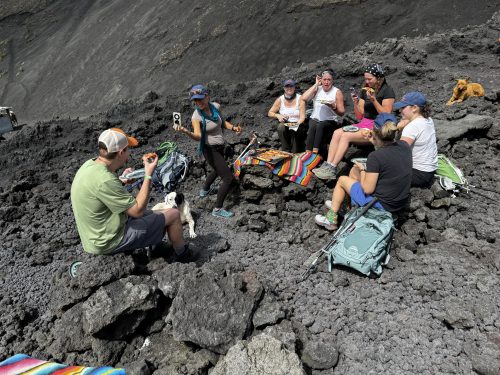

 Trekking Upward